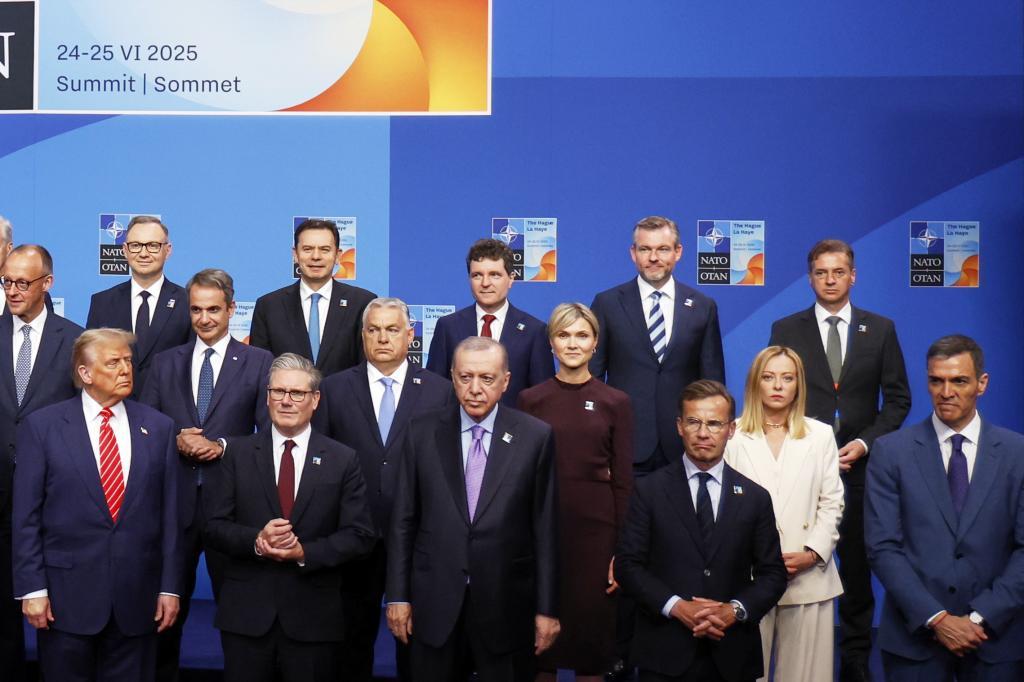
"Spain is a sovereign country that makes its decisions sovereignly," asserted Foreign Minister José Manuel Albares yesterday, after Donald Trump threatened to "cut off all trade with Spain" as retaliation for Pedro Sánchez's decision not to allow the use of the Spanish bases of Morón and Rota for his war against Iran. But Moncloa has a weak point: Spain had never been so dependent on American fuel. A vulnerability now that half the world will turn to American gas and oil due to the collapse of the Strait of Hormuz and the halt in gas production in Qatar, which, even if the artery of world trade were unblocked, would take several days to resume.
In just a decade, the United States has gone from almost not exporting any fuel to Spain to becoming a fundamental pillar of its supply security. As a natural gas supplier, it timidly emerged in 2016, but it was not until three years later that it captured a significant portion of Spanish imports (11%). The big leap came during the Ukraine war in 2022 when it almost reached 29% of all gas that entered Spain. Since then, our country has further increased its exposure to the US: with 111,696 GWh, last year it accounted for over 30% of Spanish imports, the highest relative weight in history.
And the United States not only supplies almost one out of every three gigawatts of gas that Spain imports. In 2025, it was also the top crude oil supplier to our country, with a 15.2% share. These days, government sources have pointed out that Spain has diversified the origin of its fuel a lot, but the truth is that Washington is increasingly influential in filling its storages and determining the prices paid by consumers. And it will increase, at least considering the trade agreement that Brussels and Washington signed last summer, which will require the Twenty-Seven to import $750 billion in American gas and oil.
The White House is seeking the legal and economic framework for a potential embargo against Spain, and Madrid is holding its ground, but it does so from a record level of dependence. The latest diplomatic crisis also puts our country at a disadvantage because the war in the Middle East is about to unleash a frenzied global race for American gas and oil.
Unlike France or Germany, Spain is barely interconnected with its European neighbors. In other words, it has a lot of capacity to receive liquefied natural gas (LNG) by ship and regasify it, but not to resort via pipeline to the fuel of other European partners. "This is a vulnerability that would force the country to pay a higher price for gas," explains Bruno de Moura Fernandes, Chief Macroeconomist at Coface.
In Asia, the region most affected by the collapse of Hormuz, the race has already begun. De Moura points out that Japan, Taiwan, and Korea have formed a triple entente to advance purchases and secure gas supply from Washington. "The United States will not lack customers," predicts the expert, who sees in the current diplomatic clash a problem for Spain, as it could be forced to pay a higher price.
For now, the market is ruling out a situation of shortage, although not a considerable impact on prices. Since the split between the EU and Russia, the Twenty-Seven have become more dependent on LNG, gas that travels by ship in liquid form. This is traded in a global market, making Europe more vulnerable to international events.
Historically, very rigid contracts bound buyers and sellers of gas on either side of the same pipe for decades. The penalties for breaching them were always high enough not to do so. But the LNG business has different rules.
Many transactions are sealed through completely flexible supply contracts (free on board), with which market giants try to make the most of the prices that different regions offer for their shipments. A sort of global auction that has become a significant risk for European supply security, as on paper it has certain volumes of gas contracted, but technically speaking, the ships carrying them are not obliged to reach the continent.
Today, the possibility of a sustained interruption of maritime traffic in Hormuz will lead many countries to double their bids to secure deliveries of American fuel.
"American exporters are already accumulating an additional $870 million weekly in margin above their pre-crisis base level. And that rate is rising," estimates Seb Kennedy, global gas and LNG analyst and editor of EnergyFlux. If Qatar were to maintain the force majeure halt for a whole month, he predicts that these extraordinary profits would reach up to $4 billion. "The scale of potential gain depends almost entirely on one variable: duration," he explains.