Energy market prices continue to rise, creating tension in a market where investors are unsure of what to believe, and volatility is high. The ongoing war in Iran shows no signs of ending, involving more countries and companies in the Middle East. Some are stockpiling reserves (like Asian countries), while others are announcing production halts (as Qatar did today).
So, the focus remains on the prices of raw materials. At 9:00 in the morning, European natural gas futures started the day with a 2.58% decrease in their value, but during mid-session, they turned around and surged by 3.55% to 52.53 euros per megawatt-hour. Similarly, the price of a barrel of Brent which had a slight 0.07% increase at the start of the day, reaching 85.47 dollars, gained strength with a 2.59% increase, reaching 87.73 dollars.
Uncertainty in the markets is increasing by the minute. Particularly after Qatar's Energy Minister, Saad al-Kaabi, warned that the situation is pushing all gas and oil exporters in the Persian Gulf to the limit, potentially leading to a suspension of production "in a few days." This would raise the barrel price to 150 dollars, as detailed in the British newspaper Financial Times and reported by Efe. Although Qatar, the world's second-largest LNG producer, only exports a small proportion of its liquefied natural gas (LNG) to Europe, the minister argues that the Old Continent would be significantly affected because Asian buyers would outbid European ones for the available gas. This adds another layer of concern for companies - and their investors - especially after a major gas company in the Arab country announced a production halt on Wednesday, causing price spikes.
As we await the final price of today's session, the price of a barrel of Brent has seen an 18% increase, the largest weekly surge since 2022 (with the invasion of Ukraine). However, in terms of prices, it still remains nearly 30% below the highs reached in 2022.
In this unstable situation, Ibex initially rebounded by 0.5% at the start of the trading session but dropped by 0.42% mid-session. Leading the gains are Repsol and Naturgy, companies in the sector benefiting from the increases. The most significant declines have been seen in Cellnex, ACS, and Sacyr.
Like the Madrid Stock Exchange, the main European stock exchanges began the day positively and then turned around, with minimal differences. Paris started the day with a 0.3% increase, Frankfurt with 0.8%, London with 0.2%, and Milan with 0.3%. By mid-session, London had fallen by 0.04%; Paris by 0.36%; Frankfurt by 0.24%; and Milan by 0.44%.
Meanwhile, the VIX index measuring market volatility continues to rise. It reached 25 points mid-session, starting at 23.75. It enters the realm of high volatility, reflecting an unstable situation with probable trend changes.
The outcome of Donald Trump's latest intervention announcing a series of measures to stabilize the concerning energy market remains to be seen. Among them, authorizing India, one of the largest global consumers and main clients of the Middle East, to temporarily purchase Russian gas (to alleviate demand pressure) or having AI technology developers absorb the rising cost of electricity in the US. However, the market no longer trusts Trump's words, and "the underlying problem persists," conclude analysts at Renta 4. Especially in the Strait of Hormuz, nearly closed, where ship paralysis is causing port congestion, hindering global supply chains.
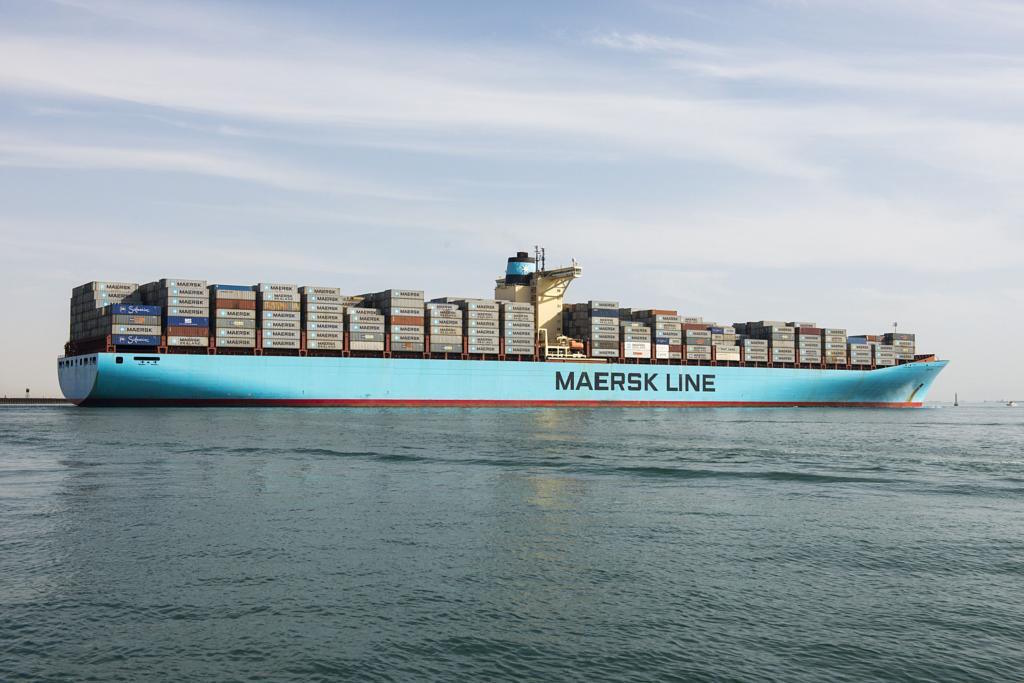
In addition to oil companies, attention is turning to logistics. The giant Maersk announced on Friday the suspension of two transportation services connecting the Middle East with Europe and Asia. This decision reflects logistic companies' fear of crossing the region. Besides the fuel price hikes, the sector is facing challenges: analysts highlight that insurance costs for ships crossing the Middle East have quadrupled, with some insurers refusing to cover these routes.
The rise in logistics costs directly impacts all expenses of transport-dependent companies, creating a chain effect that affects profitability and prices in general. Hence, fears of increased inflation in countries and investors' risk aversion are also on the rise today. European stock markets have seen a 6.15% decline in their capitalization, and Wall Street a 1.13% drop since the conflict began, according to Bankinter reports.
Analysts are divided on the matter. Some argue that the geopolitical risk cost is being underestimated in the markets, as stated by Morgan Stanley Investment Management days ago. Others insist that the long-term effect may not be as severe: while oil prices have significantly risen, they have not reached unsustainable levels. It is also crucial to consider that countries learned from the Ukraine energy crisis by increasing their reserves, as highlighted by Edmond de Rothschild AM.
"Today, we could see a session with slight rebounds on both sides of the Atlantic, which would moderate throughout the day, as both oil and the dollar are giving some relief. However, it will depend on the conflict's evolution," evaluate Bankinter analysts, who continue to bet on a brief war because "a prolonged shock benefits no one." Especially not Trump, they add: "According to a Fed study, every 10-dollar increase in oil prices translates to a 20-basis-point rise in American inflation. [...] And for Iran itself, it would be economic suicide, as it exports 90% of its oil through there, vital for financing its regime and military."
Asia rebounds while stockpiling oil
A more stable session in Asia. This is how the stock market Friday in this continent concluded, with the main index of the Tokyo Stock Exchange, the Nikkei, rising by 0.62%; the Hang Seng index in Hong Kong gaining 1.73%; and the Kospi closing nearly flat (+0.02%), but in the green.
Countries in the continent most sensitive to fuel traffic have taken direct actions regarding their fuel reserves. Two days ago, China requested its major refineries to halt diesel and gasoline exports, while the Japanese government considers releasing its strategic oil reserves.
Consequently, the South Korean government announced on Friday the emergency import of six million barrels of crude oil from the United Arab Emirates to stabilize energy prices in a market where gasoline prices have surged by 9% in the last five days.