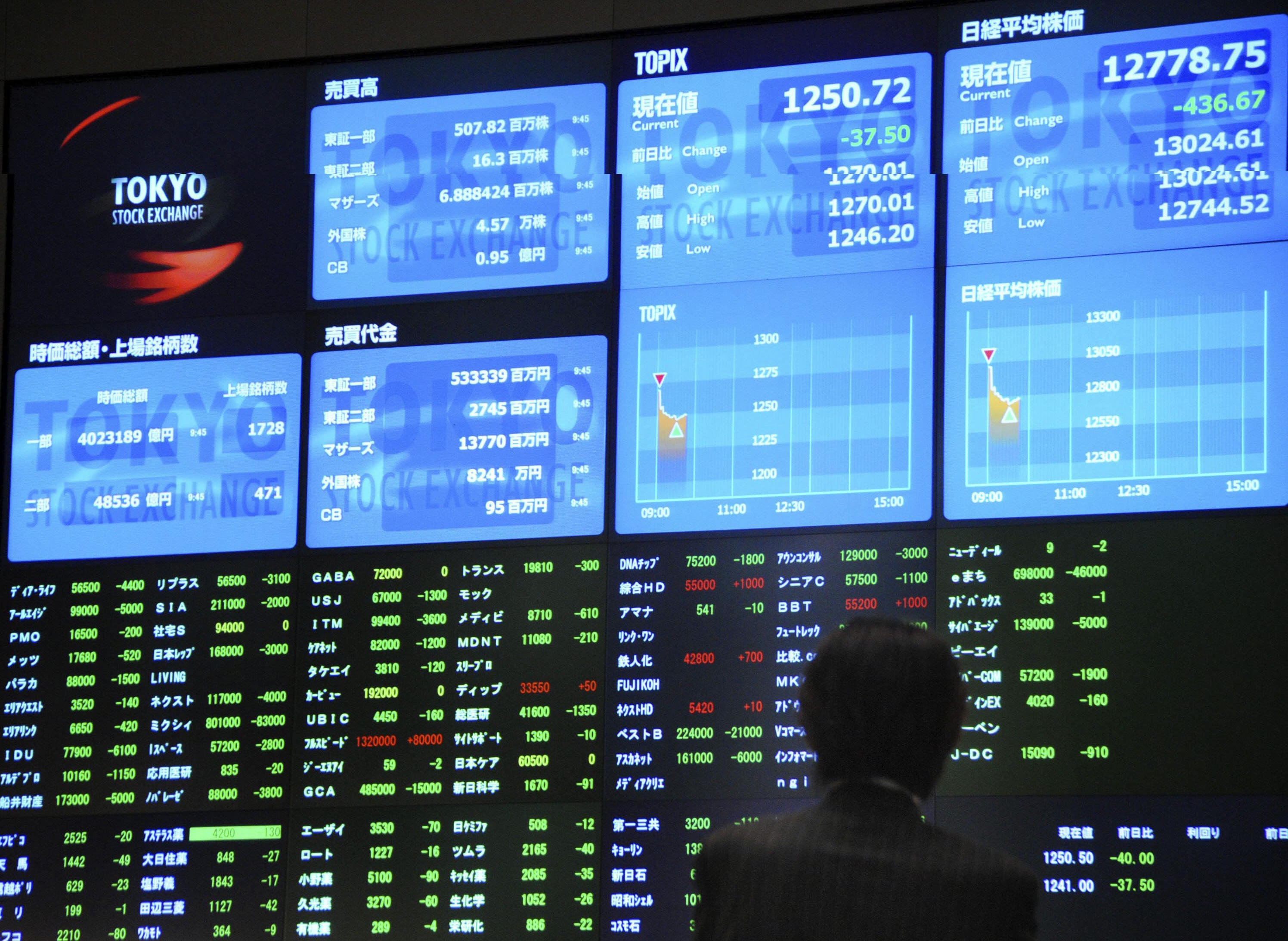
Monday dawned in Asia with a tremor in the markets that tested the financial stability of the region and set off all alarms. The Nikkei 225 in Tokyo fell by as much as 7.6%, while in Seoul the Kospi plummeted over 8%, triggering the automatic suspension of operations for the second time in four sessions.
Japan and South Korea are two of the major economies that heavily rely on imported oil from the Middle East. The corporate impact was also severe: Samsung Electronics and SK Hynix in South Korea dropped over 10%, while in Japan, technology-related stocks like Softbank, Advantest, and Lasertec experienced declines between 9% and 11%.
The decline in major Asian markets extended to Australia, where the S&P/ASX 200 dropped over 4%. In Hong Kong and mainland China, the Hang Seng fell by 3% and the CSI 300 by 2%, while Singapore's FTSE Straits Times index dropped nearly 3%, reflecting global fear over the escalation of the conflict in the Middle East.
This plunge is directly related to the sharp rise in oil prices, which surpassed $100 per barrel on Sunday for the first time since 2022 (rising to $117, a 30% increase from Friday), driven by supply reductions and the de facto closure of the Strait of Hormuz, a key route for about a fifth of the world's oil.
Both Brent crude, the global benchmark, and West Texas Intermediate rose between 18% and 20%, raising concerns about inflation and pressures on central banks and global consumption.
Following the surge in oil prices, the G-7 finance ministers will hold an emergency meeting on Monday to discuss a possible joint release of oil reserves coordinated by the International Energy Agency.
The war in the Middle East enters its second week with Israeli airstrikes in Tehran and Lebanon, and the Iranian regime appointing Mojtaba Jamenei, son of Ayatollah Jamenei, as the new supreme leader. Gulf Arab states continue to face Iranian missiles and drones, with the Islamic Republic claiming the capacity to prolong the conflict for months.
The combination of military tension and fear of further disruptions in global energy supply is triggering risk aversion among investors, leading to massive sell-offs of stocks and a flight to safe-haven assets such as the US dollar and Treasury bonds.
In Washington, President Donald Trump's statements are not helping either, as he described the oil spike as a "very small price to pay" to neutralize the Iranian nuclear threat. These words reinforce the sense that the conflict resolution will not be immediate. "Prices will drop rapidly once the Iranian nuclear threat is completely destroyed," Trump added in a comment posted on his Truth Social platform.
In South Korea, following the drop in Asian markets, President Lee Jae Myung called for an emergency meeting and ordered the immediate implementation of a maximum pricing system for oil-derived products, along with strong measures against price manipulation. Lee also instructed officials to secure alternative supply routes that bypass the Strait of Hormuz, while promising strict punishment for any hoarding or collusion in the market.
"Given the serious energy supply situation and economic anxiety among households, extraordinary measures are required in line with the circumstances," the leader stated during the meeting. "In cooperation with our strategic partner countries, we must quickly identify alternative supply routes that do not pass through Hormuz."