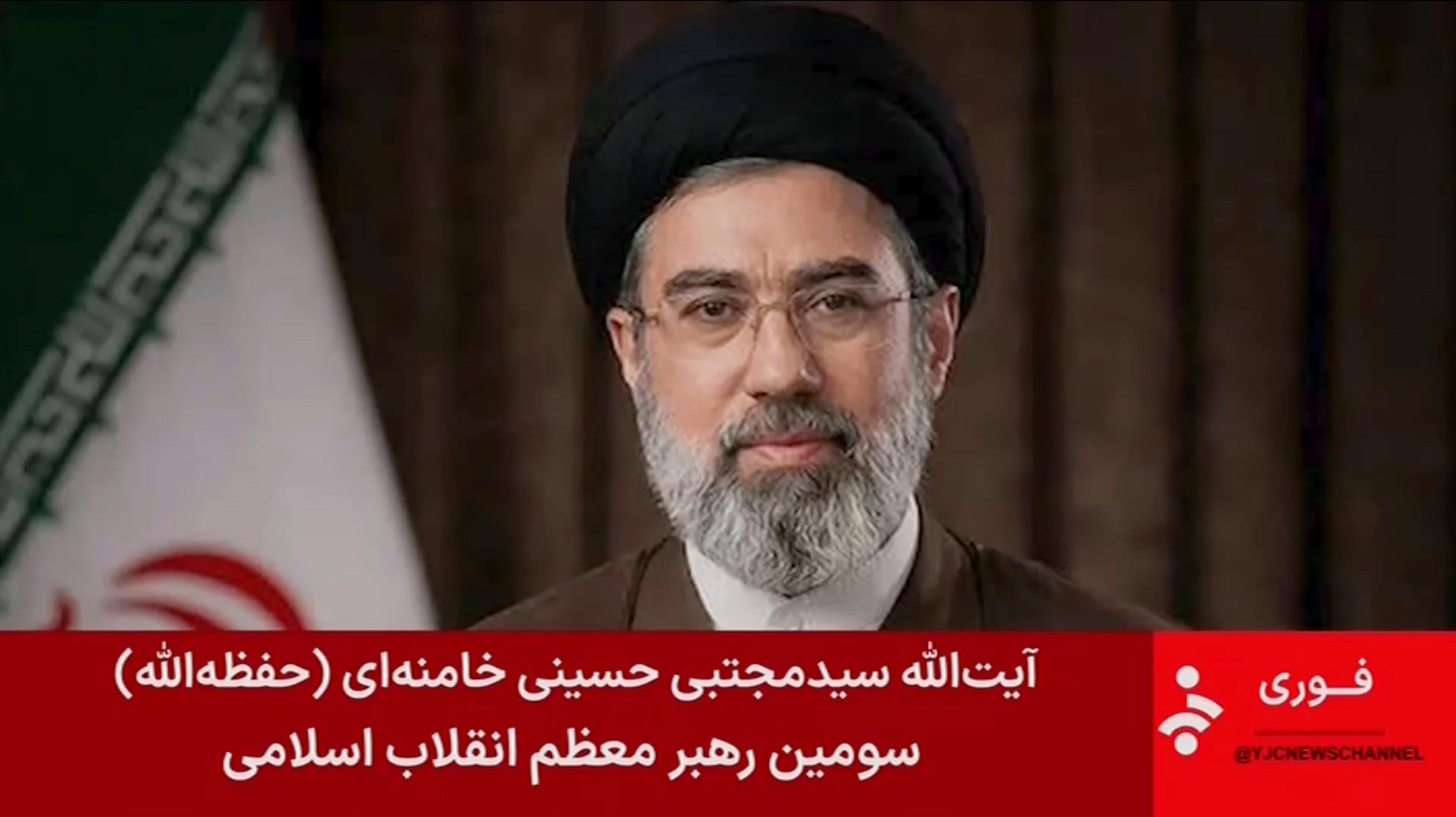
The Islamic Republic of Iran now has a new Supreme Leader. Mojtaba Jamenei, son of Ayatollah Ali Jamenei, has been appointed to the most powerful position in the Iranian political system following his father's death in the bombings launched by the United States and Israel in the current regional war.
The decision was made by the Assembly of Experts, the body composed of 88 clerics responsible for choosing the Supreme Leader. Several of its members confirmed that there is a "firm" and majority opinion in favor of Mojtaba, while another ayatollah stated that "the name of Jamenei will continue," closing a succession that had been discussed within the regime for years.
The choice of the previous Supreme Leader's son also represents a direct political challenge to Washington. In recent days, U.S. President Donald Trump had publicly disparaged Mojtaba Jamenei, calling him a "lightweight," and even suggested that the United States should have a say in the selection of the next Iranian leader. The decision now taken by the Iranian religious leadership is interpreted as a gesture of defiance in the midst of the war and as a sign that the Islamic Republic is not willing to surrender or accept a succession conditioned from abroad.
Trump responded shortly after the appointment with a new warning, stating that the new Iranian leader "won't last long" without Washington's approval.
Hours before the formal announcement, several clerics had indicated that the successor had already been chosen, although his identity was temporarily kept secret amid the war and increasing international pressure.
The United States and Israel had already warned that the future Supreme Leader would not be left out of the conflict. Israeli officials warned that any successor who continues the regime's confrontational policy will still be considered a target.
With his appointment, 56-year-old Mojtaba Jamenei now holds ultimate authority over all state matters in the Islamic Republic. The Supreme Leader controls the Armed Forces, oversees foreign policy, and exerts decisive influence over the judiciary, security services, and the country's main political institutions.
Born on September 8, 1969, in the holy city of Mashhad, he is one of the six children of the former Supreme Leader and has been considered one of the most influential — albeit discreet — figures in the system for decades. With salt-and-pepper beard and the black turban reserved for descendants of the Prophet Muhammad, Mojtaba has traditionally operated behind the scenes, from his father's office, at the core of Iranian power.
His real influence has been a subject of speculation for years both within Iran and in diplomatic circles. Some analysts already described him as a key player in the regime's decision-making, despite not formally holding any significant political position.
He is considered close to the more conservative sector of the Iranian establishment, particularly to the Revolutionary Guard, the powerful ideological military body that acts as the backbone of the regime. This relationship dates back to his participation in a combat unit at the end of the Iran-Iraq war (1980-1988).
His rise also sparks a sensitive debate within the Iranian political system. The Islamic Revolution of 1979 ended centuries of hereditary monarchy, and the arrival of the Supreme Leader's son to the highest state position de facto introduces a dynastic element in the Islamic Republic.
With Mojtaba Jamenei at the helm, Iran opts for continuity of the regime's hard core at the most critical moment for the Islamic Republic in decades.