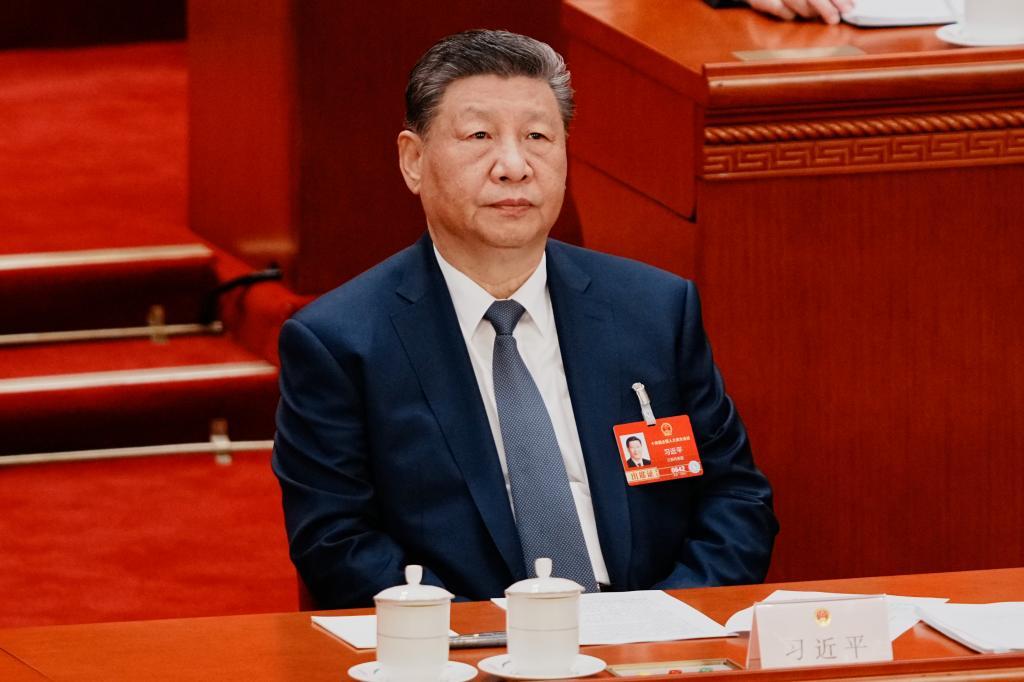
Amid escalating conflicts in the Middle East and a few weeks before a key summit in Beijing between Donald Trump and Xi Jinping, China's Foreign Minister, Wang Yi, used his annual press conference to defend China's role as a guarantor of global stability and to send a message of restraint.
The intervention took place on Sunday at the National People's Congress (NPC), the annual meeting of the Chinese legislature. In this setting, the press conference of the head of diplomacy of the world's second power has become one of the few moments of the year when Beijing presents its worldview to foreign media.
"The history of the Middle East has repeatedly shown that the use of force does not solve problems and that armed confrontation only breeds new hatred and crises," said Wang, who used an ancient Chinese proverb to reinforce his argument: "Wars are sinister instruments that should not be used without justified cause."
The Chinese minister called for an immediate ceasefire to prevent a regional escalation. "This was a war that should never have happened. All parties must return to the negotiating table as soon as possible and resolve their differences through equal dialogue," he insisted. This week, Beijing pledged to send a special envoy to the Middle East to try to mediate in the conflict, potentially indicating a more active diplomatic role for the Xi Jinping government.
Beijing maintains close economic and strategic ties with Tehran, a key partner in its strategy to expand influence in the Middle East. However, Wang avoided openly aligning with the Iranian regime and opted for a more balanced discourse, also seeking to reinforce China's image as a responsible power. During his speech, he described his country as "the most important force in the world for peace, stability, and justice."
Wang articulated China's international position around five principles that, according to him, should guide conflict management. The first is respect for national sovereignty, which he defined as "the cornerstone of the international order." In this sense, he emphasized that Iran's sovereignty, security, and territorial integrity must be respected. "Force is not synonymous with right, and the world cannot return to the law of the jungle," he said, citing as the second principle the avoidance of excessive use of force.
The third is non-interference in the internal affairs of other countries, a central doctrine of Chinese diplomacy that Wang mentioned to indirectly criticize the United States. "The peoples of the Middle East are the true owners of this region," he stated. The fourth principle involves prioritizing political solutions to international crises, and the fifth focuses on major powers acting responsibly.
Beyond the current conflict, the minister's press conference was marked by a deliberately moderate tone regarding relations between Beijing and Washington, a significant aspect in light of the planned visit by U.S. President Donald Trump to Beijing later this month. Wang stated that Beijing and Washington need to "establish a positive atmosphere, properly manage their disputes, and eliminate unnecessary disruptions."
The Foreign Minister's press conference, always closely followed by diplomats and analysts, once again made clear the goal of the Xi Jinping regime: projecting China as a responsible power while navigating an increasingly fragmented world order.