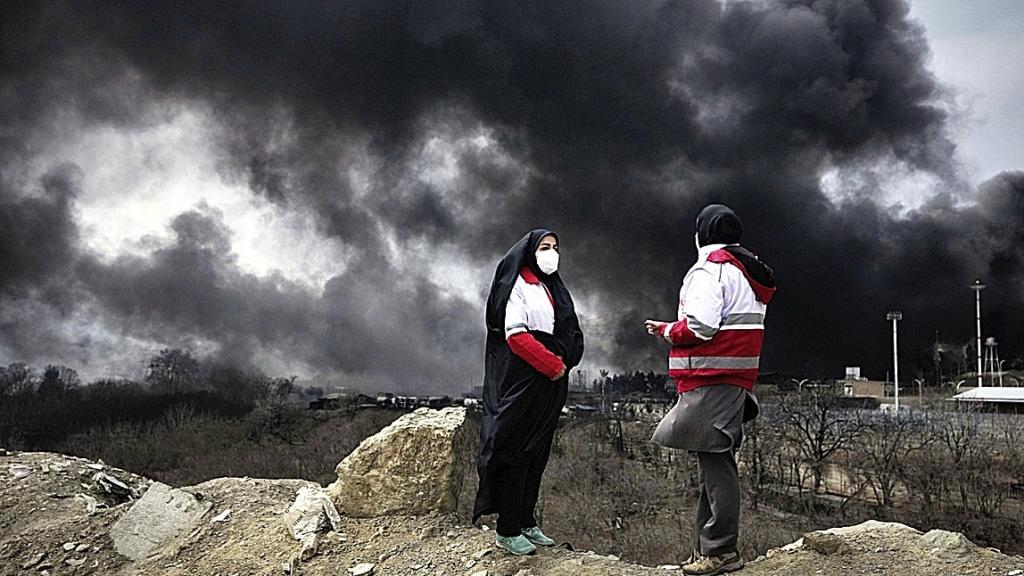
The intense bombings carried out during the night by Israeli forces against energy infrastructures have left an unprecedented pollution trace in the city. According to numerous witnesses, the precipitation that fell on the metropolis seemed like "oil rain", leaving puddles of intense black color and fuel residues on the streets.
The situation is so serious that Iran's Environmental Protection Organization has issued an urgent statement urging the population to stay indoors due to the high toxicity of the air. The toxic cloud is a direct result of the attacks on four crude oil storage facilities and a transfer center in the provinces of Tehran and Alborz. Keramat Veis Karami, director of the National Iranian Oil Products Distribution Company, has confirmed the death of four workers, all tanker truck drivers.
The senior official described the visual impact of the offensive as those "attacks that made the Iranian night shine as if it were day." Despite the damages, authorities ensure that the gasoline supply is guaranteed and urge calm to avoid collapses at gas stations. Since the joint hostilities of Israel and the United States began last Saturday, more than a thousand Iranians have lost their lives, and thousands of buildings have been reduced to rubble.
The offensive has not discriminated targets, reaching from the presidential palace and the offices of the late Supreme Leader, Ali Jameneí, to purely civilian infrastructures. The impact on the civilian population has been particularly brutal in places like Nilufar Square, where a U.S. attack caused the death of 20 people by hitting residential buildings near a military base.
Furthermore, the destruction has extended to healthcare centers, with at least two hospitals hit, and to the sports field, with the demolition of a futsal court designed to accommodate 12,000 spectators. While the Israeli Army maintains that their targets were fuel depots used exclusively by Iranian armed forces, the reality on the ground shows extensive damage to basic services and densely populated areas. Tehran is now trying to regain some normalcy under a sky that still maintained the darkness of the night at mid-morning due to the dense columns of smoke and burnt oil.