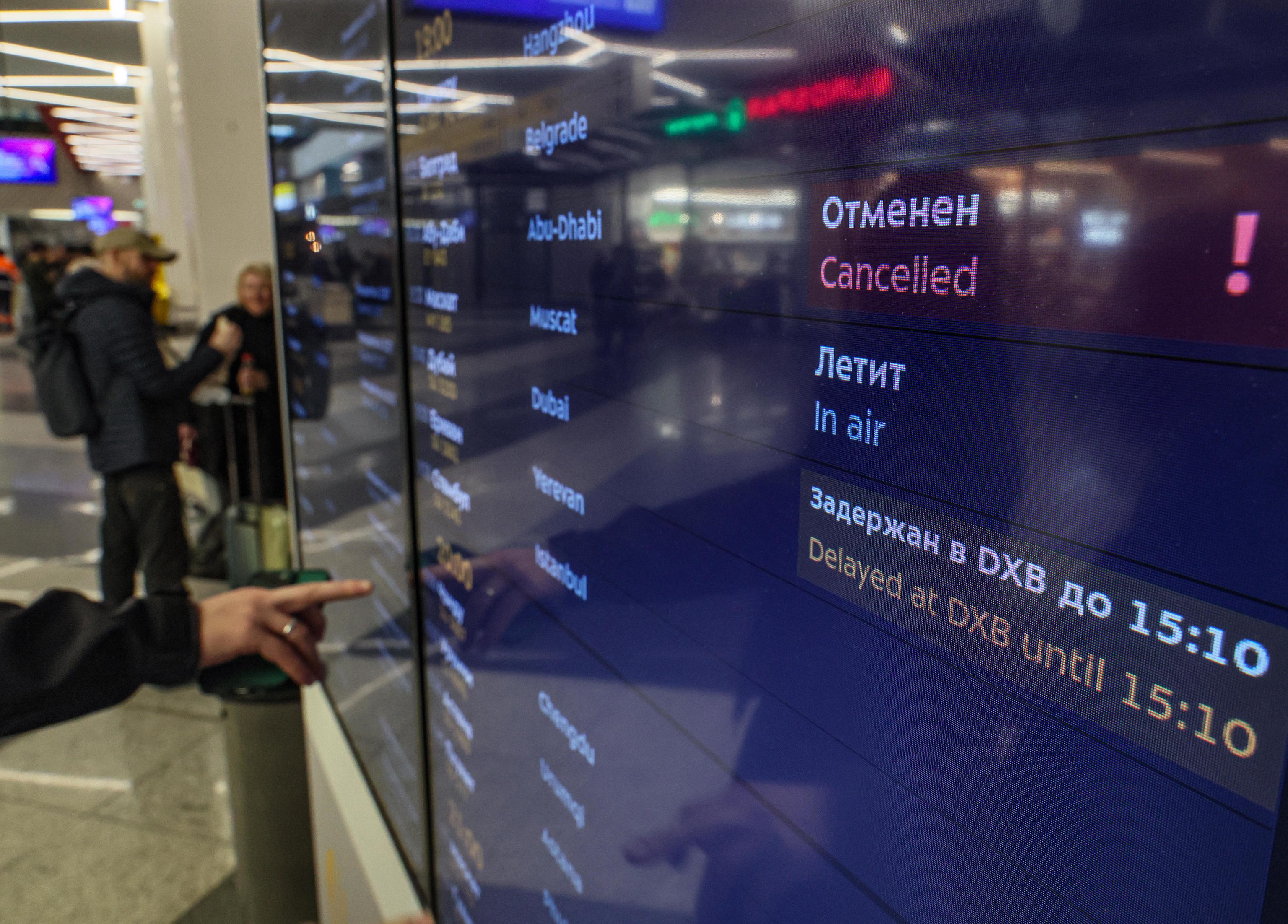
The escalation of the conflict in the Middle East has directly hit international tourism, leaving thousands of passengers stranded and significantly disrupting air traffic in a key region for global connections. The closure of airports and flight restrictions in much of the Persian Gulf has caused massive cancellations and a chain of disruptions affecting both travelers in the area and those using these airports as layovers.
In Spain, dozens of flights have been canceled, and the government estimates that around 20,000 people remain stranded in the region. Aena's airport network operates an average of more than 5,500 daily flights, of which around 35 connect to the Middle East and have been affected by the limitations.
Since the conflict began, travel agencies have seen a surge in cancellations, especially to destinations like Oman, Jordan, or Dubai, according to the Spanish Confederation of Travel Agencies (CEAV). The impact, however, extends beyond these countries, as many flights to Asia and Oceania use hubs like Doha, Dubai, or Abu Dhabi as connecting points, disrupting numerous itineraries.
Agencies are now working to rearrange trips and offer alternatives, with special attention to passengers who were supposed to return in these days. In some cases, the situation is particularly complex. "We have clients stranded in different destinations, and it's impossible to bring them back because there is no flight availability," explain from the travel agency Bidtravel. Some travelers in countries like Thailand or Vietnam have no return options until late March due to the saturation of the few available routes.
Faced with this scenario, the Spanish Federation of Territorial Associations of Travel Agencies (Fetave) and the National Union of Travel Agencies (UNAV) denounce that the current regulatory framework is not prepared to deal with extraordinary crises in global connectivity. Both associations demand the creation of a crisis protocol to coordinate the actions of airlines, suppliers, and authorities in situations like the current one.
At the same time, the deteriorating security perception in several Middle Eastern destinations is beginning to impact international tourist demand. Although it is still early to measure its extent, initial signs indicate that some European and American travelers are starting to redirect their plans to destinations considered safer.
This shift in security perception is already affecting the habits of European and American travelers, who are diverting some of their interest to other destinations, both closer and long-haul. This is indicated by an analysis by Mabrian by Data Appeal, which suggests that the evolution of the conflict is progressively influencing tourists' confidence.
American travelers, in particular, tend to react quickly to any deterioration in security perception. Therefore, destinations close to the conflict, such as Egypt, Turkey, or Jordan, are already experiencing an indirect effect on tourists' evaluation, even if they are not directly involved in the war.
The data from the Security Perception Index (PSI) show a significant deterioration in several Gulf destinations after the start of military operations in Iran on February 28, albeit with varying intensities by country. Bahrain, Oman, and Qatar experienced the most pronounced declines in the early days, while the United Arab Emirates and Saudi Arabia have shown more resilience, with more moderate declines and initial signs of stabilization.
Additionally, the conflict is generating a "contagion" effect in other nearby destinations that many travelers perceive within the same risk zone. This is the case for Jordan, Turkey, and Egypt, which also show declines in security ratings, albeit more contained. These changes are significant because, over the last decade, many of these countries had significantly invested in strengthening their security image as a cornerstone of their tourism positioning.