Twenty-three years ago, the PSOE raised the banner of No to the war when Spanish troops were sent to Iraq. José María Aznar was the Prime Minister and his decision to participate in a mission to eliminate weapons of mass destruction - which later turned out to be non-existent - mobilized the socialists to claim that slogan. Four words that became an electoral promise and translated into President José Luis Rodríguez Zapatero ordering a hasty withdrawal from Iraq just a month after taking office. The diplomatic consequences were enormous, and realigning the relationships required significant sacrifices: increased contingent at the Afghan base in Herat, more military intelligence presence in Rota... Two decades later, Pedro Sánchez, in his eagerness to position himself as the leader of anti-Trumpism, resurrects the No to the war, but his subsequent attitude differs from that of Zapatero.
EL MUNDO has contacted five sources who experienced the first No to the war on both sides of the Atlantic. Individuals linked to diplomacy and the Armed Forces. Four of them are still active and request anonymity. Only the former ambassador to Washington, Javier Rupérez, agrees to speak on the record to analyze the differences and similarities between 2003 and 2026.
"Now the same thing is happening, it's a second version of a similar event," analyzes the first expert consulted. "Spain was a top-level ally and things took a tremendously abrupt turn," recalls another. Rupérez vividly remembers those days. "The withdrawal of Spanish troops from Iraq caused deep irritation in the American Administration. I was still the ambassador in Washington, and despite having had excellent relations, possibly the best, the irritation was very visible, to the point that Bush's Chief of Staff, Condoleezza Rice, called me a couple of times in a very irritated tone to express her discontent," he confesses.
From the perspective of a now retired general, the Bush Administration "was not so bothered by the troops being withdrawn, as they understood it was an electoral promise, but by how it was done, hastily." "They claimed that Spain had endangered the lives of American soldiers with the withdrawal," he asserts. This argument was put forth last week by Treasury Secretary, Scott Bessent.
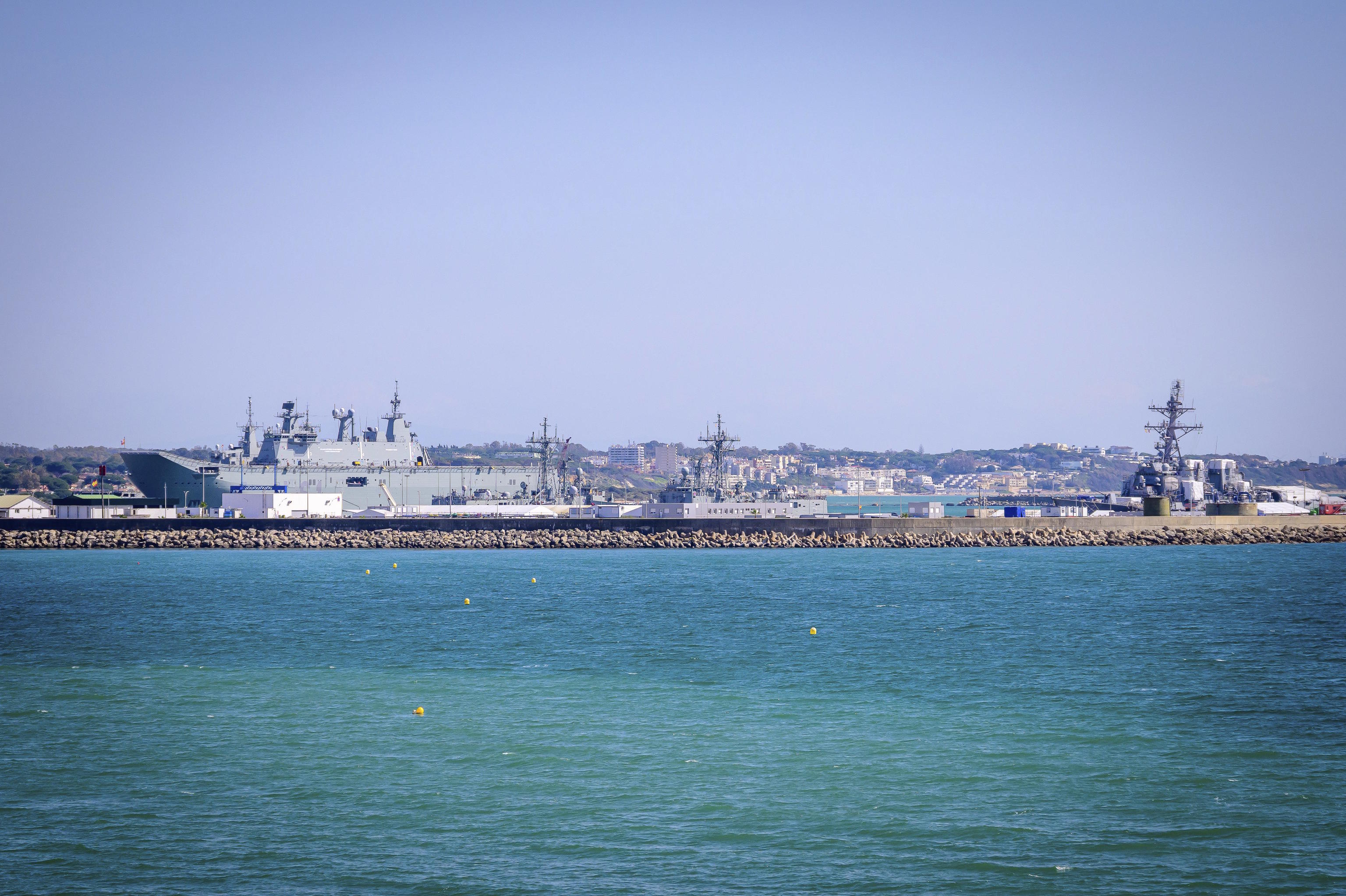
Because, 24 hours after the US and Israel's attack on Iran, it was confirmed that two US destroyers docked in Rota are in the Eastern Mediterranean to provide support during the offensive. The Government made efforts to affirm that Spanish bases would not be used in the conflict. This is stipulated in the agreement, but there have been no reports of direct governmental discussions to impose an explicit prohibition. The only public contact occurred on Wednesday.
Defense Minister, Margarita Robles, met with the American ambassador, Benjamín León. During the meeting, Trump's press secretary, Karoline Leavitt, appeared to state that Spain would collaborate. Foreign Affairs Minister, José Manuel Albares, denied this, but the next morning the dispatch of the frigate Cristóbal Colón to Cyprus as an escort for the French aircraft carrier Charles de Gaulle was announced. "These movements create confusion. And with confusion, I don't know if things end badly, but certainly deviously," analyzes Rupérez.
All sources agree that Sánchez's attitude is influenced by his partners. Twenty-three years ago, "the consequence was a decrease in Spain's importance abroad," explains one individual. Another recalls how they went "from receiving Colin Powell at the embassy to maintaining a very hostile attitude." However, after withdrawing the troops, the Government made "an effort to explain and redirect the situation." "Moratinos immediately traveled to Washington and met with Condoleezza. It was very hostile, but they met." Now there seems to be no interest: "Zapatero tried to redirect the relationship after the No to the war, but Sánchez is comfortable in this belligerent attitude," analyzes another source.
"Times and actors have changed, but we will pay tolls, now we will have to go through a calvary," reasons another of the voices consulted. "It is difficult to predict how far we will go because it is difficult to foresee the behaviors of each other, in Madrid and in Washington, but there is no doubt that at this moment the relationships are cold," points out Rupérez, who laments the stance of government allies calling for Spain to exit the NATO: "It's as if we are going back to the Franco era when Spain was nowhere."
Meanwhile, the Government's policy focuses on strengthening ties with China. Instead of seeking ways to reconcile with the United States - there have been no reports of Foreign Affairs Minister Albares contacting Marco Rubio since the conflict began - the President is set to travel to Beijing again next month. "It is evident that there is a preference for relations with China," says Rupérez. "This is a very important element to consider in these events," affirms another source.
A Spain-United States relationship with no signs of progress. Can this cooling of relations be resolved while Trump and Sánchez are at the helm of their respective countries? Rupérez answers: "I am not a prophet, but I see it as complicated. I see it as complicated because, of course, both are primarily thinking about the electoral results of their own attitudes. And they believe that by doing what they are doing, they benefit their potential voters. From that point of view, Trump and Sánchez have a lot in common."