Nervousness and tension in markets worldwide due to the US-launched war in Iran, keeping investors on edge on what is shaping up to be a gray Monday, which was expected to be bleak early this morning after the sales debacle seen in Asian stock markets. At this hour, Wall Street has opened with contained declines, around 1.5% for its main markets - such as the S&P 500 and the Nasdaq 100 -, while in Europe, the correction continues to moderate towards levels of around 1.5% for the Spanish and Parisian stock exchanges, the most affected in this session, as they opened with a 3% plunge this Monday.
The past hours have been marked by the price of oil, which surged by over 25% to surpass $120, its highest level since July 2022 (after the Russian invasion of Ukraine), driven by the US and Israel's attacks on Iran, well-founded fears of much more limited supply due to disruptions in the Strait of Hormuz, and the panic spreading among investors. A dangerous situation in the short term, unsustainable in the medium term. Capable of reshaping the world's geopolitical map, alliances, and current sanctions in a matter of weeks if energy becomes unaffordable and governments become nervous.
Currently, the Brent, the European benchmark, continues to surge with gains close to 10%, but remains below the $100 per barrel mark, a psychologically significant level for the markets.
Fears of a sharp rise in inflation, a possible recession, stagnation are multiplying, especially sensitive in an election year in the US. With a growing climate of distrust, tariffs punishing trade, and a military escalation opening more fronts. This is revaluing, for now, the dollar.
This weekend, Iranian refineries were hit by Israeli missiles, engulfing Tehran in fire and smoke. Kuwait confirmed it will cut its oil production, without providing details on the scale, and oil production in Iraq has dropped by around 70% in a few days. While Trump threatens to devastate the country, does not rule out troops on the ground, and demands "absolute surrender," Iran has defied his warnings by choosing the son of Ayatollah Jamenei as its leader.
Beyond the tension at the opening, investors have gradually reduced their pessimism after G7 powers hinted at releasing part of their strategic oil reserves to try to control oil prices. "There are rumors pointing to an intervention range of between 300-400 million barrels -equivalent to 25-30% of the G7's combined reserves-. The International Energy Agency itself has acknowledged that all options are on the table and emerges hours after Japan's decision to release part of its reserves," analyzed by Banca March.
Consequently, Asian stock markets closed with wild losses this Monday, nearing 8%. South Korea's Kospi index closed with an 8% drop; Japan's Nikkei plummeted by 7.6%, dragging down other Asian markets like Vietnam, the Philippines, or Taiwan. In China, losses were much more moderate, at 1.7% for the Hong Kong Stock Exchange, while Shanghai saw a drop of less than 1%. There were significant movements in gold, silver, cryptocurrencies, aviation fuel, gas, etc. "Traffic through the Strait of Hormuz has practically come to a halt, unleashing the most serious energy crisis since the 1970s and threatening the global economy," The Wall Street Journal headlined this Sunday. "This is by far the biggest disruption in world history in terms of daily oil production," warned energy historian Daniel Yergin in his article. "If it lasts for weeks, it will impact the entire global economy." European gas prices surged by 17% this Monday, adding to the 67% appreciation seen last week, exceeding €62/MWh.
The selling panic seen in Asia spread to Europe, where the session opened this Monday with significant losses that gradually moderated. The Ibex 35 opened with the biggest plunge in the Old Continent, at 3%, although with Wall Street open, the decline is around 1.5%. The Paris stock exchange also suffered another cut of around 1.4%, considering the weight of luxury companies in its quotation, which are also being affected by supply issues in a global business. The EuroStoxx 50 and the German DAX both lost 1.4%. In the US, the slump is focused on firms like United Airlines, down 7%; and tourism-related companies like Expedia or Carnival, down 6%.
The fear index, the US VIX, surged by 36% today alone, surpassing the 32 points, the highest peak in its quotation since the tariff crisis triggered by Donald Trump in early April last year.
In early May last year, Financial Times journalist Robert Armstrong coined, in an opinion column, the Taco Theory. That is, Trump Always Chicken Out. He always chickens out, always backs down. He always retreats. He said this thinking about how he had backtracked on many of his tariff announcements when the markets, especially the debt markets, had become very nervous due to the unilateral declaration of market war. Since then, it has been widely used, but the key day to see how the president reacts will be this Monday, a day of chaos and destruction that could wipe out hundreds of billions of dollars in a matter of hours.
The United States went to bed this Sunday almost in a state of panic. Oil prices have almost doubled so far this year. Ten days ago, they were at $60 per barrel. The US and Israel's attack on Iran caused them to rise, but Trump stated on Friday that there would be "new measures to reduce pressure on oil imminently. Oil seems to have practically stabilized," he said at an event celebrating Inter Miami's 2025 league title won by Lionel Messi.
The last hours of the weekend have sparked analyses from investment banks, macro cabinets, specialists, and media, witnessing an unprecedented supply crisis in its scale. "The current supply shock is roughly the same size as the five largest previous crises combined," warned The Kobeissi Letter a few hours ago.
The Strait of Hormuz has been practically closed for a week, and the problem goes far beyond oil, up to 20 million barrels per day. More than triple the shock of the Iranian Revolution or four times higher than the Yom Kippur War or the Gulf War. It also affects gas, almost all the sulfur on the planet, which comes from oil and gas refining. It affects fertilizers and the raw material for sulfuric acid, essential for copper extraction or cobalt used in transformers, batteries, and data center components. Not to mention soybeans or aluminum, at five-year highs.
With oil prices around $120 per barrel, Kobeissi's models indicate that if the crisis persists for 3 months, US inflation would rise to 3.7%, its highest level since September 2023, forcing the Federal Reserve, which changes presidents in May, to reverse its rate cuts. Goldman Sachs, in a note to investors, states that if the crisis is severe, with oil prices around $10 higher than now for three months, the year-on-year inflation rate in the US would likely rise from 2.4% in January to 3% in May.
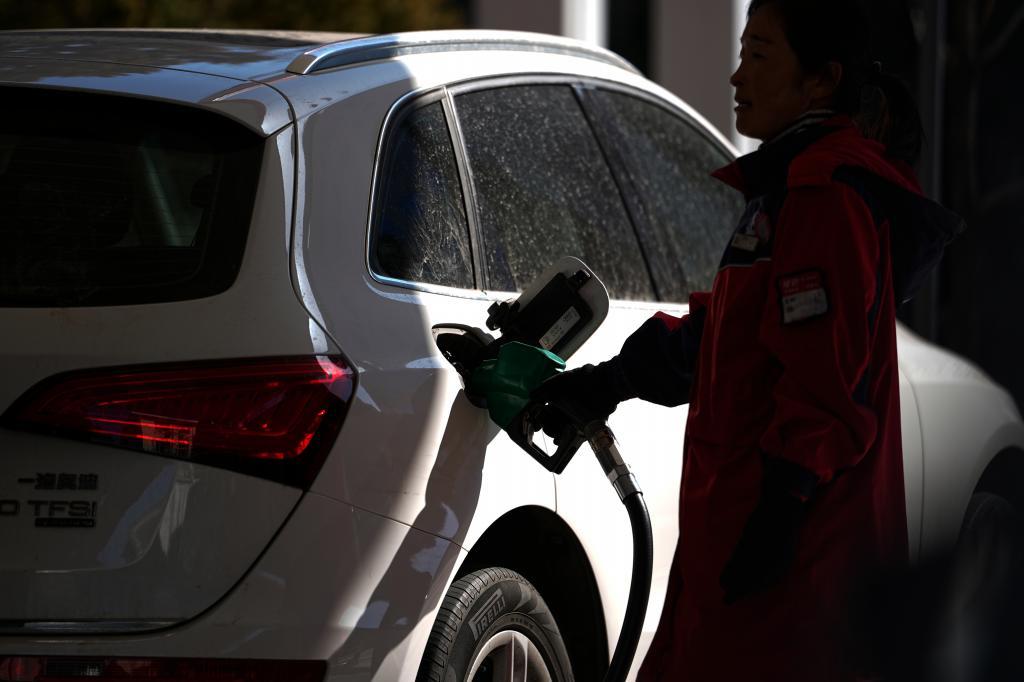
"If the oil supply shock persists, we believe that every 10% increase in oil prices should translate into a 10 basis point increase in overall inflation and a drag of 15-20 basis points on GDP growth," JP Morgan agrees. Gasoline across the US is now 46 cents more expensive per gallon than a week ago, according to the American Automobile Association (AAA), while diesel has increased by 83 cents.
"The Third Gulf War has disrupted approximately 20% of the world's oil supply for nine days and counting: more than double the previous record set during the Suez Crisis of 1956-57, which disrupted just under 10%. Compared to that, this represents the largest loss of oil supply in history, by a factor of two. Worse still, unlike previous crises, there is no spare capacity available," warned Bob McNally, president of Rapidan Energy Group.