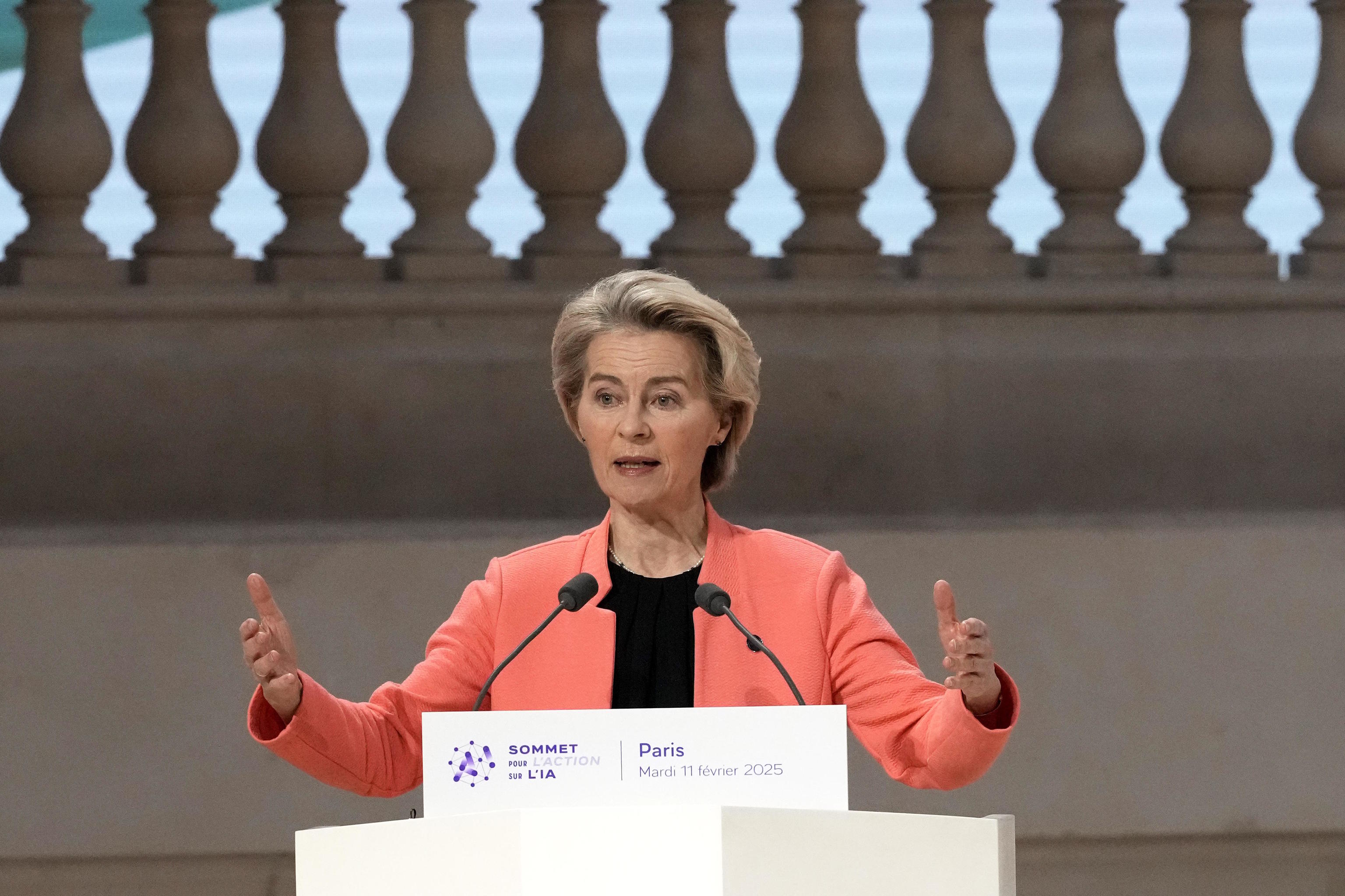
Ursula von der Leyen delivered a highly relevant speech yesterday in which, in addition to aligning with the United States and Israel in the Iran war, embraced a new world order. One very different from what Europe has always defended, based on rules that, according to the President of the European Commission, no longer exist.
"Europe can no longer be the guardian of the old world order, of a world that has disappeared and will not return. We will always defend and uphold the rules-based system we helped build with our allies, but we can no longer rely on it as the only way to defend our interests or assume that its norms will protect us from the complex threats we face. That is why we need to forge our own European path and find new ways to cooperate with partners," she said in the morning to the EU ambassadors stationed worldwide. A forum, therefore, of paramount importance.
And a few hours later, in the early afternoon, the President herself signed a manifesto with the head of the European Council, António Costa, where the language changed substantially. "Although the rules-based international order is under pressure, we firmly believe that dialogue and diplomacy are the only viable way forward," stated the document released after their meeting with leaders from Jordan, Egypt, Bahrain, Lebanon, Syria, Turkey, Armenia, Iraq, Qatar, Kuwait, United Arab Emirates, Saudi Arabia, and Oman.
"The European Union is a longstanding and reliable partner for the region in these difficult times and is willing to contribute in every possible way to help de-escalate the situation and facilitate a return to the negotiating table," the text added. There was no longer any reference to the end of the old order. This stance is characteristic of Von der Leyen, who believes that Europe must break away from the old Europe, as well as the European People's Party (EPP). A sort of hardline and a call for the EU to wake up. But there is strong opposition, not only from Costa but also from many capitals.
"It's difficult because admitting there is a new world order is admitting Europe's defeat," explain EU sources. "A sort of Darwinian law, the law of the jungle, is prevailing, with [Donald] Trump, Xi Jinping, or [Vladimir] Putin coming out on top. And there are other actors, like India, currently keeping a lower profile but surely with much to say in the future," they add in the EU capital.
"There will always be limitations to European foreign policy due to geography and geopolitics. We cannot solve all the world's problems or perfectly reconcile values and interests on every occasion. But what we can control is what guides our foreign policy and how we choose to exercise it. In times of radical change like today, we can cling to what once made us strong or choose a different path for Europe," Von der Leyen continued in her speech.
And she concluded: "We can build a foreign policy that makes us stronger at home, more influential in the world, and better partners for other countries. A foreign policy that is a central pillar of European independence, protecting our interests and promoting our values. Not with nostalgia or lamenting the old world, but shaping the new one." The message, therefore, is clear.
"Not a tear for the Iranian regime"
The aforementioned alignment with the United States and Israel was accompanied by a harsh criticism of the Iranian regime by Von der Leyen, who outright rejected the need to consider whether the conflict in Iran "is a chosen war or a necessary war".
"This debate partly misses the point. Because Europe must focus on the reality of the situation, see the world as it is today. I want to be clear: no tears should be shed for the Iranian regime, which has inflicted death and imposed repression on its own people and caused devastation and destabilization throughout the region through its missile and drone-armed allies," she also emphasized to the ambassadors.
The President of the Commission is also deeply concerned about the economic and migratory consequences of this conflict, which are already assumed to occur. And the duration, of course. In the EU capital, there is a growing conviction that it will not be a short war, as some initially thought. On the contrary, the decision to appoint Mojtaba Jamenei as his father's successor is a sign that Iran does not intend to stop the conflict, and they will continue "until they run out of missiles".