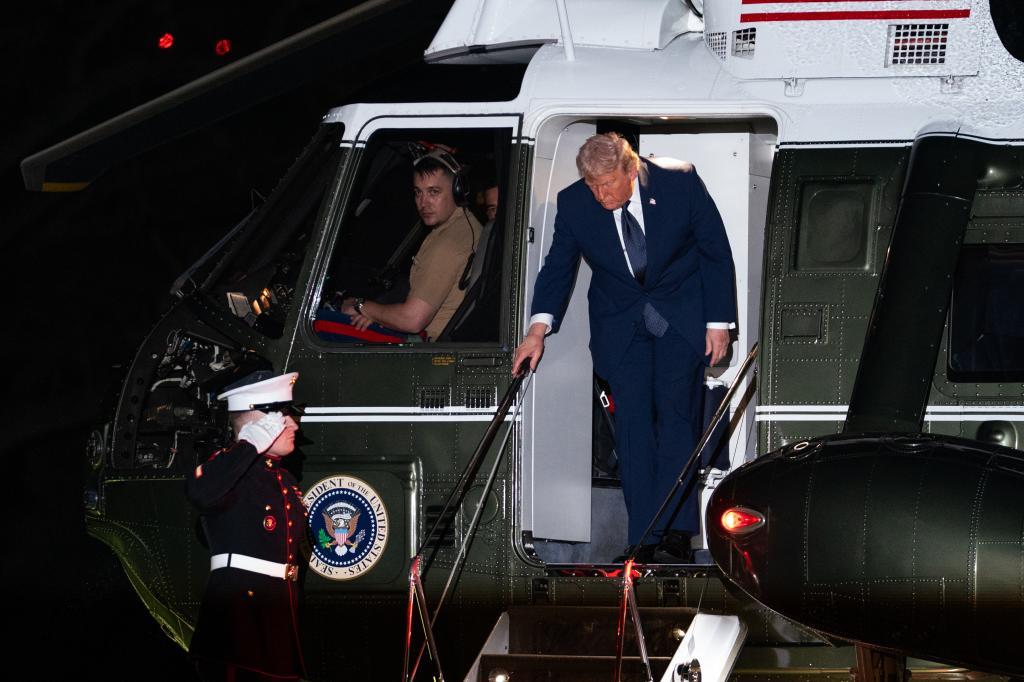
Over the past decade, Donald Trump has shown that he is a master at playing with the media, world leaders, opposition within his country, and markets. He knows how to bait them, make them hysterical, extremely reactive. He controls the timing, the message, the mechanisms. He is able to say one thing and the opposite and nothing happens, investors cling to the most optimistic message. And this Monday he has once again demonstrated this in one of the most delicate economic days. The week started with oil trading above $115 a barrel, with the biggest futures surge in a single day on record. With Asian markets plummeting and the American market looking very bad. And yet, with some tweets and a scheduled interview at the perfect moment, before the market closed, with a planned and ambiguous headline, he managed to relax investors, thinking that perhaps the war in Iran could be short, that oil will flow again without restrictions, and that the worst is over.
In reality, his message has been much less clear. With no promises of any kind, no dates. Trusting that it will be quick, but insisting that the goal remains to prevent the Iranian threat. Almost inevitable with the rise to power of the son of the slain leader on the first day of bombings.
The president, from Florida, said in a conversation with the CBS correspondent that "the war is practically over. They have no army, no communications, no Air Force." And added that things are "very advanced" compared to the initial estimated timeframe of 4 to 5 weeks of attacks. Shortly after boasting of having reached up to 5,000 targets in the Middle East, he repeated on half a dozen occasions that the bombing campaign had been like a "little excursion" to end "with bad people." "They possessed thousands and thousands of missiles and all kinds of weapons; most have already been destroyed, but their intention was to take over the Middle East. Those weapons were aimed at countries that had absolutely nothing to do with this matter. They intended to conquer the Middle East and try to destroy Israel. That is why we stopped them at the right time. And we are very proud to have participated in this action. All this will end soon; and if it were to erupt again, they would receive an even more forceful blow," said Trump singing victory and suggesting that the operation would be short.
And yet, he also constantly corrected and qualified himself: "The United States has already won in many ways, but we have not won enough," he said. "No one has any idea who will be the leaders of the country and we will not give in until the enemy is defeated totally and decisively," he seemed to correct, in line with what his Department of War said this same Monday: "We have barely begun to fight." And he repeated that the appointment of the son of Ayatollah Ali Jamenei was "very disappointing" and "worrisome," without clarifying whether his intention is to continue the attacks until he is also eliminated: "I don't want to get into that."
The markets have clung to his initial words, and the price of oil dropped to $85 after the highs anticipated by the futures. But the conflict remains wide open. The U.S. president has also briefly discussed his conversation today with Russian President Vladimir Putin. "We had a very good chat. There were many people on the line, both from our side and his. We were talking about Ukraine, which is an endless struggle because there is tremendous hatred between President Putin and President Zelenski: it seems they cannot agree. But I think, as far as that issue is concerned, it was a positive call. And obviously, we also talked about the Middle East, and he expressed his desire to be of help. I told him that he could be more helpful by ending the war between Ukraine and Russia. That would be much more useful. But we had a very good conversation, and he wants to be very constructive (...) he was very impressed," he said. Without clarifying either why he called the Kremlin and if he will lift the sanctions on Russian oil that he himself imposed a few weeks ago in the only hostile gesture towards Moscow since his return to power.
"We are temporarily exempting certain oil-related sanctions in order to reduce prices. Ultimately, we have a sanctions regime. So, in some countries, we will lift those sanctions until the situation in the strait normalizes. And who knows; maybe then we won't have to reimpose them. There will be so much peace... But when the time comes, the U.S. Navy and its partners will escort the tanker ships through the strait if necessary. I hope it is not necessary, but if it is, we will escort them from start to finish," said Trump, without mentioning Emmanuel Macron's proposal in that regard.
"We are ending the entire Iranian threat once and for all, and the result will be a reduction in oil prices —and gas— for American families. We have already achieved it. We did it. We managed to reduce them considerably. This was simply a necessary raid to carry out an indispensable task. We are very close to also concluding that work. Meanwhile, during this brief interruption, the United States offers political risk insurance to any tanker operating in the Gulf; that is, we are providing risk coverage. Perhaps we will escort these ships to provide them protection. We do not believe it is necessary; but if it is —and if they were to attempt any action—, the price they would pay would be incalculable. It would be so high that they would wish they had never tried; for it is imperative to maintain the flow of transit through the straits, since this situation affects other countries much more than it affects us, the United States"; he concluded.