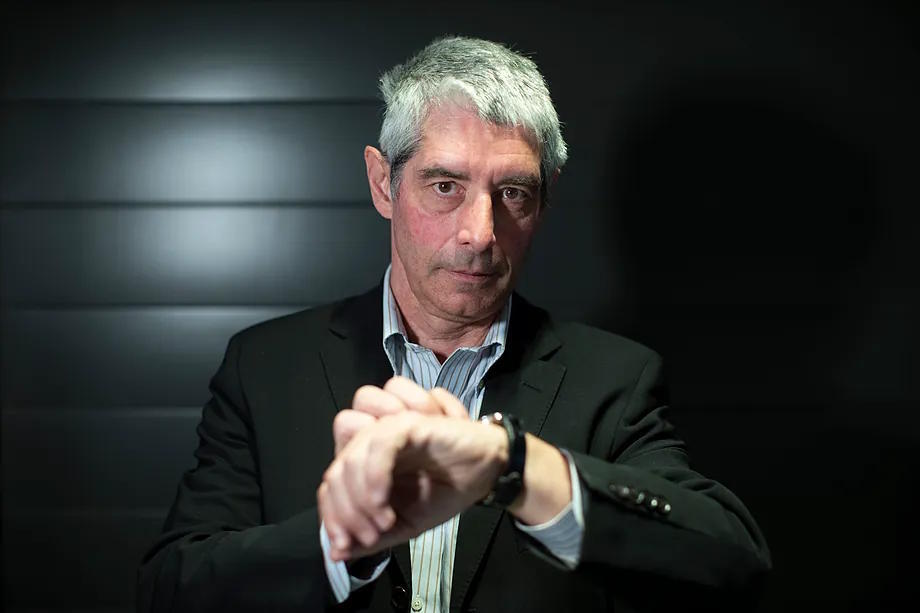
Question. He is a Colonel of the Air and Space Force in the reserve. What conclusion do you draw from these first days of war?
Answer. The U.S. attack was clearly anticipated, and Iran's reaction to internationalize the conflict is logical, involving the rest of the region and trying to pressure U.S. allies and markets to eventually make the Americans back off or soften their conditions. Currently, the closure of the Strait of Hormuz, attacks on refineries in the region affecting oil and gas production, and attacks on hotels are creating unease and pressure from third countries.
Q. You live in Qatar, although this attack caught you in Spain. What was the feeling in the region? Was this expected?
A. There was confidence that it would not happen due to Iran's weakening in the region, direct attacks in the 12-day war, neutralization of armed groups like Iran, Hezbollah, or Hamas, and the fall of the Syrian regime... Objectively, Iran was less of a threat. But on the other hand, the weaker a country is, the more temptation there is to finish the job.
Q. You published 'A Deceptive World,' an essay on war, technology, disinformation... Is this war different from previous ones?
A. It is not groundbreaking compared to Ukraine, Venezuela, or Gaza, but it is compared to everything before. The big change came in the early weeks of the Ukraine war. Initially, it was a conventional war, but not anymore. There is complete visibility of everything happening on the ground, drones, satellites, vast amounts of data, artificial intelligence from major companies integrating and drawing conclusions from that data... Before, it took 48 hours from receiving a possible target to assigning the mission and bombing. Now, in Ukraine or Iran, an identified target is attacked in three minutes. There are thousands of drones flying at any given moment and thousands of cameras. In Venezuela, we saw how with the use of artificial intelligence and cyberattacks, Venezuelan air defense can be neutralized. War has become more technological and escalates much faster.
Q. Is the war for data the real Third World War?
A. Probably. The issue is that in this war, Europe starts from an uncomfortable position. China and the United States are the main actors. In Gaza, the phone lines are Israeli. Whoever controls communications and data storage, which is the cloud, with the three American platforms (Amazon, Google, and Meta), has absolute control over the population. Another problem is how governments are using this data. Autocratic regimes benefit greatly from this control offered by AI, while in democratic regimes, freedom of the press and the separation of powers are compromised.
Q. The government wants to control companies that handle AI.
A. We saw this in China, in the showdown Jack Ma, the founder of Alibaba, had with the Communist Party, almost positioning himself as an alternative, and Xi Jinping stopped him and he went into exile in Japan. Now he has returned, but with less power. In the United States, we are seeing it now, there has been a change in attitude from companies. Eric Smith, CEO of Google, now defines himself as a digital arms dealer. Companies have aligned themselves, and during Trump's inauguration, all digital oligarchs were present.
Q. What role do these companies play in the war?
A. In Gaza, Israel's operations were led by military personnel relying on decisions made by AI, with processing done in Microsoft or Google's cloud. In fact, there was some scandal in the digital community due to Microsoft's involvement, providing services that enabled those attacks. In Iran, there is not as much information yet, but the involvement of the cloud, automated data processing, the use of autonomous weapons involving AI... All of that comes from these companies.
Q. Venezuela and Iran in two months. Has AI assistance accelerated Trump's decisions?
A. Yes, he now has more analytical capacity and can make decisions on different fronts. He can have a front open in Iran and another in Cuba. What the Pentagon does is based on an army of algorithms analyzing all that information. But it also accelerates the pace of battle and escalation. The other day there was news that simulations of this war were run on 21 AI systems, and 20 quickly led to a nuclear war. But the responsibility will still lie with humans. The machine can pull the trigger, but someone makes the decision.
Q. In this possible escalation, what role do you think China could play?
A. China plans long-term and follows its program, it is unlikely to mobilize based on others. Losing oil from Venezuela and Iran affects it, but it can compensate with what it receives from Russia, so I don't think that will alter its pace. For example, it would be dangerous if China provided material to Iran. That could change the course of the war.
Q. There are evident gaps in NATO. Could there be a before and after this war?
A. The erosion of trust on both sides of the Atlantic is serious, but the relevant aspect is not NATO, it is the change in the entire global governance system that emerged after World War II. The creation of the UN, NATO, the IMF, a bipolar system... That is what is being questioned. In that sense, Trump is a symptom of the decline of that system. We have moved from large forums where everything is shared to minilateralism of small groups with specific interests, not caring about other partners. We are in the transition between these two systems. Those who understand it first will have an advantage. Looking at Europe, those who insist on maintaining the privileges of the previous system will start the transition later. Europe will have to make difficult choices and will have to give up things to remain relevant. Between protecting its citizens or providing welfare. Draghi's report says Europe has to be an actor, not 27. It is complicated and caught us unprepared, without consensus or common interests. If you have 27 interests, you have 27 armies. Not one.
Q. What position does that leave Spain in?
A. In an uncomfortable one. Not only do we belong to a scattered bloc, but we have also lost some industrial relevance and political influence.
Q. Is the decision not to leave the bases to the United States understandable?
A. One thing is to defend Cyprus, an ally, and another is to allow the use of your bases to attack a country outside of NATO. It is a controversial decision, and I do not want to judge it, but it links to the previous question. Sometimes it is difficult or incompatible to defend your interests and defend your values. If you defend your values, you might be harming your interests.
Q. In this new global reality, is Spain obliged to choose sides between the United States and China?
A. The more polarized the situation, the more we will need to be aligned. Not being aligned will not be allowed. We will have to choose. It is evident. This is the case for all countries except India or perhaps Brazil, but few can afford it. Spain will have to choose what Europe chooses.