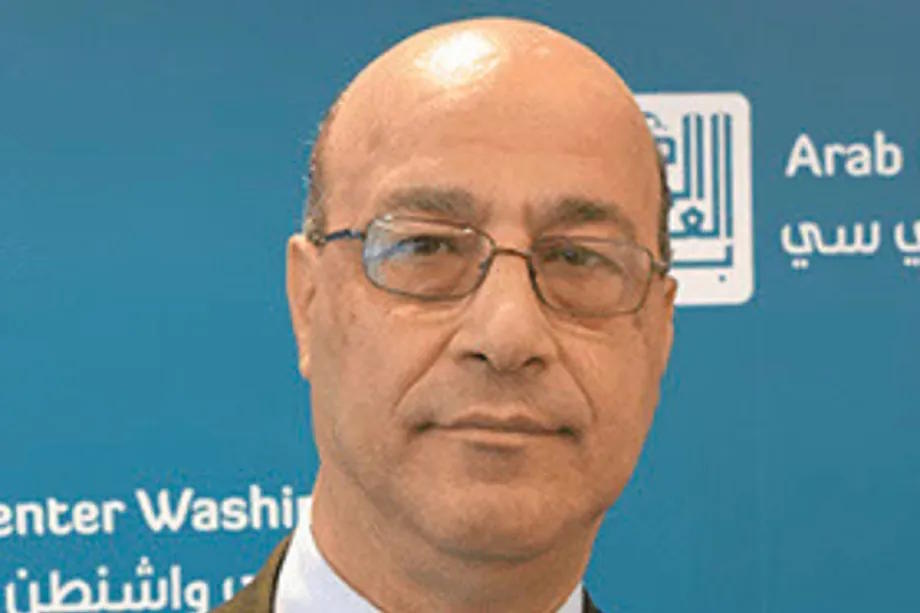
Imad K. Harb is the Director of Research and Analysis at the Arab Center of Washington, a think tank that observes the political, social, economic, and cultural impact of U.S. foreign policy in the Middle East, with its headquarters (Arab Center for Research and Policy Studies) in Doha.
At 71 years old, Harb has combined consulting and teaching throughout his career. He has taught at Georgetown, Utah, and San Francisco universities. He specializes in Arab-American relations and has co-authored reports on Iran. He responds via email.
Question. Modern history confirms that no regime has fallen solely after facing a bombing campaign. Why did someone in the US and Israel think this time would be different?
Answer. The US leadership is subject to Trump's narcissistic impulses. He is convinced that with military might, he can achieve anything. He committed to the Israeli attack plan and did not understand the ideological foundations of the Iranian regime. He thought their leadership would avoid conflict and that troops wouldn't need to be deployed on the ground. It's a gamble that won't succeed. A hardline regime, willing to cold-bloodedly kill thousands of its own protesters, will not collapse with an aerial military operation.
Q. Is it harder to win a war when its promoters can't even explain to their fellow citizens why they started it?
A. It is true that there was no real justification for the attack. There was no Iranian threat to US interests, no evidence that Iran possesses nuclear weapons, no attacks on US assets in the region. That's why the Trump Administration is desperately searching for a reason to convince the American people that the war was imperative when it was actually instigated and encouraged by Israel. The US simply got dragged into it.
Q. What is the worst-case scenario for the region, the US, and the rest of the Western Hemisphere?
A. The worst scenario is the continuation of the war. US and Israeli bombings are affecting the lives of the Iranian people. Personally, I don't care about the regime or the clerics leading it. I believe Iran is for Iranians. The same applies to the Gulf nations and international interests there. I have no doubt that when this war ends, Iran will not look kindly upon the monarchies that allowed the US and Israel to bomb a neighbor without real justification.
Q. Was such an escalation in the Gulf region expected if the war broke out?
A. It was foreseeable that Iran would respond with this intensity if attacked by Israel, the US, or both. The US should have known that the Iranian response would aim to make its presence in the Gulf as painful as possible. The regional countries also knew they would be the first to suffer the Iranian military response, but they have no way to convince the Trump Administration due to their heavy dependence on Washington.
Q. Do Iran's neighbors fear the consequences of a regime change?
A. Yes and no. Yes, because they fear that what comes next might be an even more ideologically radicalized regime. They have waited a long time for Iran to become somewhat more pragmatic, and now they fear that all hope is lost. And no, because if the new regime is moderate and not controlled by religious leaders, it might be easier for them to deal with. But this possibility is very remote.
Q. Is Israel's military superiority in the region a deterrent or an incentive for an indefinite arms race?
A. Indeed, it is an arms race. This operation will strengthen the argument for those who want the Islamic Republic to acquire nuclear weapons. Iran will undoubtedly increase its arsenal of ballistic missiles and drones. As for the Gulf countries, I am sure they will stock up on weaponry as if they didn't already have enough. Trump will be delighted with the business he will do with them. They will seek more Patriots and other weapons to face this military challenge. The classic security dilemma will repeat itself: one country develops or buys a weapon, and the other develops or buys another to counter it. And so on.
Q. Would a deployment of US forces on the ground without Congressional approval and after the experiences in Iraq and Afghanistan be visible?
A. No, not at all. Certainly not before the midterm elections [scheduled for November 3].
Q. Are you surprised by China's lack of response regarding a key ally like Iran?
A. No. China is waiting for the US to make a mistake to take advantage of it, and this is a colossal mistake. China believes that by endangering the peace and security of the Gulf countries, the US gives China a great opportunity to appear favorable to them. China acts discreetly. Their ships are the only ones Iran allows to cross the Strait of Hormuz.
Q. Trump has harshly criticized Spain after it denied the use of its military bases for flights involved in Epic Fury and called it a "terrible" ally. How concerned would you be if you were in President Sánchez's shoes?
A. Trump tries to intimidate other states to fulfill his narcissistic desires. Sánchez was not the only one to stand up to him. Starmer and a few others have as well. I really liked Sánchez's words rejecting the war.