The clock in the hallway remains stopped at 3:37 p.m. on March 11, 2011. At that time, the tsunami waves, walls of water up to 15 meters high, reached the second floor of the Ukedo elementary school, a small fishing village in the prefecture of Fukushima. The three-story gray concrete building still stands as an involuntary monument to the violence of nature. Inside, time remained encapsulated. The mud has disappeared, but it left its mark: a dark line running along the walls more than two meters high. Some chalk remnants can still be seen on the blackboards. Among the rusted lockers and crooked shelves, English exercise sheets still survive.
"At 2:46 p.m., the ground began to shake with a violence we had never felt before. There were 82 students that day. The children were screaming, and the first thing we did was ask them to get under the desks. Minutes after the earthquake, the tsunami alert came," recalls Keiko Sato, one of the teachers who was at the center that day. The school is barely 200 meters from the sea. "The principal immediately ordered evacuation to a small hill. The children were very scared, but they lined up and went out. That decision saved all our lives."
When they came out, the landscape was no longer the same. Electric cables swung like vines, and some houses had collapsed. But the most unsettling was the sound of the sea. "It was like a very deep roar," Sato recounts. From the hill, teachers and students watched as the waves advanced inland, sweeping away the port of Ukedo and throwing fishing boats onto the rooftops.
Part of the school was submerged. Less than five kilometers away, the reactors of the Fukushima Daiichi nuclear power plant began to fail after losing the cooling system. The core meltdown released radioactive material and triggered the worst nuclear accident since Chernobyl. Within hours, the government ordered the evacuation of a 20-kilometer radius.
The Ukedo school is on the outskirts of Namie, a town where more than 20,000 people lived before the earthquake - a magnitude 9.1, the worst to hit Japan - the tsunami, and the subsequent nuclear disaster. Today, much of the municipality has reopened. The authorities have decontaminated the land, rebuilt streets, and installed new services. On paper, Namie has come back to life. But only about 2,000 residents have returned. The echo of a ghost town is everywhere.
The main avenue starts at a completely renovated train station. It is wide, with new streetlights and freshly paved sidewalks. The traffic signs shine as if they had just come out of the factory. But there are hardly any cars circulating. In one corner, there is a modern supermarket. No one enters.
Many houses have been restored, with new roofs and well-kept small gardens. In others, vegetation has won the battle: ivy climbs the walls, and mailboxes gather dust. On some facades, there are signs with old photographs of the neighborhoods before 2011: summer festivals that attracted thousands of tourists, streets full of bicycles.
"The problem is no longer the fear of radiation," explains a municipal employee. "Most former residents have rebuilt their lives elsewhere. They found jobs, their children changed schools. Returning is not so simple anymore, even though Namie is now considered a safe area."
As the 15th anniversary of the Fukushima triple disaster approaches, which combined earthquake, flooding, and radiation - with more than 20,000 people dead - EL MUNDO returns to the epicenter to traverse a geography where time seems to have fractured. On one side are the rebuilt cities, with new train stations, open supermarkets, and rice fields being cultivated again. On the other side, the invisible scars of a nuclear terror that forced the evacuation of more than 150,000 people.
A 15-minute drive from Namie is Futaba, another typical modest rural Japanese municipality that remained frozen for over a decade. In 2022, the authorities removed the "exclusion zone" label, rebuilt the train station, erected new buildings to attract former residents who never returned, and decorated some streets with murals for tourists who rarely show up. On an old street, a blue sign remains as a past irony: "Nuclear energy is the bright future of the city."
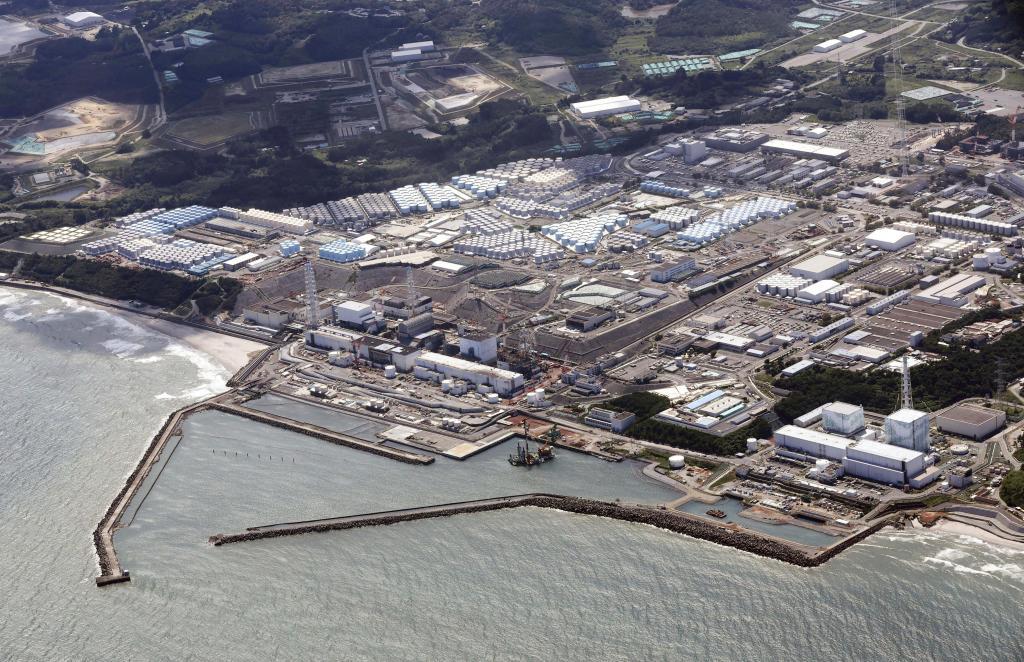
The nuclear power plant is less than four kilometers from Futaba, although it is impossible to approach without special permission. From the road, the white buildings of the plant are barely distinguishable among the hills and the sea. One of the most complex battles in the long dismantling process is still being fought there: what to do with the huge volume of contaminated water accumulated.
These days, the eighteenth discharge of treated water from the plant into the sea is taking place, a plan that the Japanese government initiated in 2023 and will continue for decades. The goal is to gradually release over a million tons of accumulated water used to cool the three reactors that melted down after the tsunami into the Pacific. For over a decade, it has been stored in nearly a thousand metal tanks that now occupy much of the industrial site and are nearing their capacity limit.
In Tokyo, they argue that controlled release is the only viable long-term solution. Spokespersons from the plant operator, the electric company Tokyo Electric Power Company (Tepco), assure that the water undergoes a complex purification process through a system that removes most of the dangerous radionuclides, including cesium and strontium. Subsequently, the liquid is diluted with seawater to levels well below the limits set by international standards. The plan is technically supervised by the International Atomic Energy Agency.
However, controversy remains significant both inside and outside Japan. Neighboring countries like China or South Korea have criticized the plan and demanded greater scientific transparency, while environmental groups argue that it sets a dangerous precedent in nuclear waste management and that the filtering process does not eliminate tritium, a radioactive isotope of hydrogen with a half-life of just over 12 years.
But where the concern is most tangible is among the fishermen of Fukushima, who have long been trying to shed the stigma that ruined their economy. The region's seafood products have lived under permanent suspicion of radioactive contamination. The fear is that the discharge, even if technically safe, will sow distrust among consumers again. To demonstrate the safety of the process, Tepco raised flounders in tanks within the facilities using the treated water that would later be discharged into the sea. The fish survived without showing anomalies, a test that the company presented as evidence of safety.
"For 15 years, we have been trying to clear our name, surviving thanks to state subsidies and occasional work away from the sea," says Hiroshi Takahashi, captain of a small boat that fishes flounders and octopus. "Now they tell us that it is safe to fish off the coast, but if consumers start thinking again that Fukushima fish is contaminated, who will buy them?"
Takahashi lives with his family about 50 kilometers south of the plant, in Iwaki, a large city with over 350,000 inhabitants that became a refuge for many evacuated neighbors from towns like Namie or Futaba. "Here, we also suffered strongly from the earthquake and tsunami," recalls Yuto Araki, a former fisherman who now runs a small ramen restaurant on a central street. "More than 300 people died. Many of those who arrived then are still here and will never leave."
As evening falls, the Fukushima coast falls silent again. In the towns, the streetlights automatically turn on, even if no one is walking the streets. In Namie, the last train of the day stops for a few seconds at the newly built platform. The doors open. No one gets off. No one gets on. The train starts again and disappears into the rice fields. In the abandoned Ukedo school, the clock remains stopped at 3:37. In vibrant Japan, clocks almost never stop. But this one did on the day the sea swept everything away. And since then, in a small part of Fukushima, time continues to stand still.
JAPAN REOPENS THE NUCLEAR DEBATE
15 years after the Fukushima Daiichi nuclear disaster, the Asian nation is once again debating its energy future. On the coast of the Sea of Japan, the gigantic Kashiwazaki-Kariwa Nuclear Power Plant—the world's largest nuclear power plant—has begun to restart. Its seven reactors, capable of supplying millions of homes, had been shut down since the 2011 disaster. But one of them has just been restarted after receiving approval from regulators and local authorities. The plant belongs to Tepco, the same power company that operated the Fukushima reactors. For proponents of nuclear energy, the restart symbolizes that the atom still has a future in Japan. For its critics, it represents the return of a technology too risky for an archipelago regularly shaken by multiple earthquakes.
After the 2011 disaster, Tokyo designed a completely different energy strategy. All of the country's nuclear reactors were shut down for inspections, and a new regulatory body was created to enforce much stricter safety controls. For years, electricity consumption fell thanks to energy efficiency measures as the country became increasingly reliant on imported fuels. However, the international context has once again altered the calculations. The war in the Middle East and the rise in oil and gas prices have reignited fears in Tokyo about energy dependence: Japan imports almost all of its energy. Now, the government of conservative Prime Minister Sanae Takaichi has begun to scale back some of the support for renewable energy while accelerating the reactivation of nuclear power, a shift that reopens a debate the country thought was settled after Fukushima.