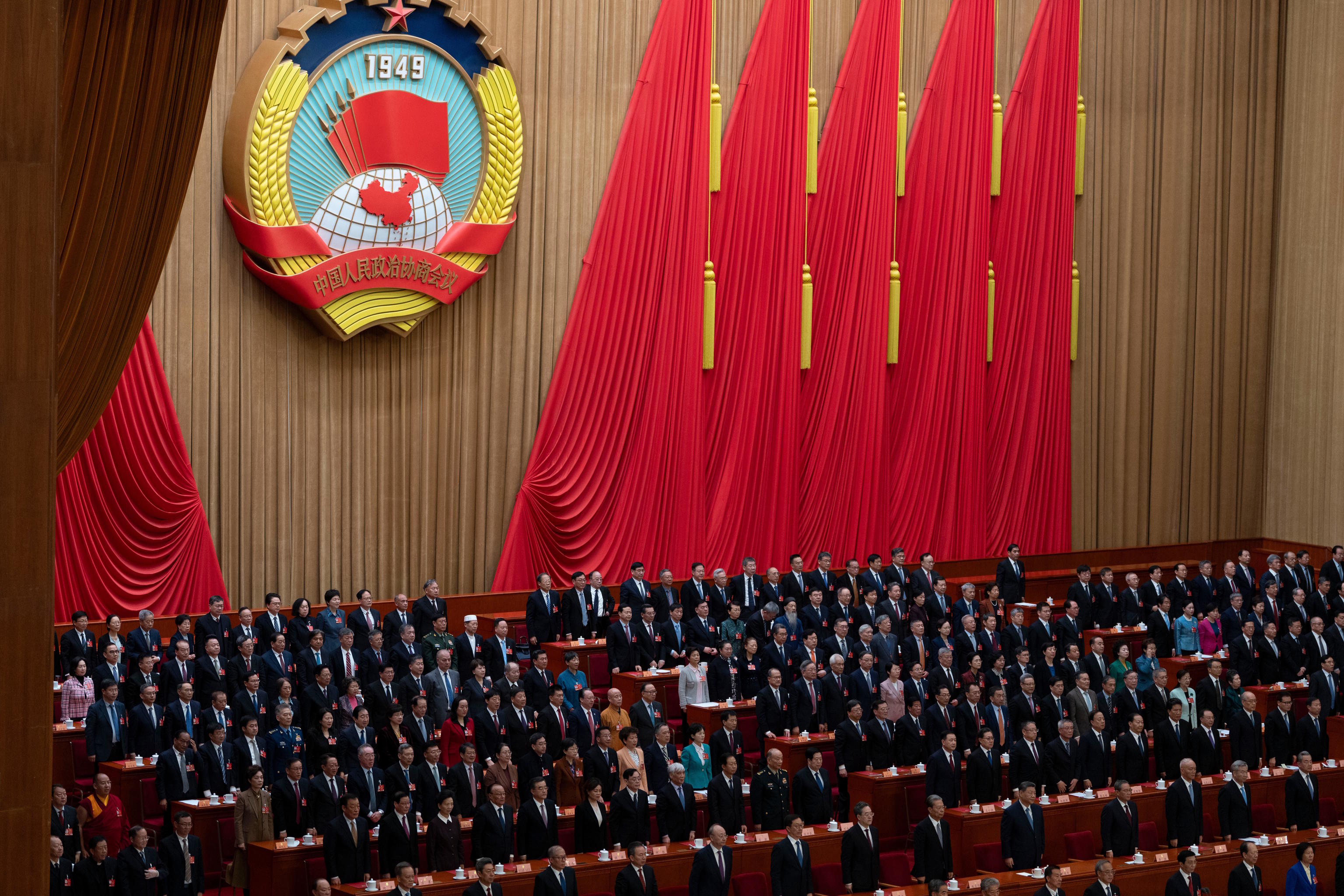
South Korea will impose a limit on fuel prices to protect its economy from the energy shock; Japan is discussing the release of oil reserves; Philippines, Thailand, and Myanmar, in response to rising fuel costs, have ordered public officials to reduce the use of air conditioning in offices; Pakistan has announced a four-day workweek; China, as the world's largest importer of oil and liquefied natural gas, maneuvers in the Strait of Hormuz to secure its tankers.
Asian countries are making moves to secure energy after the main stock exchanges on the continent plummeted on Monday due to the rise in oil prices from the war in the Middle East. Seoul and Tokyo especially reported huge drops after crude oil prices surpassed $100 per barrel on Monday for the first time since 2022.
"The current crisis is a significant burden on our economy, which relies heavily on global trade and energy imports from the Middle East," stated South Korean President Lee Jae Myung, after announcing that his country will limit domestic fuel prices for the first time in nearly 30 years to contain price increases.
During an emergency meeting with his cabinet, Lee added that Seoul - although having enough oil reserves to meet 208 days of consumption - will also seek new energy suppliers beyond supplies sent through Hormuz. A plan also announced by Japan, which critically depends on the Middle East for its energy supply, importing around 80% of its crude oil from this region.
Oil prices surged dramatically at the opening of trading on Monday, with Brent rising 30% to $119.46 per barrel. This led to the Nikkei 225 in Tokyo plummeting by 7.6%, with the stock average recovering by 5.2% at the end of the day.
"The longer this situation persists, the greater the challenge for Japan to protect itself from the erosion of its energy supplies," says Adam Ward, editor at the consultancy Oxford Analytics. Local media suggest that the Japanese government is considering the release of stored oil. The Japanese energy agency has reportedly instructed the national oil reserves base in Kagoshima prefecture to prepare for this measure. According to authorities, Japan has stored a total of 254 days of crude oil and petroleum products, and three weeks of liquefied natural gas.
Meanwhile, in China, authorities are trying to persuade Iran to ensure the safe passage of tankers and gas carriers. Executives from Chinese state energy companies explained to Bloomberg that Beijing is pushing for Tehran not to touch their shipments and is negotiating agreements to secure the transit of their vessels.
On March 5, the bulk carrier Iron Maiden left the Persian Gulf, and as it approached the Strait of Hormuz, its automatic identification system discreetly changed, altering its destination information from "awaiting orders" to "Chinese-owned." This mechanism, designed for ships to locate each other and avoid collisions, has also become a strategic tool in regions where war and naval policy intersect.
Some analysts claim that, if the conflict prolongs, Chinese vessels could sail under an "immunity umbrella," reducing the risk of disruptions in maritime traffic, even amid regional conflicts. China is particularly vulnerable to an effective blockade of the Strait of Hormuz, where around 45% of its oil is concentrated.
At the same time, the Asian giant has temporarily suspended fuel exports from its refineries. Strategic and commercial reserves - estimated by Kpler at around 115 days of supply - provide leeway, not to mention the possibility of turning to energy allies such as Angola, Brazil, and, especially, Russia.
Prior to the war, to reduce its vulnerability, Beijing had already begun to diversify its sources of supply and has accumulated huge oil reserves exceeding 1.2 billion barrels. Thanks to these measures, China depends less than other Asian economies on oil passing through Hormuz and, for now, is weathering the impact of a crisis that reinforces the Jinping government's strategy to increase self-sufficiency amid global instability.
"Except for Malaysia, all major Asian economies have a sustained deficit in oil and gas trade, leaving them exposed when global prices rise," explains Deepali Bhargava, regional head of research for Asia-Pacific at ING Bank. "The Philippines is the country at the highest risk of inflation, not only because it relies on the Gulf for 90% of its oil needs but also because its fuel subsidies are much more limited than other countries."
A few days ago, the government of the Philippines, in a desperate measure to conserve energy, ordered public officials to reduce air conditioning use and travel. All national government agencies, universities, colleges, and local administrations have been urged to reduce fuel consumption by at least 10%. Even considering a transition to a four-day workweek.
Other Southeast Asian countries are also implementing energy-saving measures. In Thailand, the Ministry of Defense recommended that agencies under its control reduce air conditioning use and use video conferencing to avoid unnecessary travel. In neighboring Myanmar, the military government has banned half of private vehicles from circulating.
Pakistan has ordered extensive emergency austerity and fuel conservation measures. Prime Minister Shehbaz Sharif announced the measures in a televised address to the nation on Monday night, warning that disruptions to maritime traffic in the Strait of Hormuz had directly threatened the Pakistani economy.
Sharif announced the transition to a four-day workweek for government employees and spring break for schools from March 16 until the end of the month. 50% of public staff will work from homeon a rotating basis, and the leader recommended similar arrangements for the private sector. Pakistan relies on imports to cover over 80% of its oil needs.
Other measures include the freezing of salaries for high-ranking executive positions and a 25% reduction in the salaries of provincial legislators. All in-person meetings in provincial governments have been banned, to be held online, and fuel allowances for government offices have also been reduced. The population has been asked to restrict social gatherings, limiting weddings and parties to a maximum of 200 guests and one main dish.
In Bangladesh - which imports 95% of its oil and gas needs - military personnel have been deployed to major oil depots, while the police patrol gas stations and their surroundings. This South Asian nation, with 170 million inhabitants, has started rationing fuel and sent students home.