The fear that the price of oil will stabilize at levels close to $100 for a much longer period than the one promised by the United States to end its war in Iran, and that it will take even longer to normalize or return to the levels of last February, has prompted the administrations of all European countries to work on measures to contain the impact on prices of the Gulf crisis.
With the outbreak of the war on February 28 and the death of Iranian leader Ali Jamenei, initial estimates on the duration of the conflict placed it at four weeks, a period in which Asian and Western economies should expect a critical outcome for their future. However, Iranian resistance and the closure of the Strait of Hormuz raised the price of a barrel to $120 on Monday and gas prices, anticipating sharp increases in electricity bills. Both commodities are setting the stage for a general escalation in prices in transportation, food, construction, industry, services... that all countries are trying to avoid.
The increase in oil prices impacts the CPI through its effect on fuel prices (gasoline and diesel), while the price of natural gas affects electricity and natural gas for domestic use. Funcas has estimated that a 10% increase in oil pricesadds one-tenth to the CPI, and a 10% increase in gas prices results in a price index increase of the same magnitude. After the dizzying day on Monday, crude oil was trading at $86 a barrel yesterday, 20% higher than before the attack.
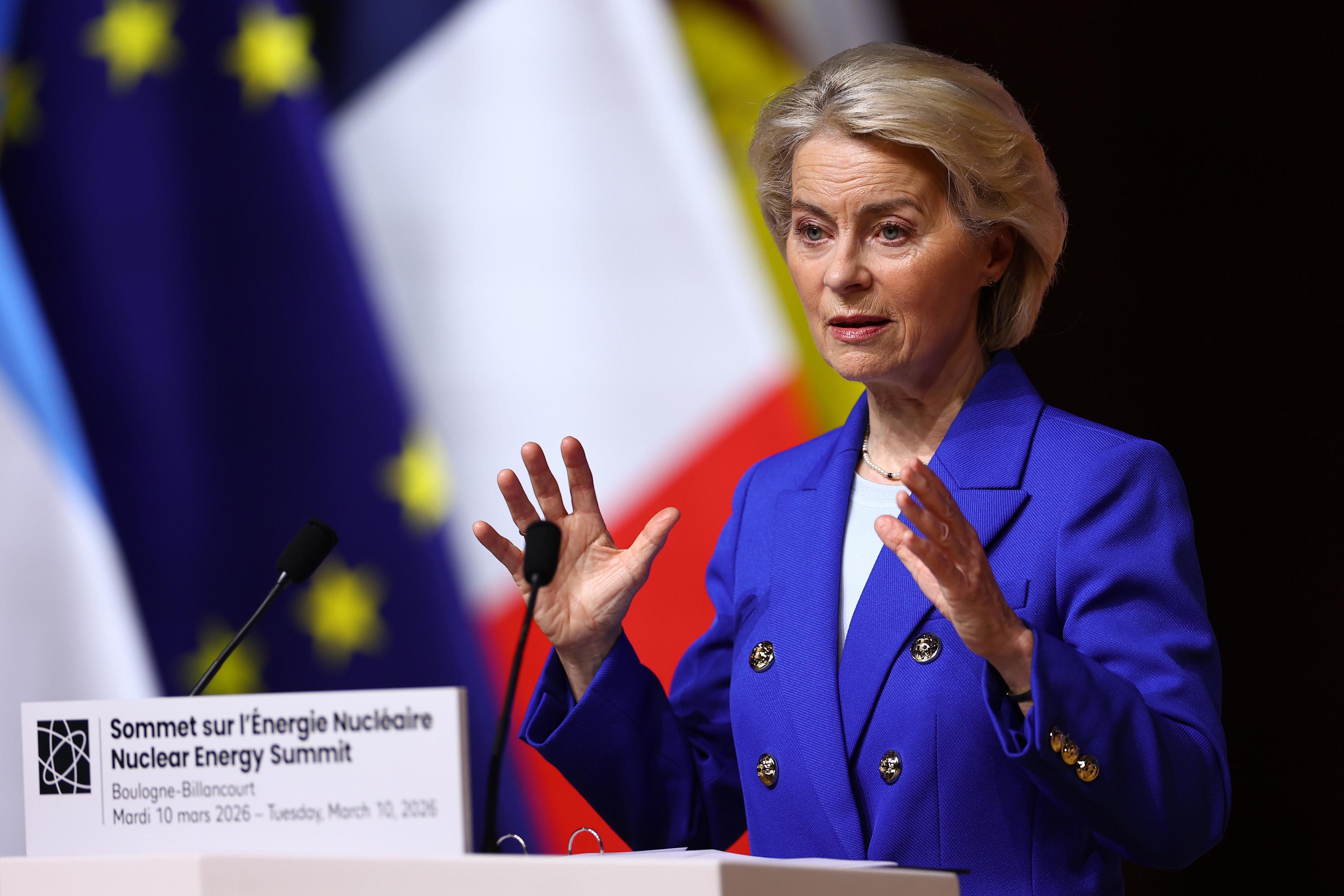
In Germany, France, Italy, Spain... packages of measures to control the impact are already being prepared. Monitoring how prices are passed on to consumers at gas stations and domestic electricity and gas bills is widespread, but EU finance ministers will meet this Wednesday to analyze the situation, and in any case, Commission President Ursula von der Leyen announced on Tuesday that the emergency plan against the general price escalation already seen at gas stations will likely be brought forward to next week.
How aligned the response will be in a Commission experiencing days of strong internal tension over the crisis response remains to be seen. In countries like Germany or Italy, there is a call for intervention to ease the energy bill for the industry, which even before this crisis complained about high energy prices. Italy requested on Tuesday the temporary suspension of the CO2 emissions trading system as a measure to reduce costs, something that partners like Spain are unlikely to accept.
After the council of ministers on Tuesday, the Government announced, without specifying, that it will include measures "to protect households, workers, and affected companies," but will also include a "structural" aspect, with measures to accelerate "ecological transition and strengthen strategic autonomy." The Minister of Ecological Transition, Sara Aagesen, explained that the energy supply through the Strait of Hormuz is less than 2% in the case of gas and below 5% in the case of oil, highlighting the evolution of electricity prices, which have experienced an 80% increase.