On March 12, 1986, the Spaniards voted in a referendum for their permanence in the NATO. Being part of the Atlantic Alliance won with 56.85% of the votes. Since then, Spain began efforts to show itself as a reliable ally of the organization and a profitable partner for the United States. This materialized on December 1, 1988, with the signing of the Defense Cooperation Agreement regulating the use of the bases in Spain for the US administration. It mentioned Torrejón, Zaragoza, Rota, and Morón. Over time, the agreement was renegotiated, and the US removed its presence in Zaragoza and Torrejón to focus on the bases that were more strategically important: Rota and Morón. Nearly four decades after that referendum, the utility of the bases seems to be a bargaining chip in the deteriorating relations between Spain and the United States.
"Tonight I urge President Trump to move all our bases out of Spain. We have a commitment to Spain under Article 5 of NATO, but should we have air bases in a country that does not allow us to use those planes to protect the world against a Nazi regime of religious nature," conservative senator Lindsey Graham declared early Monday. In response, Spanish Foreign Minister José Manuel Albares stated a phrase he often repeats: "I do not comment on comments," and then affirmed that he has not received "any indication in this regard."
"The debate about Rota seems more like a bluff than anything else, a way of threatening, but if Trump's advisors are serious people, they know that they can do little," explains a source knowledgeable about the utility of the bases to this newspaper.
According to Article 69 of the agreement, the validity of the agreement is eight years. However, it is renewed annually if there are no changes and while it is renegotiated. The last time the text was discussed was when Joe Biden took office in the US administration in 2020. It will be renegotiated again in just two years, in 2028. Six years ago, it was extended for a year to give time for the Democrat to settle in.
In February 2022, the Russian invasion of Ukraine was seen as a threat to the Atlantic Alliance, and the allies faced the war on European territory with the need for strengthening Defense: more spending, more capabilities, and an essential rearmament.
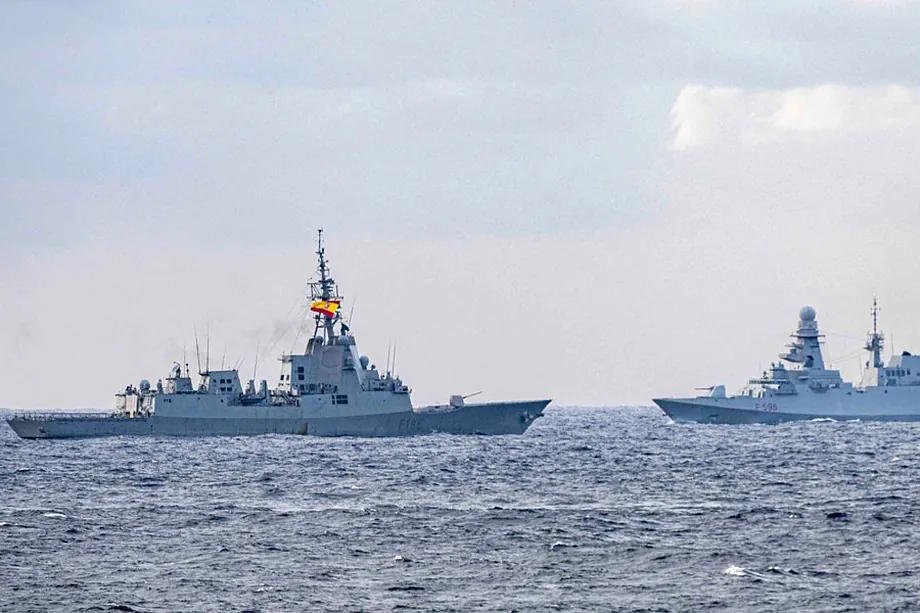
This need materialized on May 8, 2023, with an agreement signed between Margarita Robles and the US Ambassador to Spain, Julyssa Reinoso, regarding the deployment of two additional US Navy ships at the naval base in Rota "for the development of cooperation established by the second amendment protocol of the Defense Cooperation Agreement." Thus, Rota will go from having four to six destroyers permanently stationed in the waters of Cádiz in 2026. The agreement maintains the total authorized personnel level, in the case of the naval base, at 5,250 military personnel and 756 civilians. In Morón, there may be 486 American soldiers and 43 civilians. The airbase usually has ten US aircraft permanently. The fifth destroyer arrived in Rota last year, and the sixth is expected this year.
"The plans have not changed and continue despite the political noise," assures this source, emphasizing that "in Defense matters, despite the statements, Spain and the United States understand each other and are aware that they need each other," the same person clarifies. Because Rota's situation is strategic for the United States, not only do they guarantee security for the European missile defense shield from there, but it is also the gateway to the Mediterranean. "Just look at a map, where else would the US establish a base with better advantages? In the case of ships, they depart from their East Coast and in a few days are in a base that is a small American city in Europe," they explain. "The best proof of Rota's utility is that two of the destroyers participated in the Epic Fury mission thanks to where they are docked," emphasizes the source consulted.
From Rota, the destroyers can reach the coasts of Lebanon and Israel in a few days, where they are currently located. Additionally, they can cross the Suez Canal to reach the Gulf. "There is much talk of moving the ships to Morocco, but that possibility is almost impossible because the excuse for being in Rota is the protection of the Atlantic Alliance, one of the capabilities they promise to the rest of the allies," they assert. Therefore, with Rota's utility out of the debate, it remains to be seen what the toll will be on the diplomatic crisis between the two countries.