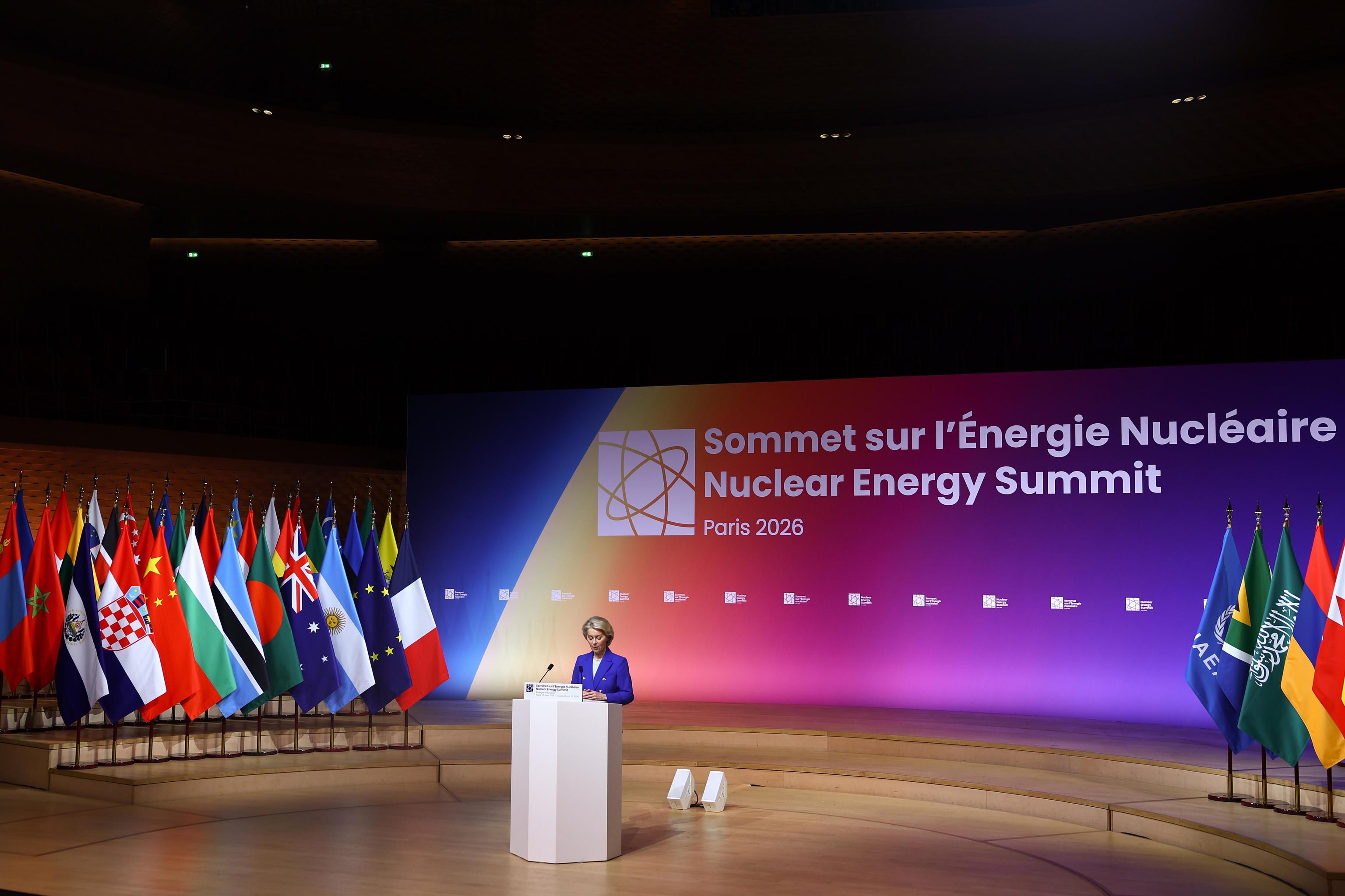
After several days of high tension with the Spanish Government, the German leader sought to approach the government of Pedro Sánchez by reaffirming the EU's "unbreakable" commitment to peace, international law, and the principles of the United Nations Charter.
This shift in discourse responds to the strong pressure exerted by the socialist bloc and the Spanish Government in recent days. Key figures such as Vice President Teresa Ribera, the President of the European Council, António Costa, and Pedro Sánchez himself had openly criticized Von der Leyen's previous stance. The Spanish President recently emphasized in an interview that, while the world is changing, "the values and principles of the European Union should not change," opposing the idea of a "new order" that the President initially suggested to EU ambassadors regarding the conflict in Iran.
Despite this approach, Von der Leyen has not completely abandoned her analysis of global geopolitical change. During her intervention, she recalled that "Europe cannot be the guardian of the old world order that has already disappeared." Likewise, she justified firmness against an authoritarian regime that has caused over 17,000 deaths, sponsored terrorism even on European soil, and provided crucial support for the Russian invasion in Ukraine, stating that "no tears should be shed for such a regime."
Today's change in tone is interpreted as an evident attempt to reduce tension that was beginning to threaten institutional stability. Discontent had reached such a point that socialist MEP Jonás Fernández even suggested on social media the possibility of a vote of no confidence against the President. With this new stance, which fully reflects the socialist position, Von der Leyen seems to have opted for détente to safeguard the unity of the European project.