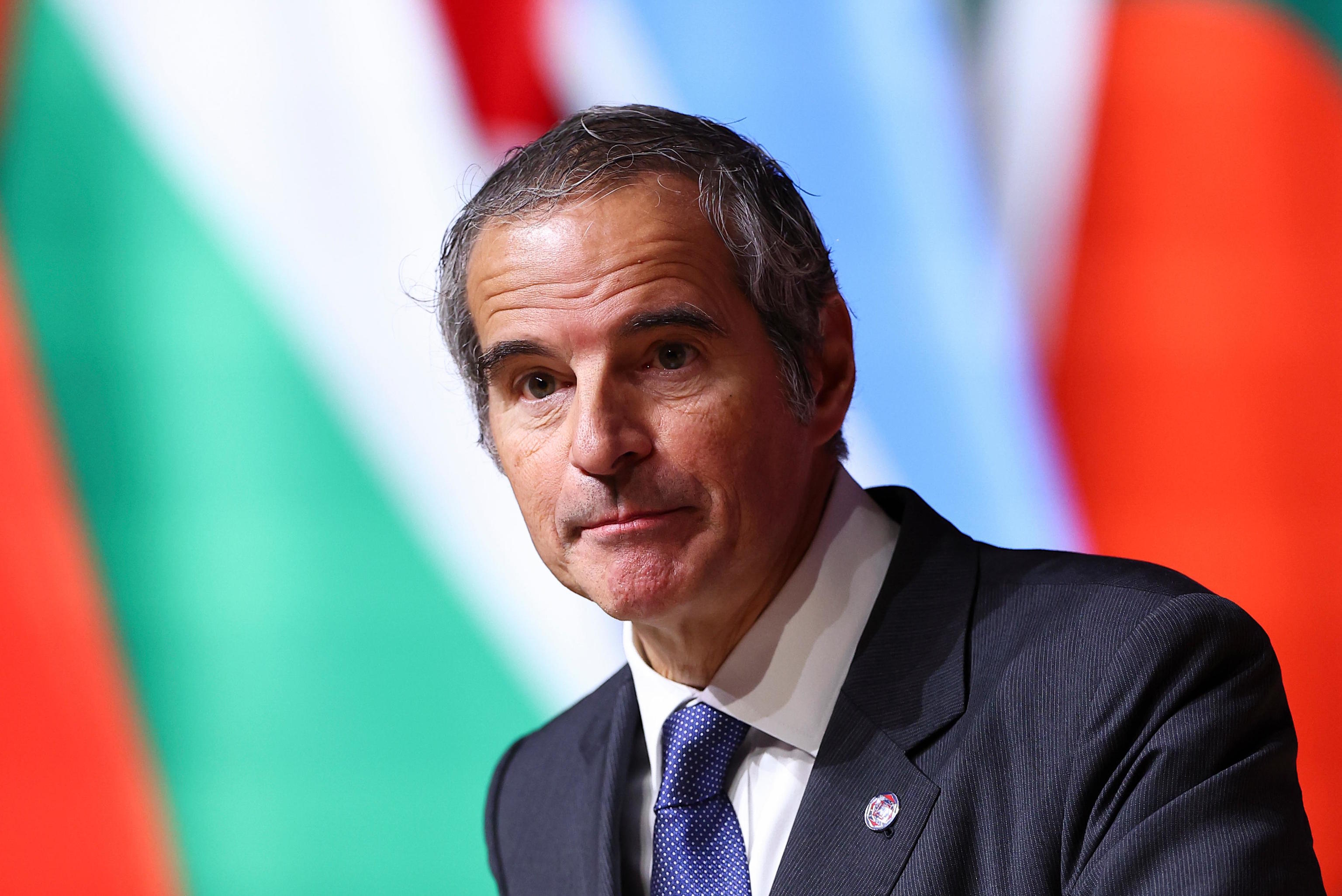
The International Energy Agency, which includes the world's major countries, has unanimously agreed to a record release of strategic oil reserves to curb the price escalation and supply disruption triggered by the Iran war and the closure of the Strait of Hormuz. This was announced by the Executive Director of the IEA, Fatih Birol: "It is the largest in history".
The measure entails that the different IEA member countries will release up to 400 million barrels of oil stored in their emergency depots in the coming weeks, double the amount in 2022 when the same organization sought to contain the spiral caused by the Ukraine war.
The aim is for the world's major countries, including those in the EU, not to accumulate as much oil in their depots and decide to put it on the market to avoid supply and supply problems in countries highly dependent on the Persian Gulf. According to Birol, it is necessary "to compensate for the supply loss caused by the effective closure of the Strait of Hormuz. This is an important measure aimed at alleviating the immediate effects of market disruption".
However, he admits that, although it is a historic measure, it is only a palliative. "To be clear, the most important thing for the stable flow of oil and gas to be restored is for transit through the Strait of Hormuz to resume". Around 25% of crude oil passes through this geographic location.
The Japanese government has already announced the release of reserves, and the Third Vice President of Spain, Sara Aagessen, has also expressed agreement to proceed with this relief measure. "From Spain, we will support, we have always been supportive and we understand that this way we also support less tense markets and that other countries, whose tensions go beyond prices, can have a supply response," stated the Third Vice President at a breakfast organized by Europa Press.
In the case of Spain, around 12 to 12.5 days of reserves can be released. Currently, Spain has reserves for about 92 days of supply, according to Aagesen. Its contribution would be 2% of the total.
The Prime Minister of Japan, Sanae Takaichi, did not wait for the formal agreement within the IEA and announced: "We will release 15 days of reserves from the private sector plus one month of national reserves, and deliver them to national refineries as soon as possible. We will also promptly use the joint reserves we hold with oil-producing countries."
The German government is also joining this measure, and the Austrian government is following suit as the morning progresses on Wednesday. Meanwhile, the French Minister of Finance, Roland Lescure, stated that it is necessary for the West to send a clear signal: If we cannot reopen the Strait of Hormuz, we will replace it with oil from other parts of the world that circulates globally." France holds the presidency of the G-7.
The Vice President of the European Central Bank, Luis de Guindos, has already described what is happening as a "shock" with an impact on European economic growth and an increase in the cost of living, during a speech at the 32nd Financial Sector Meeting, organized by ABC and Deloitte.
The IEA was established after the 1974 oil crisis, and all its members are required to have strategic reserves for about three months. IEA member countries currently have over 1.2 billion barrels of public emergency oil reserves, in addition to another 600 million barrels of industrial reserves maintained by state obligation, as Birol reminded on Tuesday.