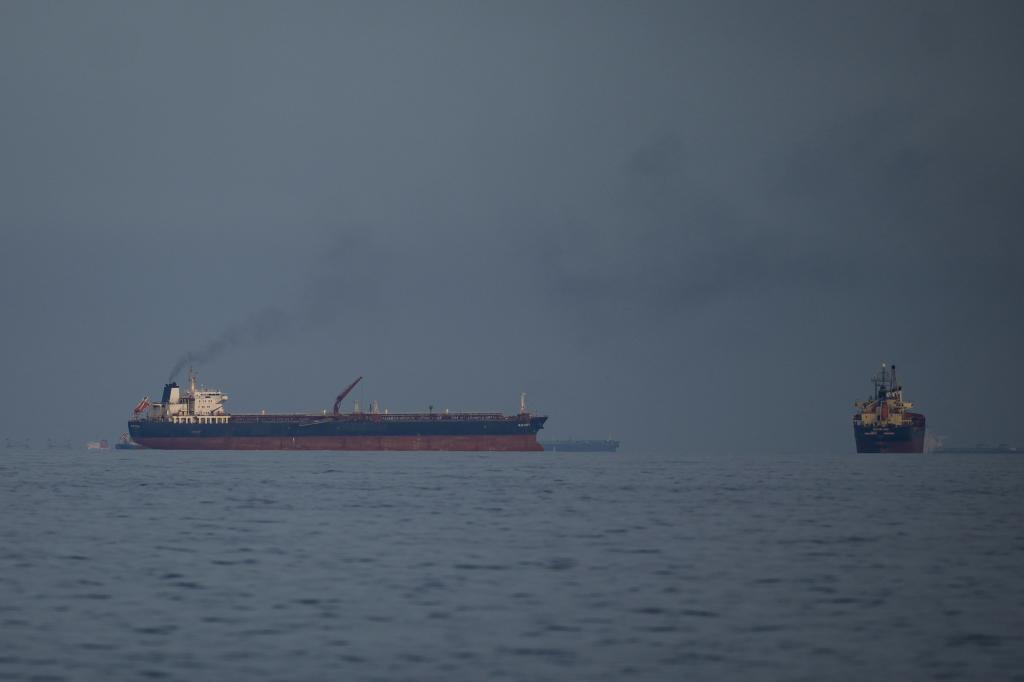
The offensive, partly claimed by the Iranian Revolutionary Guard, has affected ships from Greece, Japan, Thailand, and Israel, escalating geopolitical and economic tensions to critical levels in a key area for global energy security.
One of the most alarming incidents involves the Thai bulk carrier Mayuree Naree, which was engulfed in flames after being hit by a projectile just 11 nautical miles north of Oman. Of the 23 crew members on board, the Royal Navy of Oman has managed to rescue 20, while efforts are ongoing to assist the remaining three in a highly dangerous environment. Simultaneously, the United Kingdom Maritime Trade Operations agency (UKMTO) reported impacts on the Greek ship Star Gwyneth and the Japanese container ship One Majesty, which sustained damage while anchored in the Persian Gulf near the coast of the United Arab Emirates. Additionally, the Revolutionary Guard also claimed responsibility for the attack on the Israeli-owned Express Room, flying the flag of Liberia.
Tehran's stance is clear: Iranian authorities have stated that they will not allow "a single drop of oil" to pass through the strait benefiting the United States, Israel, or their allies. This aggressive strategy is part of a crisis that has seen 17 maritime incidents since the US and Israel launched their offensive against Iran on February 28. In response, the United States Central Command (Centcom) has reported the destruction of multiple Iranian warships, including 16 mine-laying vessels tasked with disrupting traffic.
The impact on the markets has been immediate. The price of a barrel of crude oil Brent has surpassed $90 after a 2.76% increase in the London market. Iran has warned that prices could reach $200 if hostilities continue, while Washington asserts it will escalate its military response if the deliberate sabotage of energy flow in this vital maritime route persists.