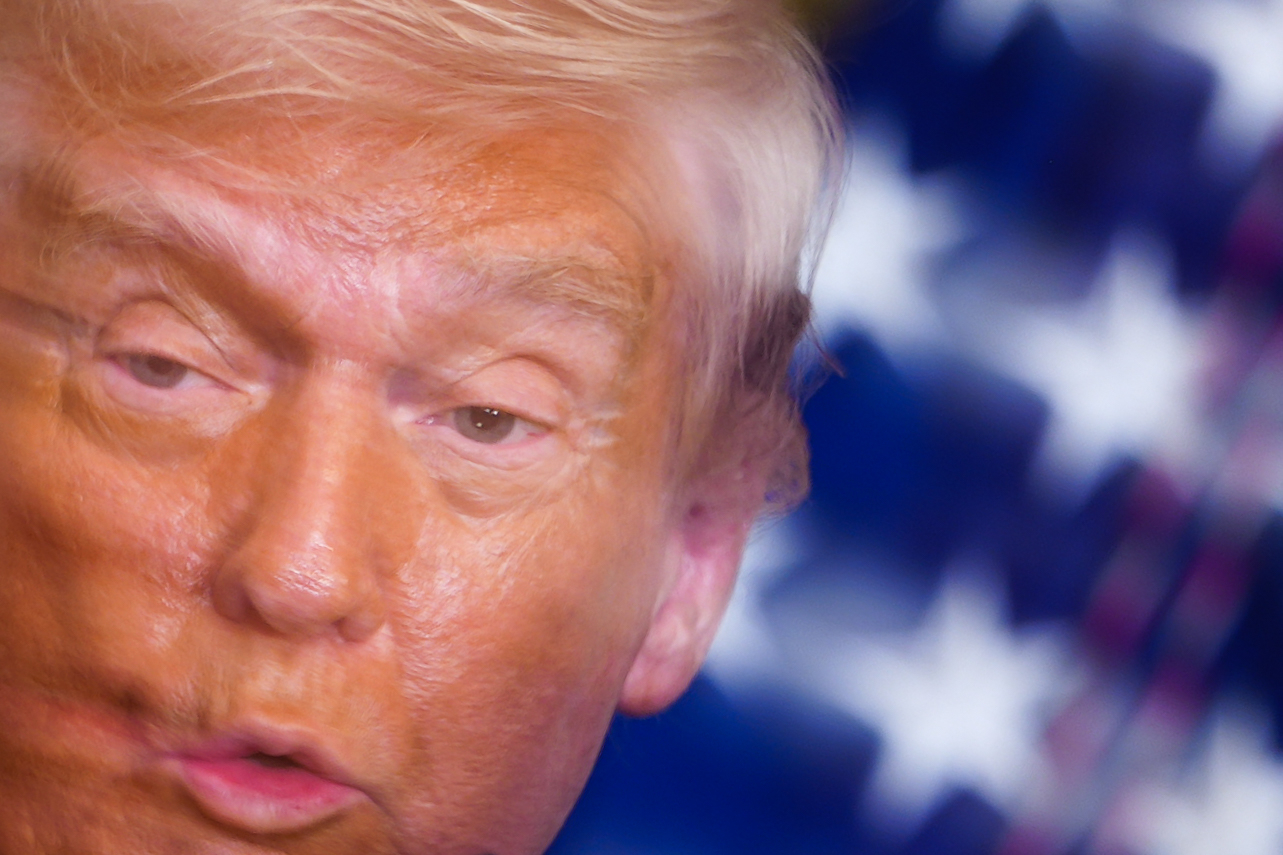
On Thursday morning, with the price of oil back above $100 per barrel, President Donald Trump celebrated on his social media the great business opportunity. "The United States is the largest oil producer in the world, by far; therefore, when oil prices rise, we make a lot of money. BUT, of much greater interest and importance to me, as president, is to prevent an evil empire —Iran— from obtaining nuclear weapons and destroying the Middle East and, in fact, the whole world. I will never allow that to happen!" he wrote. Minutes later, his Energy Secretary, Chris Wright, reiterated the same argument in a television interview: Fortunately, the US produces more oil than we can consume -- we're a net oil exporter. So overall for the US economy, this isn't bad news." he stated.
Among some traders and analysts, the image that came to mind was that of a Roman emperor thrilled to see the city burning. While tourism plummets in the Middle East, commodities soar, and analysts and investors begin to prepare for a possible serious economic slowdown, the president of the world's leading power seems to enjoy the situation, literally proclaiming victory one day in Kentucky and playing with ambiguity shortly after about how long this new crisis will last. "The economy is in full expansion, it's phenomenal," he repeated yesterday.
In his lengthy State of the Union address just a few weeks ago, Trump claimed that gasoline prices in parts of the country were already around two dollars per gallon (3.8 liters). That was not true, but since then, the increase has been brutal. The average price reached $3.48 per gallon on Monday, according to the AAA, the leading motor association. A 17% increase from before the bombings. The same goes for diesel, which has surged 24%. On Sunday night, crude oil futures reached $120 per barrel, although the day was not as bleak as expected, and closed below $90. This Thursday, it has surpassed 100 again, and calculations suggest that if prices remain this way, gasoline could reach four dollars per gallon as soon as next week.
Despite Trump's enthusiasm, the administration is concerned. Once oil prices reach a certain level, oil obtained through fracking techniques starts to become less attractive. The U.S. has lifted some of its sanctions to increase the circulation of crude oil. And now, they are even considering temporary exemptions to a centuries-old maritime law that requires the use of U.S.-built ships for transporting goods between ports in the United States.
The concern is evident. Iraq has reduced its production, and companies like Total Energies have seen theirs reduced by 15% due to Iranian attacks throughout the region. Goldman Sachs estimates that the blockade of the Strait of Hormuz has a 17 times greater impact on the crude oil supply chain than the blow to Russian oil production after the invasion of Ukraine, which temporarily drove the barrel price to $139. There is no mobilization of reserves that can compensate for the 20 million barrels that pass through the Strait every day, 20% of global production.
The war is costing a fortune daily to the U.S., not even considering the resulting consequences. In the first week of fire, at least $11.3 billion, according to Pentagon estimates sent to Congress.
Additionally, on Thursday, the mortgage giant Freddie Mac indicated that the average rate for 30-year fixed-rate mortgages in the United States had risen to 6.11%, the second consecutive week of increases. The 10-year Treasury bond, the main benchmark rate for the real estate market, reached 4.25%, when it was below 4% before the bombings in Tehran.
The macro picture is crumbling. First, there was the Supreme Court decision declaring the vast majority of Trump's tariffs illegal. Now, add the spending on military operations, the deficit, and the cost of debt in an increasingly expensive environment. The latest data showed that the U.S. economy lost 92,000 jobs in February, while revisions to December and January data revealed 69,000 fewer jobs than originally estimated.
The Congressional Budget Office reported this week that the country added another trillion dollars to the federal deficit in the first five months of the fiscal year. Since October, Secretary Scott Bessen's team had to pay an additional $31 billion in net interest on the public debt. In those five months, the Treasury allocated a total of $433 billion to the public debt service, which is now approaching $38.9 trillion. The Committee for a Responsible Federal Budget (CRFB) estimates that debt interest payments will exceed one trillion dollars this year and will surpass two trillion annually by 2036, increasingly unsustainable figures even for the nation of the dollar.