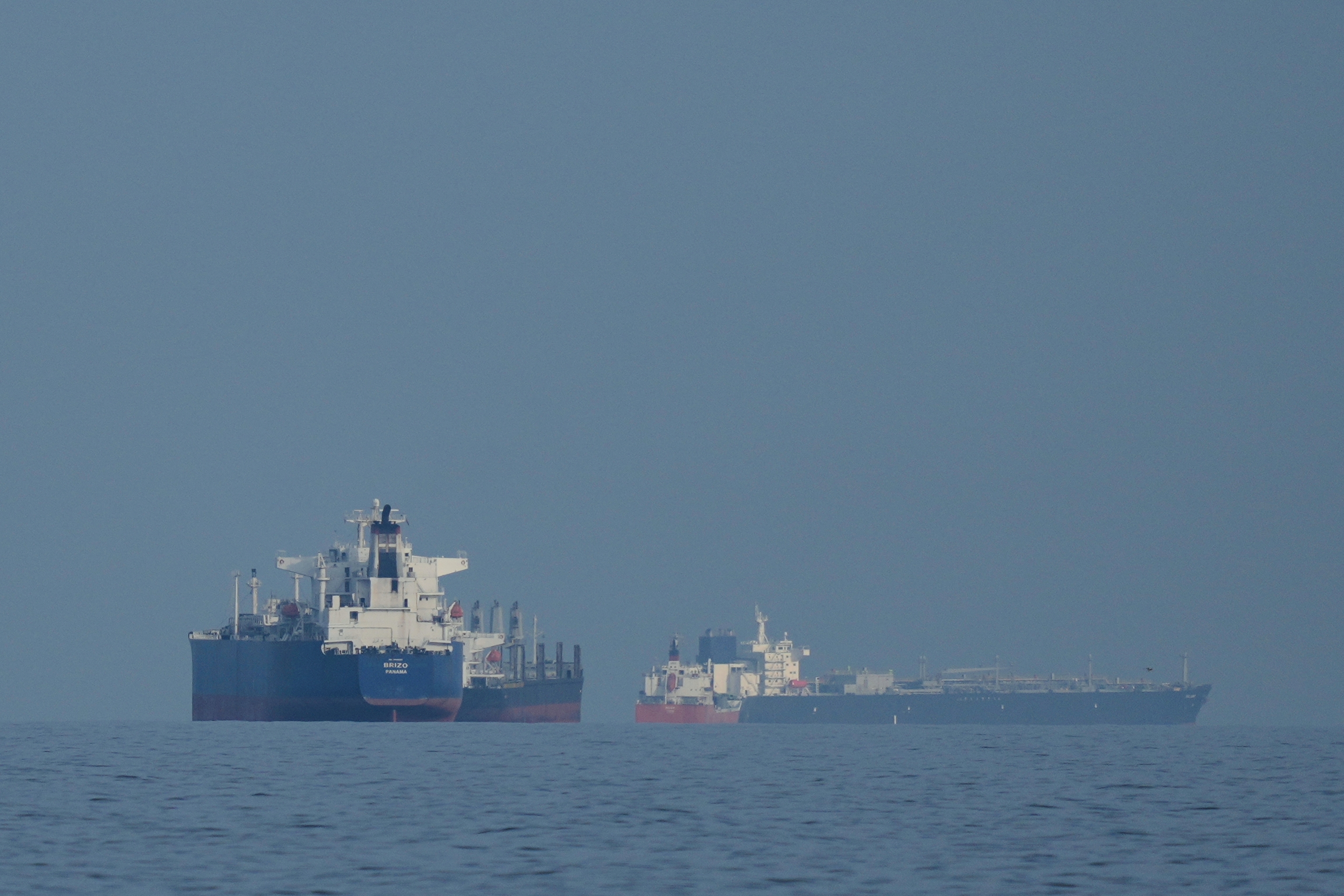
The US Department of the Treasury announced on Thursday that it will temporarily authorize the world to purchase Russian oil that is in maritime transit in an attempt to contain the escalation of crude oil prices, caused by the war in Iran. However, this measure, with which US President Donald Trump provides oxygen and income to the Vladimir Putin regime, does not stop the spiral of crude oil, which surpasses $101 per barrel on Friday with new stock market declines.
The problem is that the measure perpetuates the reality assumed by the markets, that the Strait of Ormuz, a critical point, will remain closed or with minimal flow at least throughout this month.
In fact, the US permission to buy Russian oil is for one month and valid until April 11. It is a sign that the US may not launch a military operation to escort and protect cargo ships in Ormuz before that date.
Treasury Secretary Scott Bessent announced the measure with Russia on his X account and estimated that hundreds of millions of barrels of oil could enter the market if sanctions on Russia are temporarily lifted.
This is the second lifeline offered to Russia because last week, the Treasury had already authorized India to access Russian oil stranded at sea for a period of 30 days but now extends the measure to the entire planet. According to Bessent, lifting the sanctions will not represent a significant benefit for Russia, but it undoubtedly adds income to the Moscow regime in the midst of the war with Ukraine and, above all, is a political victory for Putin. In addition, the price escalation due to the US indifference to the closure achieved by Iran in Ormuz is strengthening Russia's accounts.
The new palliative left the oil market indifferent. "Brent futures have already exceeded $100 per barrel and continue to hold today, despite measures to calm the markets with the exemption of Russian oil and the unprecedented release of emergency reserves," said Emril Jamil, senior analyst at LSEG, to Reuters.
"The market considers this a short-term solution that does not address the supply disruption problem. Inter-month crude differentials for the coming months indicate an unresolved and ongoing supply shortage," Jamil said.
Bessent has only assured that the US will protect cargo ships in Ormuz - which have already been attacked at least half a dozen times - "as soon as militarily possible." This indifference means leaving the world without the fifth part of the world's oil and gas that was transiting through the Persian Gulf at least throughout March.
European markets opened lower on Friday by more than one point as they still do not see a way out of this military operation. The IBEX has lost the 17,000-point mark by opening with declines close to 1.3%.