The Ramlet al Bayda beach is a legacy of that Beirut from the golden years when Lebanon dreamed of being the Switzerland of the Middle East, while approaching the catastrophe.
"When we moved to Ramlet al Bayda in 1967, it was very peaceful. Most residents were the country's elite or foreigners," recalled one of the initial tenants in a well-known documentary that was filmed to remember the history of that seaside area, so emblematic for the Lebanese capital. It was designed for that purpose. With palm trees, wide avenues, and public gardens.
However, that mirage ended due to the repeated conflicts that the Arab country faced against neighboring Israel. In 1973, this same stretch of sand was the chosen place used by the Israeli command led by the future Prime Minister Ehud Barak to escape after assassinating several prominent leaders of the Palestine Liberation Organization of Yasir Arafat. An event that was the prelude to the civil war that began in 1975.
Trapped in a historical loop, like the rest of the country, Ramlet al Bayda has become the scene over the past decades of bloody episodes such as the terrible Israeli bombings it had to face in 1982.
Both in 2024 and now, this part of the coast - which, if there is no war, is usually a place of recreation for the capital's residents in the summer - was the destination for hundreds of displaced families who settled there, unable to find another place of refuge.
This Thursday at dawn, Ramlet al Baida once again regained its troubled history and was stained with blood for the umpteenth time. Literally. The dry but clearly visible trail of the victims left by the Israeli drone attack remained on the sidewalk of the promenade or mixed with the sand that had escaped from the beach.
Around 2 in the morning, the same place where dozens of fleeing civilians were camped, living in tents lined up on the platforms, was hit by at least two rockets launched by an Israeli drone.
The projectile impacts could be clearly seen. One on the sidewalk and another a few meters away, on the asphalt of the road. Just like the damage caused by shrapnel to two cars and a motorcycle. Dozens of fragments pierced the bodywork and windows.
They also pierced the dozens of victims left by the incident. According to the Lebanese Ministry of Health, the attack resulted in the death of seven people and left 31 injured. Another massacre in the new war initiated by Israel and the United States.
Ali Baloud arrived at Ramlet al Bayda on the first day of this conflagration. He was fleeing from Dayiha, the southern neighborhoods of Beirut, repeatedly hit by the Israeli air force.
At 7:30 in the morning, Baloud was trying to gather the plastic shelters that had served as a precarious home for the 27 members of his family. Five of them ended up injured in the hospital.
"There were two missiles. The first one killed three people by the beach, but when people approached to help them, they threw another one, creating chaos," he recounted.
Baloud remembers the bodies lying on the sidewalk. The trails of blood. The ambulance sirens and the shouting of those present. The absolute commotion that can be seen in the video he recorded during those moments.
"My son has a hole in his belly and my brother's daughter has one in her leg. What fault do the children have? Where are we going to go now?" he wondered aloud, while packing his few belongings into a car.
"We are all civilians. Why do they kill poor people who don't even have a house to hide in?", Ibrahim Hadas, a 37-year-old Syrian, questioned.
The tragic scenes that unfolded in Ramlet al Bayda - reminiscent of those experienced countless times in the Gaza Strip - were just another episode of the escalating violence witnessed in the military struggle between Israel and the Lebanese paramilitaries of Hezbollah alongside their main supporter, Iran.
The bombing occurred shortly after the armed faction launched the largest assault with missiles and drones against northern Israel, in a coordinated action with Tehran, which simultaneously bombarded the center of the country with its long-range rockets.
Iranian agencies said the barrage was aimed at around fifty Israeli "targets."
Militants under the command of Naim Qassem fired nearly 200 missiles at towns like Acre, Haifa, or Nayariyah, causing only a few injuries but casting doubt on the triumphant statements that Tel Aviv had made at the end of the previous conflict.
The Israeli army itself issued a mea culpa acknowledging that they should have alerted the northern Israeli population, who were caught off guard by the wave of projectiles that lasted for hours.
Hezbollah, mimicking the warnings that Israel usually issues demanding the evacuation of populations or buildings, issued a statement demanding that all Israelis living within five kilometers of the border area flee.
The analogies between what happened in Ramlet al Baida and the Palestinian strip that Israel has devastated are not just a visual effect. Israeli sources cited by The Times of Israel admitted that their troops intend to use in Lebanon the same methods they used during the genocide that ravaged the Palestinian enclave.
"The Lebanese government must take control of its country or parts of Beirut will soon resemble Gaza," stated the military spokesperson quoted by that media outlet.
Tel Aviv also informed Beirut that they are prepared to increase the destruction of the country's civilian infrastructure, something that if it were to happen would constitute a war crime.
The latest warnings from the Israeli armed forces have urged the evacuation of all Lebanese living within 40 kilometers of the border between the two states, well beyond the limit set by the Litani River until now.
Both Hezbollah and Tel Aviv are now clinging to the most incendiary rhetoric. The former announced the start of an offensive whose name was taken from the Quran, while the latter promised "a blow for a blow."
"We are about to launch a major campaign in Lebanon. We will mobilize reservists," explained another Israeli official to the Yediot Aharonot newspaper from that country.
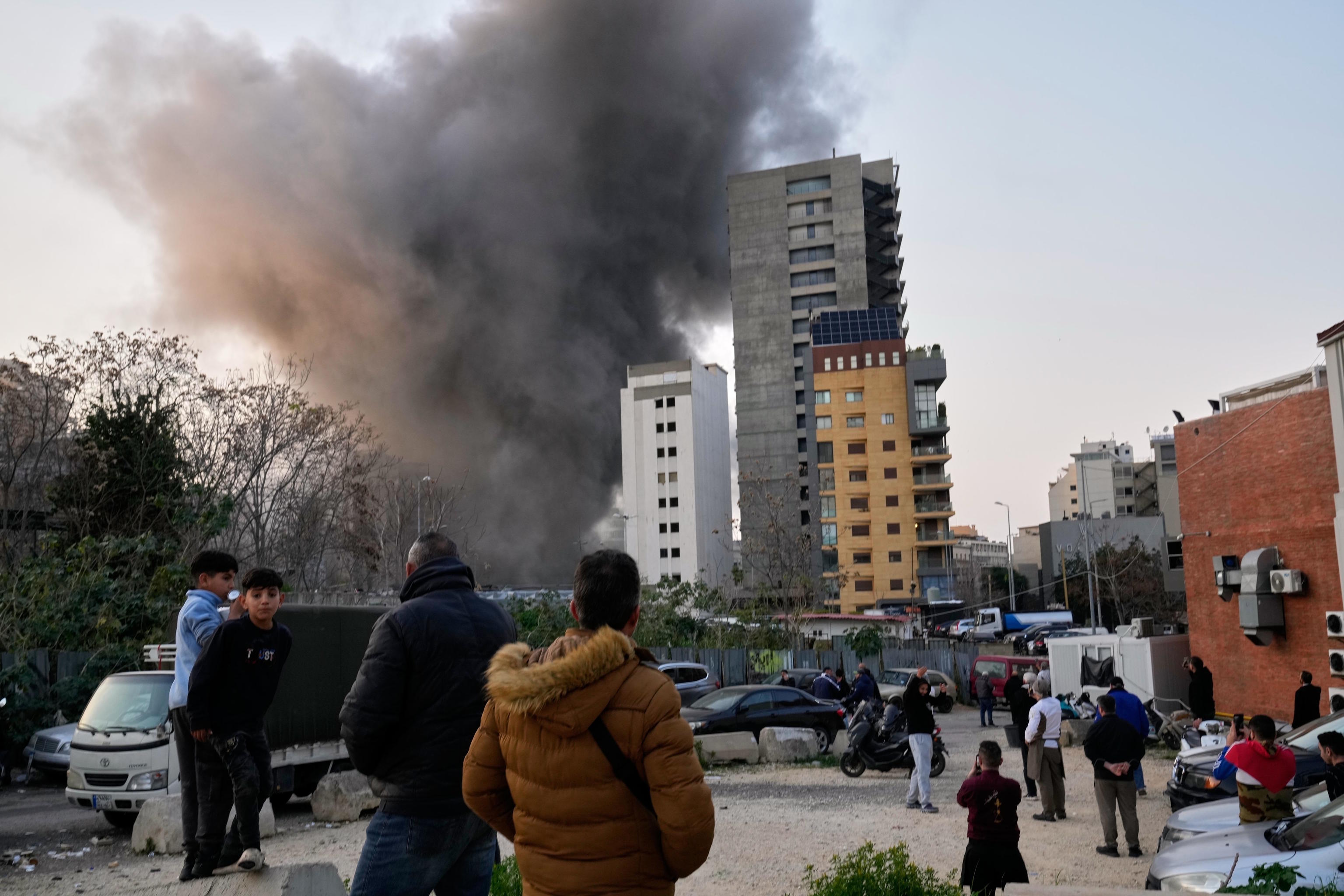
The Israeli air force intensified the bombings throughout Thursday night. Shortly before the end of Wednesday's day - before the beach massacre occurred - the southern neighborhoods of Beirut were shaken by a series of massive explosions that reverberated throughout the metropolis.
The darkness was broken by the flashes, the tracer bullets marking the vain attempts of the Lebanese machine guns to reach the planes, and the huge columns of smoke.
Another subsequent attack shook an elegant urbanization located in Aramoun, near Beirut.
Israeli bombs also razed several locations in Tyre. One of their aerial assaults hit a four-story building. The shockwave shattered facades, windows, and neighboring facilities.
The nearby Jabal Amel hospital lost most of its windows. "I was preparing the food for the iftar (the breaking of the fast, one of the traditions of the current Muslim celebration of Ramadan) and all the food went flying. Miraculously, we didn't have any injuries at the hospital, but the explosion killed two people in that house," said the director of the facility, Dr. Wael Morue.
For experts like Imad Salamey, quoted by the local newspaper L'Orient Le Jour, Hezbollah's offensive "has forced Israel to divert military resources" intended for its harassment against Iran and is increasing "operational costs" of this regional confrontation.