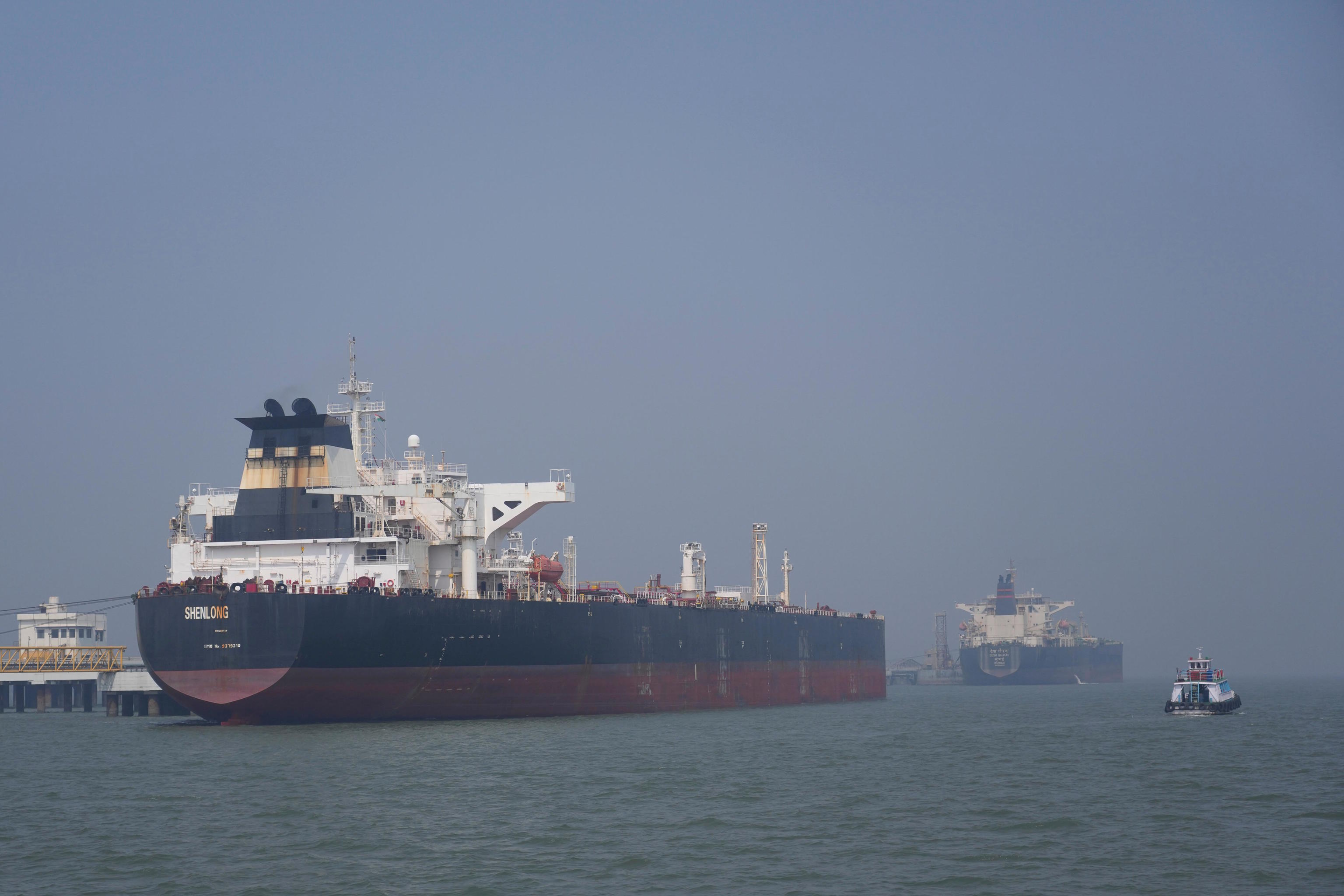
Before American and Israeli bombers began flying over Iran and maritime traffic was virtually paralyzed in the Strait of Hormuz, China had already decided to stock up on energy reserves, hoarding oil as if anticipating an inevitable war.
The data released this week by Chinese customs show to what extent the Asian giant was preparing for a possible global energy shock. In January and February, China imported 96.93 million tons of crude oil, a 15.8% increase compared to the same period last year. The volume surged just as markets began to anticipate a military escalation in the Middle East. Paradoxically, the total value of these purchases fell by 5.2% year-on-year due to lower prices at the beginning of the year.
Beijing's strategic calculation has gained particular significance following the paralysis of the artery through which nearly a fifth of the world's oil flows. With Hormuz out of play and key refineries in Saudi Arabia or Iraq halting production, a nightmare scenario unfolded for the major Asian economies, all major importers of Gulf energy. For China, the world's largest oil buyer, the problem was even greater. Over 35% of the country's oil consumption, and almost 12% of its natural gas, pass through that strait.
But Beijing, as several analysts have pointed out in recent days, has been preparing for this type of crisis for years. "China has been building up large reserves of oil and gas aware that the market expected the United States to attack Iran," says Chim Lee, senior analyst at The Economist's Intelligence Unit, referring to a record storage level in the Asian country in 2025.
China's strategic oil reserves - built over the past decade through massive storage complexes scattered along the coast and inland - would exceed 1.2 billion barrels. According to this calculation, the volume is approximately equivalent to about 120 days of import coverage, a significant cushion to mitigate temporary supply disruptions.
"This safety net allows Beijing to buy time in times of tension," says a Barclays Research report. "Reserves can be released to smooth short-term oil supply disruptions and cushion sudden price spikes, which could give China more time to buy oil from non-Gulf countries."
Asked whether China will release part of its reserves to stabilize the market, an official spokesperson this week simply stated that the country will "take measures to safeguard its energy security". Beijing's spokespersons have not commented yet on the latest reports that Iran has reportedly continued to send large amounts of crude oil to China through the Strait of Hormuz.
As reported by CNBC on Wednesday, Tehran has sent at least 11.7 million barrels to its top buyer since the war began on February 28. This information comes from TankerTrackers, a company that tracks vessel movements with satellite images. Kpler, a provider of maritime intelligence data, estimates that around 12 million barrels of crude oil have passed through the strait since the conflict began. "Given that China has been the main buyer of Iranian oil in recent years, a significant portion of these barrels could ultimately head there," notes Nhway Khin Soe, an analyst at Kpler.
For several years now, energy security has become a central priority for the government of Xi Jinping, obsessed with shielding the economy and enhancing self-sufficiency against external trade blows and geopolitical tensions. The plan has several pillars, one of which is reducing dependence on imported oil through massive electrification of transportation. China leads the global deployment of electric vehicles and dominates much of the battery supply chain. Each electric car that replaces a gasoline one is, strategically speaking, a small cut in the country's oil bill.
Another front is diversifying suppliers. This is where the strategic alliance with Russia comes into play. Since the invasion of Ukraine, the cheap Russian oil and gas that has reached China has been an energy boon for Beijing - and an economic lifeline for Moscow - taking advantage of international sanctions against Vladimir Putin's regime to buy oil at discounts.
The war in the Middle East could further strengthen that relationship. In China's new five-year plan, whose draft was released last week, the importance of accelerating projects like the Power of Siberia 2 gas pipeline, designed to transport Russian gas directly to its Asian neighbor, is mentioned. This move would increase Moscow's weight in China's energy supply.