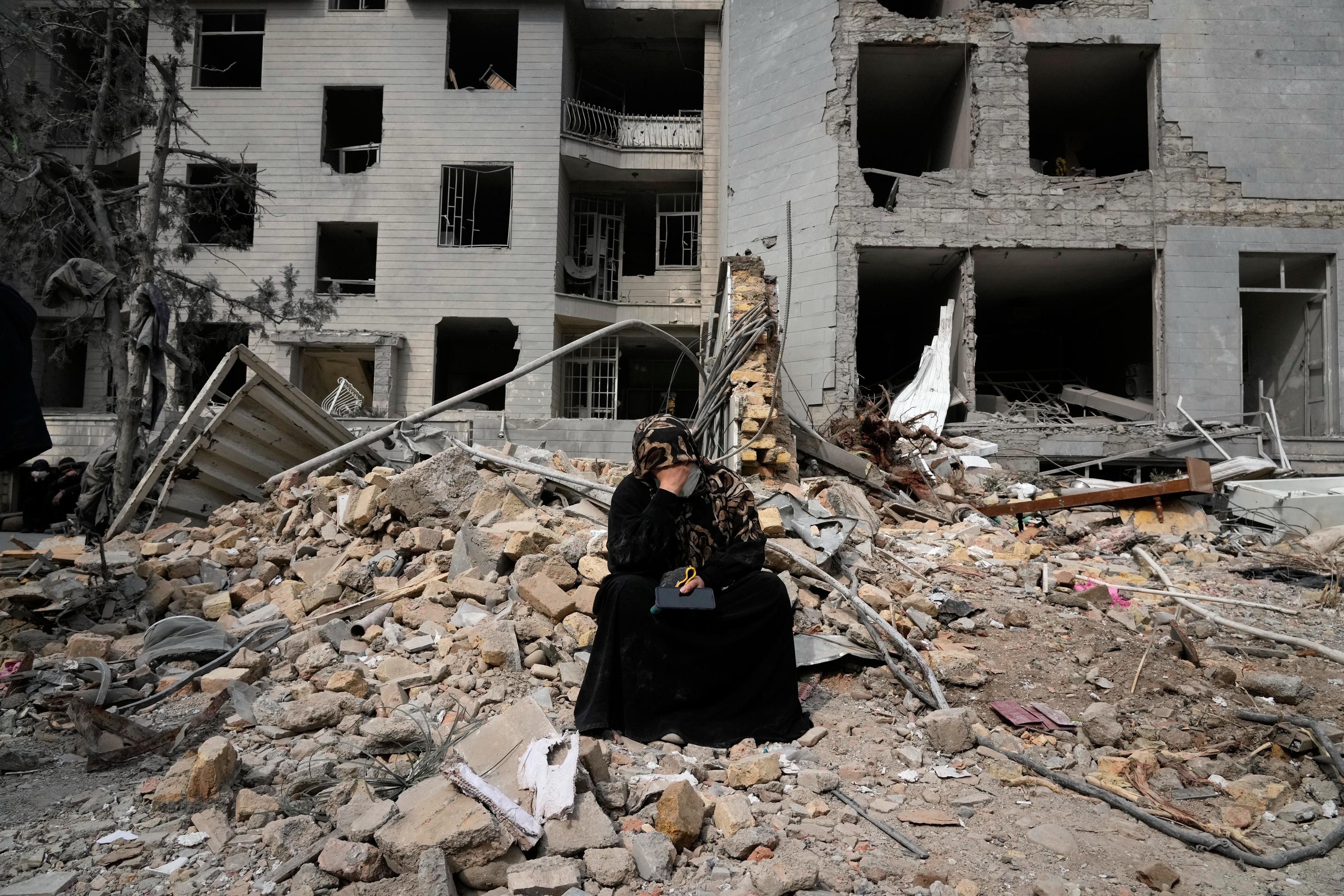
Seyed Abbas Araghchi, the Iranian Minister of Foreign Affairs, posted a message on X on March 1, the day after the start of the Epic Fury and Lion's Roar operations: "We have had two decades to study the defeats of the US Army to the east and west. We take the lessons into account. Bombings in our capital do not affect our ability to wage war. Decentralized and mosaic defense will allow us to decide when and how the war will end."
In the following hours, the Iranian regime was hit in its core but that did not mean it surrendered or negotiated a new franchised power system like the dictatorship in Venezuela. The Iran of the ayatollahs, engaged in an eternal proxy war in Palestine, Lebanon, and the Persian Gulf, encouraged its enemies to enter its territory, to start a new phase where Tehran becomes a gigantic version of Gaza. Will Americans and Israelis accept that invitation to wage war on the ground? Underground?
Underground, yes, because the asymmetric wars that Iran has waged over the past 20 years have mainly taken place in tunnels, silos, and mines, where the technological superiority of its enemies loses value. The most significant example is Palestine.
Some facts: in 2007, the year of Hamas' victory in the Palestinian elections and amid an Israeli blockade, the Quds Force, the external intervention body of the Iranian Revolutionary Guard, arrived in the city with engineers and qualified personnel and began building the so-called Gaza Metro from a pre-existing network of tunnels used in the black market. 17 years later, their work was key in the 2023 war.
"Hamas' greatest advantage over the Israelis was the immense network of concrete and steel tunnels it had built over the previous 16 years at an estimated cost of one billion dollars," reads in War. The Evolution of Military Conflict from 1945 to Gaza, by David Petraeus and Andrew Roberts (Ático de los Libros). "Although estimates of the network's length range from 570 to 800 kilometers, it undoubtedly surpasses the London Underground. In some sections, it is deeper. The deepest tunnel discovered reached 70 meters underground. Some passages are accessible by elevator, and many are wide enough for trucks to pass through."
The Gaza Metro houses weapon and food storage, command centers, server farms, missile manufacturing chains, and shelters for Hamas members, not for the civilian population. But its most famous function became clear on October 7, 2023: the surprise attack. That day, the tunnels allowed Hamas to infiltrate Israel and return to their hideout with hostages. When the Army invaded the Gaza Strip, Hamas continued to attack its opponents from the tunnels.
Israel has faced its subterranean enemy with a specialized sapper unit (the Yahalon engineers, diamond), with sponge explosives that seal the tunnels, and with the GBU 28 bomb, which reaches targets 30 meters deep but is also highly destructive to civilian surface infrastructure. Avoiding sending their soldiers into the ground, into a deadly trap, at all costs.
In the initial months of the invasion, the Israeli Army discovered 800 tunnel entrances and closed 500, but their task was extremely costly in terms of image. Hamas used hospitals, mosques, cemeteries, schools, and kindergartens as access points to their tunnels. Each Israeli detonation was a disaster for their international reputation.
Back to Iran, 2026. "It would be madness for the United States to enter the terrain because Iran's military power is based on asymmetric warfare," says Javier Gil Guerrero, a professor at the University of Navarra and author of The Shadow of the Ayatollah. A History of the Islamic Republic of Iran (Ciudadela Libros, 2025). "An intervention on the islands of Qish and Jark may have some chance of success, but entering Tehran would be hell."
On March 5, the Israeli Armed Forces destroyed the bunker of the Iranian president accessed from the Pasteur Complex, the district of offices and official residences. According to Israel's description, the bunker was five kilometers long and 50 meters deep, confirming the suspicion that the Revolutionary Guard has done in Tehran what it did in Gaza: a labyrinth for guerrilla warfare.
The Revolutionary Guard, indeed: starting in the 1990s, the Iranian irregular army developed a branch dedicated to civil engineering and infrastructure. The pasdaran have the knowledge and operational capacity.
Following the Gaza model, President Khamenei's bunker had a network of secret entrances disguised in two clinics, two public garages, a school, a soccer school, and a mosque. What goes against this underground city? The unpopularity of the Islamic Republic. According to the study The impact of tunnels on conflicts in the Middle East by British researcher Christina Steenkamp, Gaza residents protected their metro system because, for years, their livelihood depended on the tunnels. The tunnels allowed medicines and food to enter Gaza during blockades. In Iran, however, maintaining secrecy will be difficult.
One more question: what do we know about Tehran's underground? The capital of the Islamic Republic is built on gravel, sand, silt, and clay. It is an alluvial and sedimentary terrain, halfway between a limestone area (the Alborz Mountains) and an arid plain. It is not a hard soil.