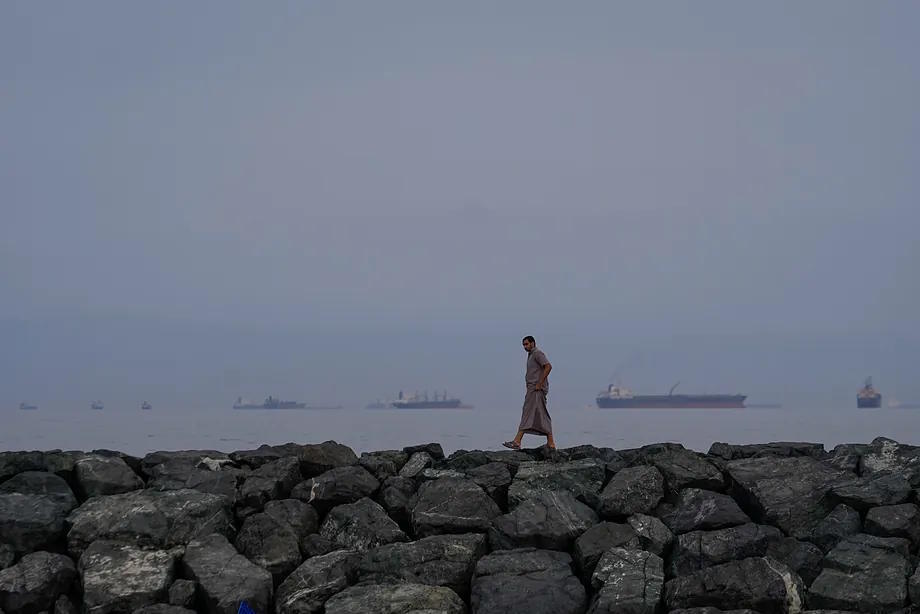
Investors stopped listening to what was being said from the White House a week ago and now only look towards the Middle East, where ground battles continue and where Iran keeps the Strait of Hormuz closed with no expectation of imminent reopening, at least not according to market prices.
The Brent oil, a reference in Europe, climbs another 3% this Monday, above $106 per barrel; while there are also problems at home for the Donald Trump Administration as the West Texas barrel, used in the U.S., is about to surpass $100, a level not seen since 2022, during the peak of the war in Ukraine.
Nothing seems to calm commodity market investors, even though several significant events occurred over the weekend. Late on Sunday, the International Energy Agency (IEA) announced the "immediate" release of the first strategic oil reserves that should already be available in Asia and Oceania. This region is undoubtedly the most affected, especially India and China, highly dependent on oil from the Middle East. As part of the commitment made last week to release 400 million barrels of these reserves globally, the largest release since the establishment of this organization in 1947.
Additionally, the U.S. President has sought help in his own way. He appealed to the NATO members to assist in reopening the passage through the Strait of Hormuz and, furthermore, overturned four years of sanctions against the Russian regime by announcing the lifting of sanctions on Russian oil for a month in an attempt to control oil prices.
Donald Trump warned on Sunday that the North Atlantic Treaty Organization (NATO) will face a "very bad future" if allies do not collaborate to reopen the Strait of Hormuz, a strategic hub for international oil trade currently blocked by the Iranian Army in response to the offensive launched by Washington and Israel against Iran on February 28. "It is logical that those who benefit from the strait help ensure that nothing bad happens there", Trump pointed out in an interview with the British newspaper Financial Times.
Gold continues its de-escalation and on Monday dropped below $5,000 per ounce. Since the outbreak of the war in Iran, the metal has lost nearly 5%, although it is important to look back and see where it started. Investors have decided to sell gold after a 66% increase in the past year and seek refuge in the dollar, which continues to strengthen against other major currencies, bolstering the U.S. economy. Today, it is trading at $1,142 compared to $1,187 at the start of the war.
European stock markets start the week with many uncertainties and a mixed tone. The highlight of the session is the takeover bid launched by Unicredit on Commerzbank with the aim of exceeding the 30% threshold. Currently, the Italian entity holds 26% of its capital. The German bank rose over 3% upon hearing the news and supports the banking union proposed by Frankfurt, which is far from being achieved. If there is strong support for the offer, it would be the first endorsement of the ECB's goals to create European banking giants to compete with U.S. banks.
This week, nine central banks worldwide, including the European Central Bank (ECB), will meet. It will be the first meeting in Frankfurt to review monetary policy in light of possible inflation increases resulting from the war in the Middle East. Only a tough stance is expected from President Christine Lagarde, although the market is pricing in an interest rate hike for the April meeting when the central bank revises its quarterly estimates.