Under the bridges of the Kabul River, which runs through eastern Afghanistan from the Hindu Kush mountains, thousands of men have been living in squalor for years among piles of garbage, tattered blankets, and makeshift fires. There, they gather in small circles to smoke heroin on strips of aluminum foil. Many of the regular consumers are former soldiers who fell into addiction due to decades of war trauma and are now trapped in one of the world's worst opioid epidemics. Some of them, following the Taliban's rise to power in 2021, began to be forcibly relocated to the Omar Hospital, a rehabilitation center on the outskirts of the capital.
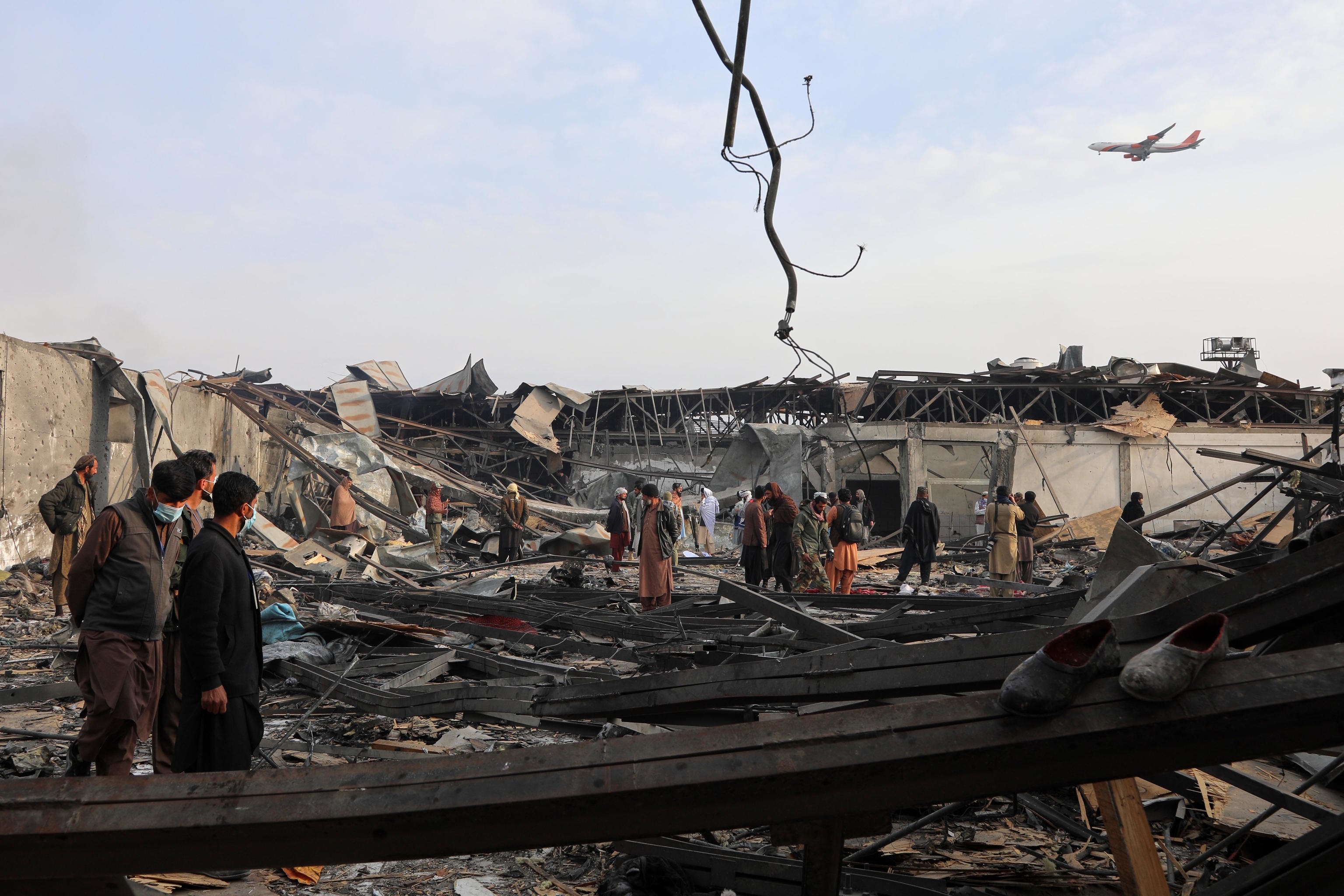
On Monday night, shortly after 9:00 p.m., several explosions rocked this healthcare complex. The first neighbors who went out to the street saw a column of smoke rising above the neighborhood. When the noise subsided, part of the hospital had been reduced to a blackened mass of broken concrete and twisted beams. According to the Afghan government, the attack was an aerial bombardment carried out by the Pakistani army amid the escalating war between the two countries. The Taliban authorities claim that there are over 400 dead and at least 250 injured. Islamabad denies having attacked the hospital.
Afghanistan, which was the world's leading opium producer for years, has also become one of its biggest consumers. According to UN estimates, nearly four million Afghans - around 10% of the population - use drugs regularly. Heroin and opium remain the most common, although in recent years locally produced methamphetamine, known as shisha, has rapidly spread among the younger population.
When the Taliban returned five years ago, they promised to eradicate both poppy cultivation and drug consumption. Starting in 2022, they launched an aggressive campaign against addicts on the streets. Fighter patrols roamed the most degraded neighborhoods of Kabul and the areas under the bridges of the river to "cleanse" the city. Drug users were forcibly loaded into vans and taken to rehabilitation centers.
The largest of these was the Omar Hospital. Originally built as a military facility during the US presence, it had been converted into the country's largest detox center. With nearly 2,000 beds, it operated as a massive forced abstinence ward.
The Omar Hospital was a desolate place even before the explosions on Monday. The main halls were gigantic hangars with endless rows of metal beds. Gray blankets piled up on worn mattresses, and sometimes two patients shared the same bed. Others slept directly on the cement floor. Most had been daily consumers of heroin or opium for years.
The detoxification process lasted around 45 days and consisted largely of enduring withdrawal symptoms under medical supervision. Doctors tried to alleviate symptoms with basic painkillers, IV fluids, and sedatives, but the hospital was chronically undersupplied since the economic collapse following the international withdrawal in 2021. Foreign aid that sustained the Afghan healthcare system evaporated almost overnight. Many doctors left the country, and public facilities barely function with the essentials. At the Omar Hospital, several healthcare workers described the situation as "managing a permanent humanitarian crisis."
On the night of the alleged bombing, hundreds of patients were sleeping in the pavilions. According to a Taliban spokesperson, the first blast tore a huge hole in the roof of one of the main buildings. Then came other explosions that caused several floors to collapse and fires in different wings of the complex.
Rescue teams described chaotic scenes. Disoriented patients ran among the debris without understanding what was happening. Nurses dragged stretchers through dusty, smoky hallways. Some inmates, still weak from withdrawal, could barely stand. Dozens of people were trapped under the concrete slabs. For hours, according to local media, makeshift brigades - made up of doctors, neighbors, and fighters - searched for survivors among the building's remains with flashlights, shovels, and excavators. As Tuesday dawned in Kabul, part of the hospital was still burning as seen in television broadcasts. Excavators removed concrete blocks while black body bags lined up in the courtyard.
Afghan authorities insist that the attack constitutes a crime against civilians committed by the Pakistani army. From Islamabad, they deny any responsibility. Pakistan's Ministry of Information stated in a post on X that their recent operations were "precise and carefully planned to avoid collateral damage" and that they targeted "military facilities and terrorist support infrastructure, including warehouses of technical equipment and ammunition belonging to the Afghan Taliban."
The alleged hospital attack occurred just hours after Kabul reported new exchanges of gunfire along the border between the two countries, with at least four dead on Afghan territory. The clashes were already in their third week. The conflict, historically marked by the disputed border known as the Durand Line (recognized by Islamabad but not by Kabul), reignited in October 2025 when a series of armed clashes left dozens dead and nearly completely closed border crossings.
After several regional mediation attempts, both governments reached a fragile truce that held until February 26. That day, Afghan forces launched an offensive on the border in response to Pakistani airstrikes that Islamabad claimed were directed against Tehrik-i-Taliban Pakistan (TTP) positions, the insurgent group that has been waging war against the Pakistani state for years. Pakistan accuses the Afghan Taliban of allowing TTP militants to operate from their territory. Pakistani authorities even spoke of an "open war" at that time.
Bombings, skirmishes, and artillery exchanges have multiplied in recent weeks in the border provinces. The Pakistani military force is much larger than the Afghan one. According to a count published last week by the United Nations Assistance Mission in Afghanistan, at least 56 Afghan civilians, including 24 children, have died since the military escalation intensified at the end of last month. The UN High Commissioner for Refugees estimates that over 115,000 people have been displaced within Afghanistan due to the fighting.