Amid the war in the Middle East, India has once again found itself walking the thin line that separates its various strategic partners. With historical ties to Iran and a close relationship with the United States, Israel, and the Gulf monarchies, New Delhi tries to play the role it has best known how to perform in its contemporary foreign policy: that of an international relations juggler who, with much diplomacy, tries to resolve the enormous energy crisis triggered by the blockade of the Strait of Hormuz.
While Donald Trump pressures his allies - and also rivals, as in the case of China - to send their warships to reopen the artery through which nearly a fifth of the world's oil flows, the government of Narendra Modi shows that there is another quieter and more peaceful formula: directly engaging with Tehran.
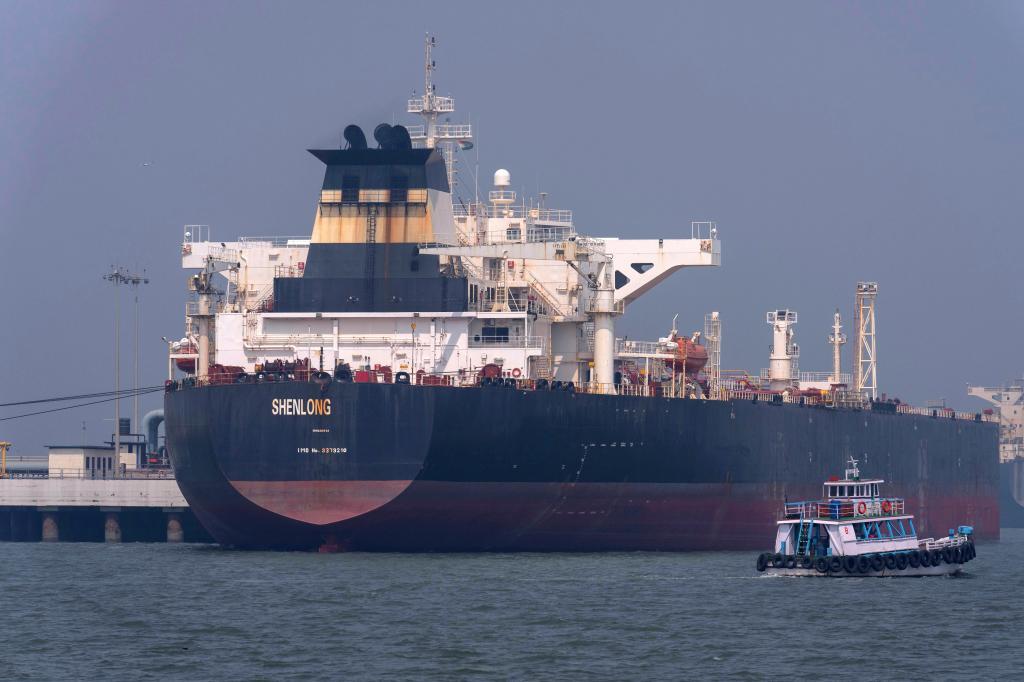
Last Saturday, two Indian-flagged oil tankers loaded with liquefied petroleum gas (LPG) managed to pass through the Strait of Hormuz bound for ports in western South Asia. The authorization was an exception in the midst of the blockade imposed by the ayatollah regime following US and Israeli attacks on Iranian territory.
Unlike the vast majority of US allies, New Delhi has maintained an open political channel with the Islamic Republic for decades. The relationship is based on both energy interests and strategic regional connectivity projects, such as the Iranian port of Chabahar, conceived as a gateway to Central Asia.
India's Minister of External Affairs, Subrahmanyam Jaishankar, defended this diplomatic approach in an interview with the Financial Times, describing talks with Iran as "the most effective way" to resume maritime transit. "Dialogue has yielded some results," he said. "For us, it is preferable to resort to reason, coordinate efforts, and find a solution," he stated in remarks following Trump's message urging several countries, including China, the UK, and Japan, to contribute their warships to a military campaign to unblock the Strait of Hormuz.
So far, the pressure from the White House has not elicited any commitments. Australia and Japan, two of the main US allies in the Pacific, distanced themselves on Monday by ruling out sending warships. "We continue to analyze what Japan can do independently and what is possible within the legal framework," stated Japanese Prime Minister Sanae Takaichi, who will meet with Trump in Washington on Thursday. The Japanese leader is constrained by the pacifist restrictions of Tokyo's Constitution, which limits the participation of the Self-Defense Forces in military operations abroad.
On Sunday, Trump once again directly pressured China to assist Washington in Hormuz, even threatening to postpone his visit to the Asian giant until the end of the month, when he is scheduled to meet with Chinese leader Xi Jinping. From Beijing, cautious in their response, they stated that they were still in discussions with the US about the president's trip, which on Monday announced that it will be postponed "about a month".
"China reiterates its call to all parties to immediately stop military operations, avoid further escalation of tension, and prevent regional instability from having a greater impact on global economic growth," a Chinese spokesperson stated in response to a question about whether Beijing had received a formal invitation from Washington to send warships to help open the Strait of Hormuz.
In India, there hasn't even been a debate on this issue because joining a naval operation against Iran would mean jeopardizing a carefully cultivated diplomatic relationship over decades. For Delhi, its network of alliances turns the war in the Middle East into a major geopolitical balancing act.
Modi spoke by phone last Friday with Iranian President Masoud Pezeshkian to discuss the security of goods and energy transit in the Gulf. India is the world's third-largest oil consumer and depends on imports that pass through Hormuz, whose blockade threatens to cause shortages of basic fuels in a country of over 1.4 billion people. The Indian government has activated emergency powers and instructed refineries to maximize LPG production to prevent shortages. It also reduced industrial sales to ensure supply to the 333 million households that use this fuel for cooking.
India's silent mediation is not new in its foreign policy. From the Cold War to the current scenario, the country has cultivated a reputation as a pragmatic actor capable of engaging in dialogue with opposing blocs without aligning with any. This legacy explains why, amid the noise of the current war, Delhi insists on a dialogue strategy that steers clear of naval shows of force. For a country accustomed to successfully navigating between rival powers, diplomacy remains the safest tool to navigate turbulent waters.