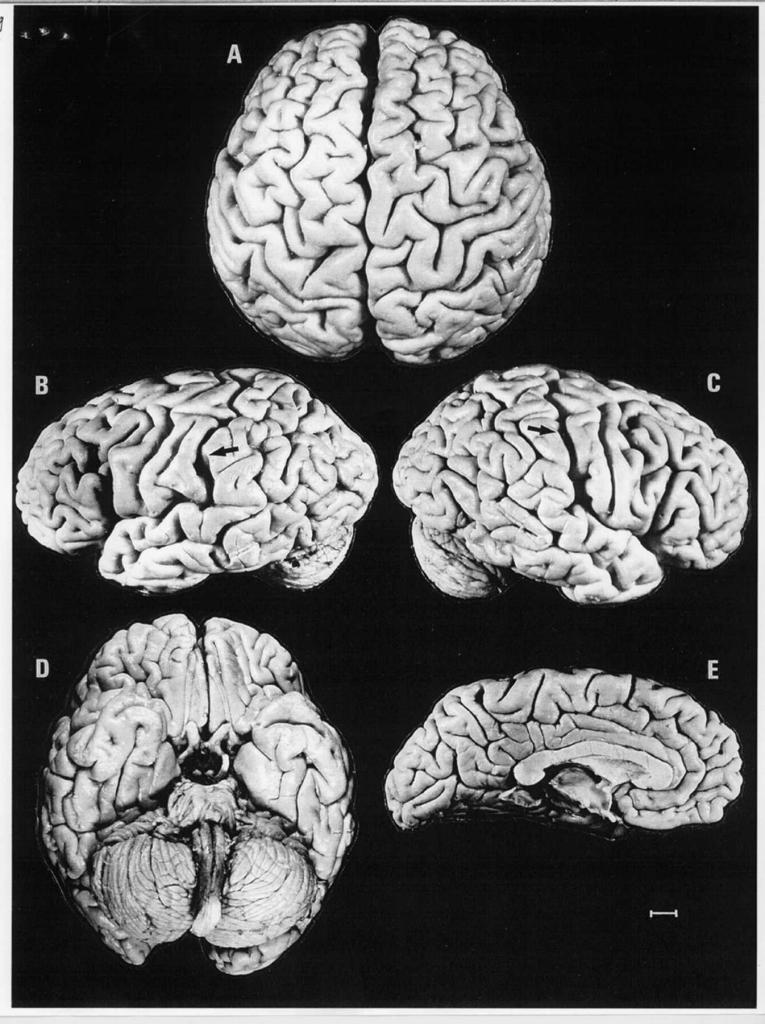
There is no animal on the face of the Earth whose brain has more neurons than humans. The most complex organ in our body accumulates around 11.5 billion nerve cells, a figure that explains why a good part of our energy is spent feeding the brain. If our precious brain represents approximately 2% of our body mass, the truth is that it consumes 20% of the body's energy.
It then seems logical to think that we are intelligent beings thanks to our brain. The success of our species lies in the skull. So we take for granted that the size of our brain increased over thousands of years of evolution to allow the development of our great weapon: abstract thinking. Thanks to our ability to reason, we invented agriculture or mathematics, reached the Moon, and aspire to colonize Mars. However, it is not to be ruled out that we may be wrong.
What if the evolution of our brain is not so much explained by reasoning as by our ability to socialize with friends? What if we are intelligent beings because we knew how to group together to live in community and forge alliances and social relationships? What if what distinguishes us as humans is our skill to intuit what others think and how they will react? In other words, it turns out that we may have come to dominate the world simply because we are sociable and friendly individuals.
This is the thesis of Matthew Lieberman (Atlantic City, United States, 1970), whose acclaimed work Social is now being published in Spain (Capitán Swing). "For a long time, we have assumed that our large brains are a consequence of our analytical capacity, but there are studies that suggest that the need to get along with others not only drove the development of the brain, but that this social part could be even more important than the analytical part for brain evolution," explains the psychologist in a video conference interview from his home in Los Angeles. "It's surprising."
Dr. Lieberman, a professor in the departments of Psychology, Psychiatry, and Biobehavioral Sciences at the University of California, refers to the hypothesis of the social brain developed by anthropologist Robin Dunbar in the early 1990s. According to this theory, the growth of the neocortex in the brains of primates was what drove a more complex social life, in larger and more numerous groups.
In his book, Lieberman argues that the dominance of Homo Sapiens is thus based on its social thinking. Whether we like it or not, we are programmed to be social: "Living a social life is difficult, really difficult. We depend on other people, the most complex entities in the universe, to produce our food, pay our salary, and contribute to our general well-being. This system is far from perfect, but evolution has repeatedly bet on making us more and more social," writes Lieberman.
And here comes the great paradox. If in theory we are programmed to be social, why are we becoming increasingly individualistic and witnessing impassively the lonely deaths of many elderly people? Furthermore, if our brain dictates that we should be empathetic towards others, why is hatred spreading worldwide? Being social improves our lives, but for some reason, we are becoming less social.
Lieberman can only agree: "I wrote the book over 10 years ago, to help people understand why our social needs are so important for our well-being, and the situation has only worsened." When the pandemic forced us to isolate ourselves radically, we discovered that prolonged loneliness and lack of social contact do not leave us unscathed. Nevertheless, we continue to bet everything... on money. And what our social brain tells us is that money does not bring happiness.
"Humans have been willing to sacrifice their social connections for something they value even more: money." The American author uses himself as an example: he lives 5,600 kilometers away from where he was born because he moved to the West Coast of the United States to pursue a career, just as he had previously changed cities to study. He distanced himself from relatives and left dozens of friends along the way. The same could be said of any of us.
"We tend to think that if we earn money, status, and prestige, we will be happier. However, when this comes at the expense of our social life, we end up being unhappier. As we become a more individualistic society, more people are seeking therapy for depression and anxiety," explains Lieberman. "We have theories about what will make us happier and make decisions based on them. But sometimes these theories are wrong."
In fact, in his book, he uses Facebook as an example of what once - long ago, yes - made us happy. In the early days of the internet, the first studies on its impact already suggested that users who spent more hours browsing the web reduced communication with their families. And with less social life, more sadness. However, something changed so that, in the early 2000s, suddenly the internet became associated with greater social connection and well-being. Today it may seem like a bad joke, but back then Facebook burst into our lives to bring a smile to our faces.
Those were the times when the social network of Mark Zuckerberg allowed us to reconnect with former classmates, with cousins who lived far away, and even with siblings studying abroad. The idyll with Facebook vanished the moment it opened the doors to polarization. It was no longer about posting innocent photos of family meals at Christmas.
So we ask Lieberman what has happened for us to act against thousands of years of brain evolution. What sense does it make, ultimately, to have developed a social brain to empathize with others if hatred seems to be the most valued human trait today and indifference to others' suffering is spreading everywhere.
"It is one of the most striking things I have seen since I wrote the book," confirms Lieberman. "I am astonished when I see people who deeply identify with Christianity but, at the same time, believe that empathy is a weakness that drives us to do things for those who do not help themselves." And he insists: "Christianity basically boils down to helping others and the most needy."
The psychologist admits that in recent years many things have happened that could explain the current social and political polarization. He even dares to mention one so decisive that "it changed everything": the American news network Fox, aligned today with Donald Trump. "There are increasingly more sources that are opinions disguised as facts, and that adapt to our particular information bubble. This inevitably leads to an 'us against them' dynamic, and while we are made for empathy, we are also wired to activate our protective instinct against the rest," argues Lieberman.
When 5,000 years ago we lived in small isolated communities, the appearance of another group inevitably put us on alert. Something similar happens today with those we consider our enemies.
Lieberman does not believe that we are deliberately sabotaging thousands of years of brain evolution. He points out, however, that "the circumstances of the world are much more complex than those for which our brains were designed."
"Our brains have probably not changed in the last 50,000 years. On the contrary, our abilities and our technology have changed. Climate change has changed things. So the world is infinitely more complicated." According to Lieberman, "the brain is designed for hunting and gathering in small groups, to recognize 90% of the faces you'll have seen by the time you're five." And "that's not the world we live in, so our brains aren't designed for such a complex world."
"I don't think we're going against our evolution," the author insists, "but rather that the world has outgrown it."
Just ask our leaders and politicians. In Lieberman's view, there's a huge contradiction between our social selves and the hoops that administrations try to force us to jump through. It's as if the administrative framework wasn't made for us. If we are driven and motivated by social needs, the question then becomes why institutions focus solely on IQ (the education system, for example) and income (the job market).
"Politicians should work with psychologists," Lieberman argues. Just as leaders rely on committees of experts and economic advisory boards, why not have a psychologist in government? "It would help politicians understand how people would react to certain measures, or explain difficult decisions so that people can get on board."
Lieberman proposes refocusing on the social aspect of our selves, because our future depends on it. And so does our health: "There are people who live in isolation with hardly any social contact. You can live like that, although the evidence suggests you will live a shorter life." Being alone won't kill you today, but it will harm your health in the long run.
Again, we must look to our ancestors to understand how what keeps our inflammatory system under control is precisely being connected to other people. Those who had to go out hunting alone had to be alert and prepared for any danger. It was always safer to venture into the jungle in a group. Therefore, "the body seems to know that, when alone, it must activate the inflammatory system to protect us." And inflammation, which at a certain point can be beneficial, according to Lieberman, "becomes harmful when it becomes chronic."
One last piece of information to further convince us that social connection has allowed us to survive as a species. Doesn't it hurt when social bonds are broken? We can break a leg and complain bitterly about the physical pain for days or even weeks. But the death of a mother or a child is felt for years. "Social pain is real, just like physical pain," because both mental processes "rely on common neural mechanisms." The point is that this social suffering is the price we pay for being human.