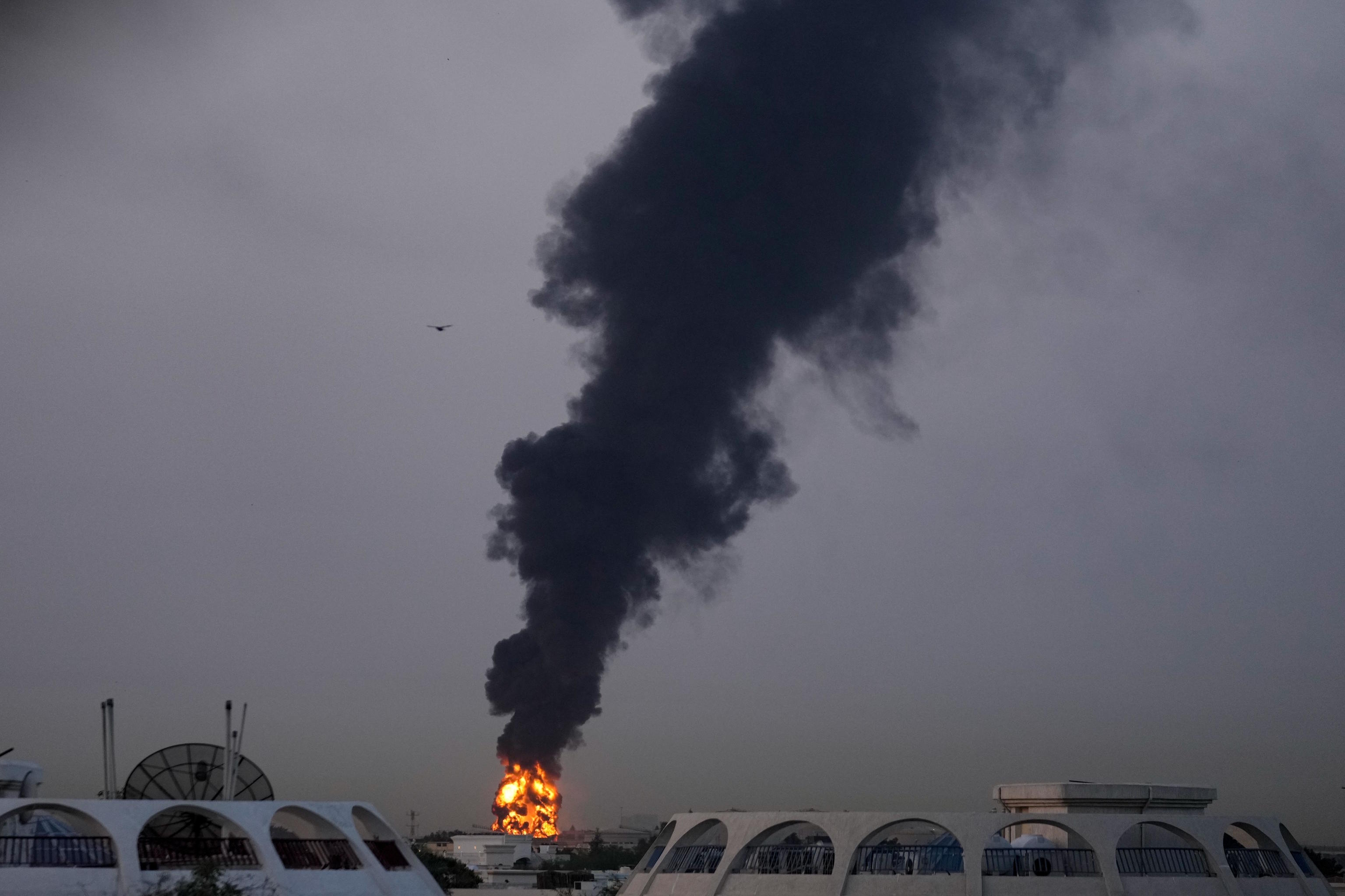
On one of the busiest nights over the Persian Gulf, Iran unleashed two waves of ballistic missiles and drones on various targets in the United Arab Emirates. The projectiles from one of them, after two in the morning, were intercepted with a loud noise over the center of the futuristic city of Dubai. Emirati air force fighter jets could be heard patrolling the skies in search of targets to shoot down.
Despite United States reiterating that it has degraded Iran's attack capabilities, the ayatollahs continue to send an average of eight or nine ballistic missiles and 20 to 30 drones per night. As a novelty, Iran is using a type of missile with cluster munition, similar to those launched on Israel. When in a descending trajectory, the rocket opens its head and releases smaller explosive projectiles.
Just today, it was reported that the United Arab Emirates is considering joining the coalition that Trump is seeking to control the strategic Strait of Hormuz. Individuals close to the Gulf monarchies assert that patience with Tehran in these countries is running out, and they believe that perhaps it is best to support Washington's effort to end a hostile neighbor like the ayatollah regime.
Traditional interceptors, such as Patriot or Thaad missiles of American origin, can shoot down one projectile at a time, but if it manages to open up, it becomes impossible to stop them all. Nevertheless, the United Arab Emirates boast very high interception rates, exceeding 85% and sometimes reaching 90% on certain days. The key is that they have managed, in two weeks, to sharpen a system similar to Israel's famous Iron Dome, to the extent of being able to keep their international airport, the busiest in the region, open.
In Dubai, authorities have chosen not to use air raid sirens in the streets but rather sound alerts on mobile phones. Last night, they sounded twice and once more during Wednesday morning. There is also no network of shelters planned like in Kiev or Tel Aviv, although the government recommends seeking safe places indoors and moving away from windows and exposed areas.
Despite the attacks, authorities are managing to instill a certain sense of normalcy among residents and local inhabitants who have chosen to stay, gradually internalizing the alerts and resuming their lives minutes later. They all feel grateful to the air forces and the government for the protection they are providing in these moments of crisis.