In the past hours, the price of crude oil has surged to $116 per barrel, while natural gas has reached levels not seen in the last four years. Following the bombing of its main field, the Iranian regime has declared the end of the containment phase.
Authorities in Tehran have officially stated that "the pendulum of war" has shifted towards a "large-scale" economic conflict, immediately ordering the evacuation of gas plants and refineries in the Gulf countries in anticipation of retaliation. This new phase of hostilities has blown up years of diplomatic efforts in the region. From Riyadh, authorities have warned Iran that the "little trust" that had recently been built with its Gulf neighbors is now "completely shattered." The Iranian retaliation has targeted high strategic value objectives.
In Saudi Arabia, a projectile hit the Samref refinery in the port of Yanbu, operated by the state giant Aramco. While industry sources describe the impact as "minimal," tension in the area is extreme: the Saudi air defense had to intercept a ballistic missile heading towards this port, vital for exports through the Red Sea due to the blockade in the Strait of Hormuz.
On the other hand, Qatar has been hit in the industrial zone of Ras Laffan, where the world's largest liquefied natural gas plant is located. Iranian bombings have caused fires and "significant damage" to facilities whose production had already been suspended since March 2 due to regional instability. Additionally, the UK Maritime Trade Operations (UKMTO) has reported that a commercial vessel was hit by a projectile just six kilometers from the Qatari plant, causing a fire on board, although the crew is safe.
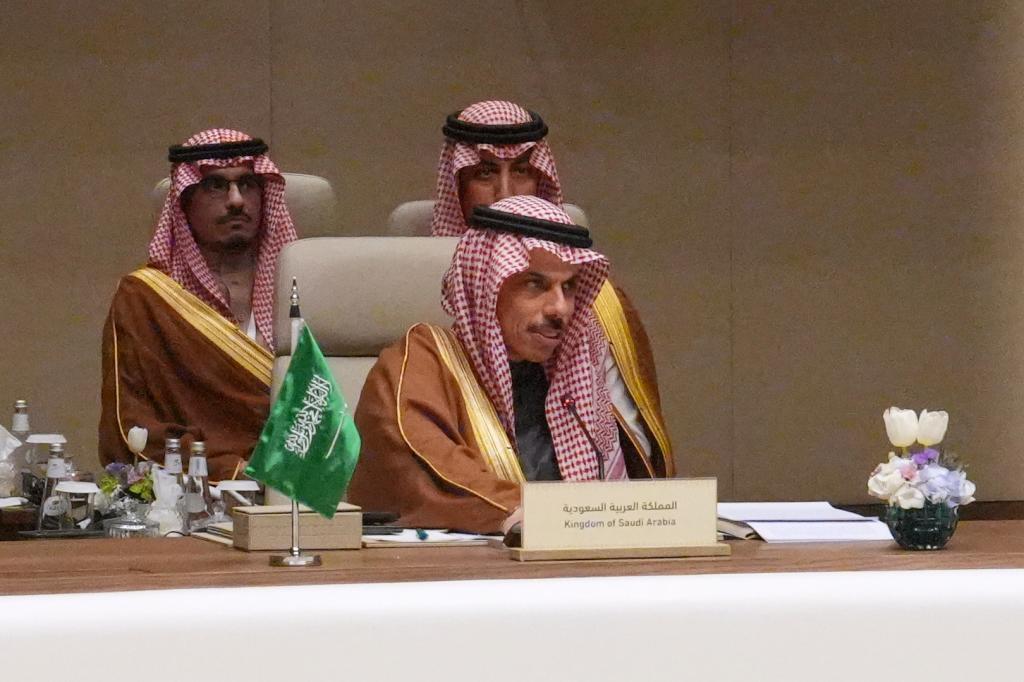
The patience of the Gulf powers seems to have reached its limit. Saudi Foreign Minister, Prince Faisal bin Farhan, has issued a final warning, stating that Iran's pressure will have a "counterproductive effect both politically and morally, and we certainly reserve the right to take military action if deemed necessary." While the global energy supply hangs by a thread, the international community watches in fear as the missile war transforms into a total economic stranglehold.