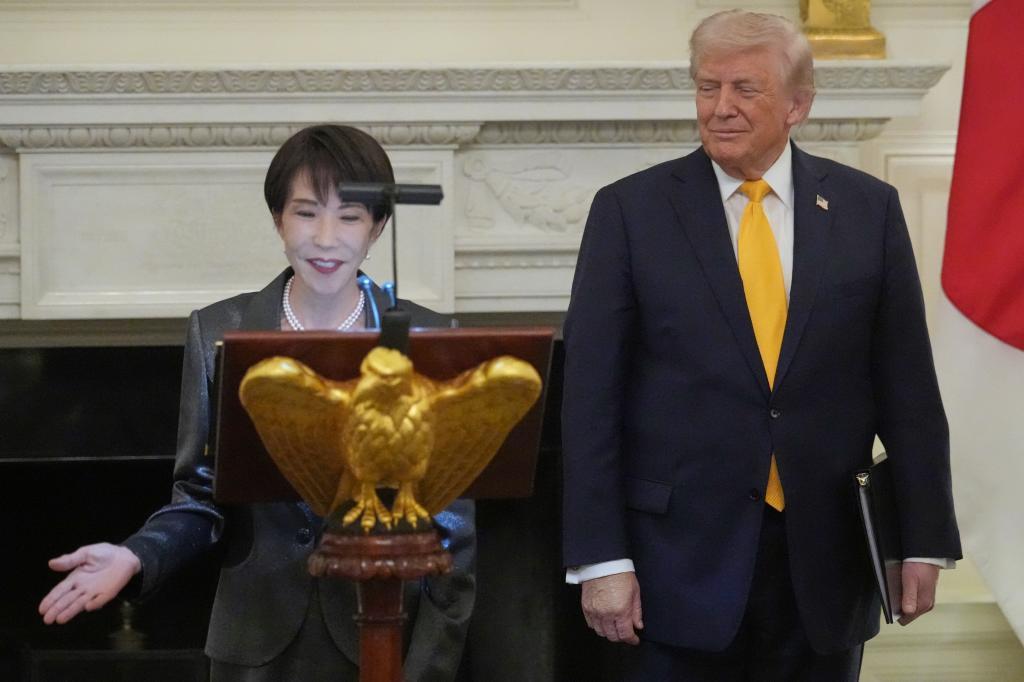
The meeting took place in a delicate context, following public complaints from the U.S. President about Japan's alleged lack of support in protecting the Strait of Hormuz amid tensions with Iran.
During the approximately 30-minute meeting in the Oval Office, moments of evident discomfort were experienced. When questioned about not notifying his allies before carrying out attacks in Iran, Trump made a controversial joke about the 1941 attack on Pearl Harbor. "Who knows more about surprises than Japan? Why didn't you warn me about Pearl Harbor?" commented the President, causing Takaichi's smile to fade. Despite these tensions, the Prime Minister appealed to Trump's desire to be seen as a peacemaker, stating that only he can achieve world peace.
The main point of friction remains Japan's level of military commitment in the Middle East. Trump insisted that Tokyo must "step up," reminding that a significant portion of the oil consumed by Japan passes through the Strait of Hormuz. On her part, Takaichi detailed the constitutional limitations of her country, which prohibit the use of force except for self-defense. Experts indicate that joining the U.S. mission would require overcoming an exceptionally high political threshold to invoke collective self-defense, something unprecedented in Japan's recent history.
Despite defense differences, the visit yielded significant economic results with the signing of a $40 billion agreement. According to this pact, GE Vernova and Hitachi will build small modular nuclear reactors in Tennessee and Alabama to stabilize electricity prices in the United States.
Finally, the agenda included concerns about regional security and China's influence in Taiwan. Takaichi expressed her concern about the transfer of U.S. troops from Japan to the Middle East, which could weaken deterrence in East Asia at a time when China is intensifying its military exercises. However, after an official dinner, both leaders displayed a united front, with Takaichi declaring in English that "Japan is back."