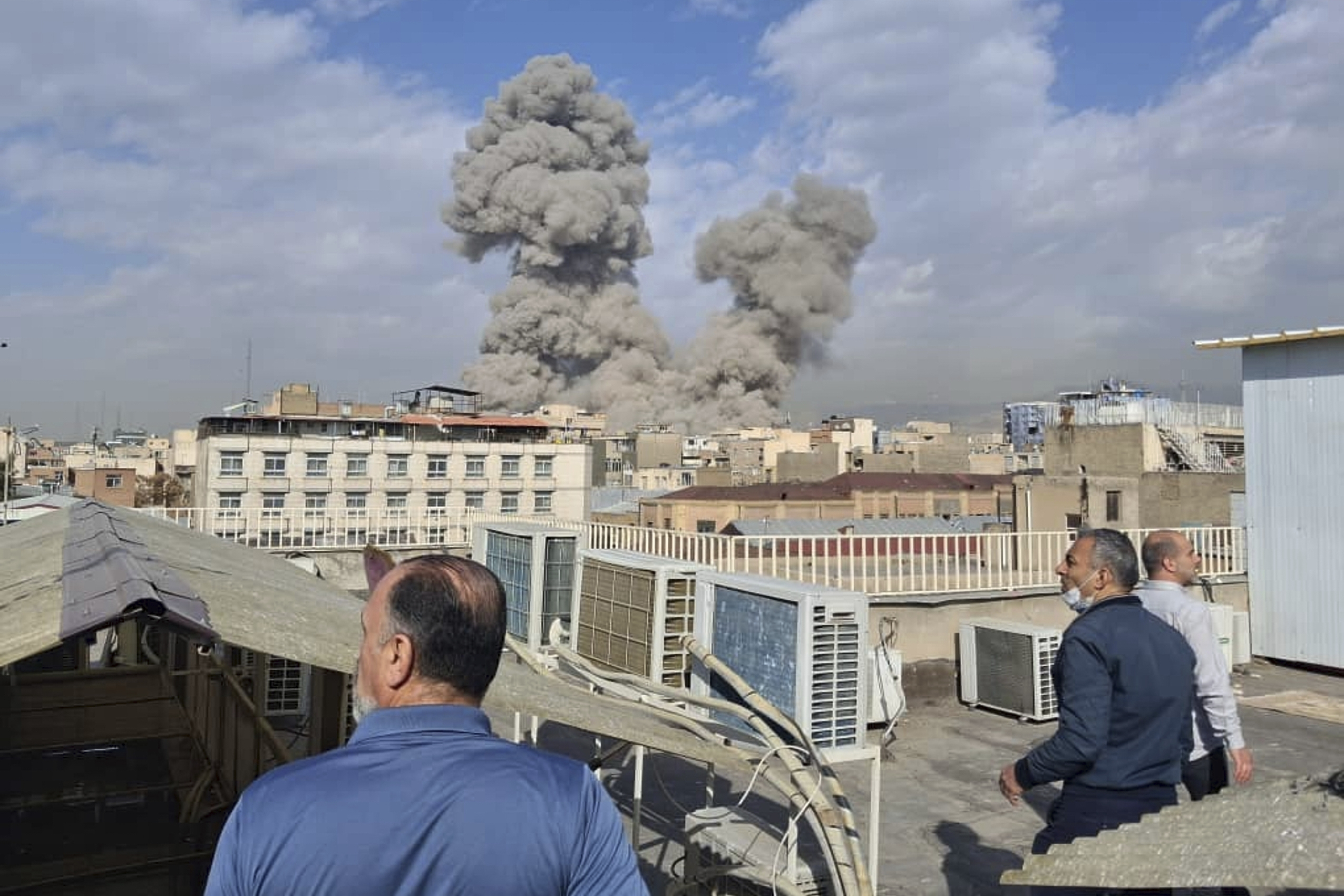
The United States is spending $23,000 per second, according to conservative estimates released in Pentagon reports, in its war against Iran. The Center for Strategic and International Studies independently estimated that the total reached $16.5 billion by the twelfth day, with daily costs increasing until today and will increase even more when the deployment of 5,000 marines expected in a few days arrives.
What is most concerning now, within this out-of-control spending, is the pressing shortage of interceptors. And what is an interceptor? An interceptor is a defensive missile designed to detect, reach, and destroy another missile or drone in the air before it hits its target. Essentially, it is the core of missile defense systems: a projectile that neutralizes another projectile in mid-flight to protect infrastructures and cities.
Why have these missiles become the most prized and scarce weaponry in arsenals worldwide? The underlying problem is not so much the ability to launch missiles but the ability to stop them for weeks or months. In a war like this, based on drones and relatively cheap missile salvos launched by Iran, the shortage of interceptors becomes a strategic bottleneck for the United States, Israel, and the Gulf monarchies.
Although Donald Trump boasts of having significantly reduced Iran's capabilities, and that may partly be true, Iran still has the ability to launch dozens of ballistic missiles daily, in addition to drones, and continues to possess an arsenal expanded for decades whose actual numbers are unknown with certainty but could exceed 6,500 ballistic missiles, all hidden underground in armored bunkers.
The initial impressions of the instructor teams sent by Ukraine to Gulf countries are emerging. One of the first impressions of these war veterans against Russia is their total surprise at the use of several Patriot missiles, "sometimes up to six against the same target," considering their price, which exceeds three million euros, and their scarcity.
An Iranian drone or missile can cost tens or hundreds of thousands of dollars. The price of an interceptor -Patriot, THAAD, or Arrow missiles- ranges between one and four million per unit. This creates an unsustainable equation in the long run. In other words, the attacker can saturate another country's defenses at a very affordable cost, but the defender goes bankrupt trying to protect its territory. This is what the Ukrainians learned through bombardments. To eliminate the cheap projectile, you must use cheap interceptors and save your best missiles to stop the enemy's ballistic missiles.
Some countries are already showing signs of exhaustion. Semafor reported, citing US officials, that Israel has warned that its interceptors are about to run out. Some analyses speak of a usage rate far exceeding the replenishment capacity. Their reserves are under real and constant pressure, and could become a critical factor if the war drags on. Although Israel denies it, all countries attacked by Iran with missiles and drones could face the same problem, being exposed and without ammunition to waves of old and cheap but equally damaging missiles.
Why are they so scarce and expensive?
What makes these missiles so scarce and expensive? The MIM-104 Patriot is not ammunition in the classical sense, but a piece of highly precise engineering, difficult to manufacture, with long and inflexible supply chains due to its technological complexity. A Patriot interceptor -especially in its PAC-3 version- does not carry a large explosive charge, but directly impacts the target (hit-to-kill). In other words, you shoot an arrow to bring down another arrow. This requires highly precise miniaturized sensors and radars, extremely sophisticated guidance systems, and advanced electronic components capable of operating in milliseconds. Despite everything, they sometimes fail.
Although they are mass-produced, these missiles do not come from a massive automated assembly line. Production is concentrated in a few companies -mainly Lockheed Martin and Raytheon Technologies- and each unit requires long processes, strict quality controls, and specialized assembly. Moreover, Ukraine, Israel, Gulf countries, and the United States compete to access the production line ahead of the rest.
The Patriot is not scarce because of a lack of money, but because its manufacturing depends on a narrow and highly specialized industrial chain that cannot expand at the rate interceptors are consumed due to the salvo war imposed by Russia and now by Iran, two countries with gigantic missile arsenals from the Cold War.
Concerns about Western arsenals have to do with a very simple but unsettling idea: the West has built extremely advanced military systems, but is not prepared to sustain a high-intensity war for a long time. Rheinmetall's CEO, Armin Papperger, has probably been the most direct in speaking about the real state of Western arsenals in this crisis: "I think the warehouses are empty or nearly empty everywhere: in Europe, in America, and in the Middle East."
In this context, the war with Iran continues to escalate. In a message in his usual defiant tone, President Donald Trump warned yesterday that the United States will "annihilate" power plants in Iran if the Islamic Republic does not fully open the strategic Strait of Hormuz within 48 hours. He even went further by saying that he will "destroy" several power plants "starting with the largest." The blonde president had no problem publicly threatening something that is essentially a war crime because it targets a civilian objective. The clock has been ticking since then.
In response, the ayatollah regime replied to Trump: "All US energy, information technology, and desalination infrastructures in the region will become targets." Subsequently, Iran's representative to the International Maritime Organization (IMO) stated that the Strait of Hormuz remains open to international navigation, except for Israel and the United States. This statement is not true, as almost no tanker currently leaves the waters of the Persian Gulf for the Arabian Sea.