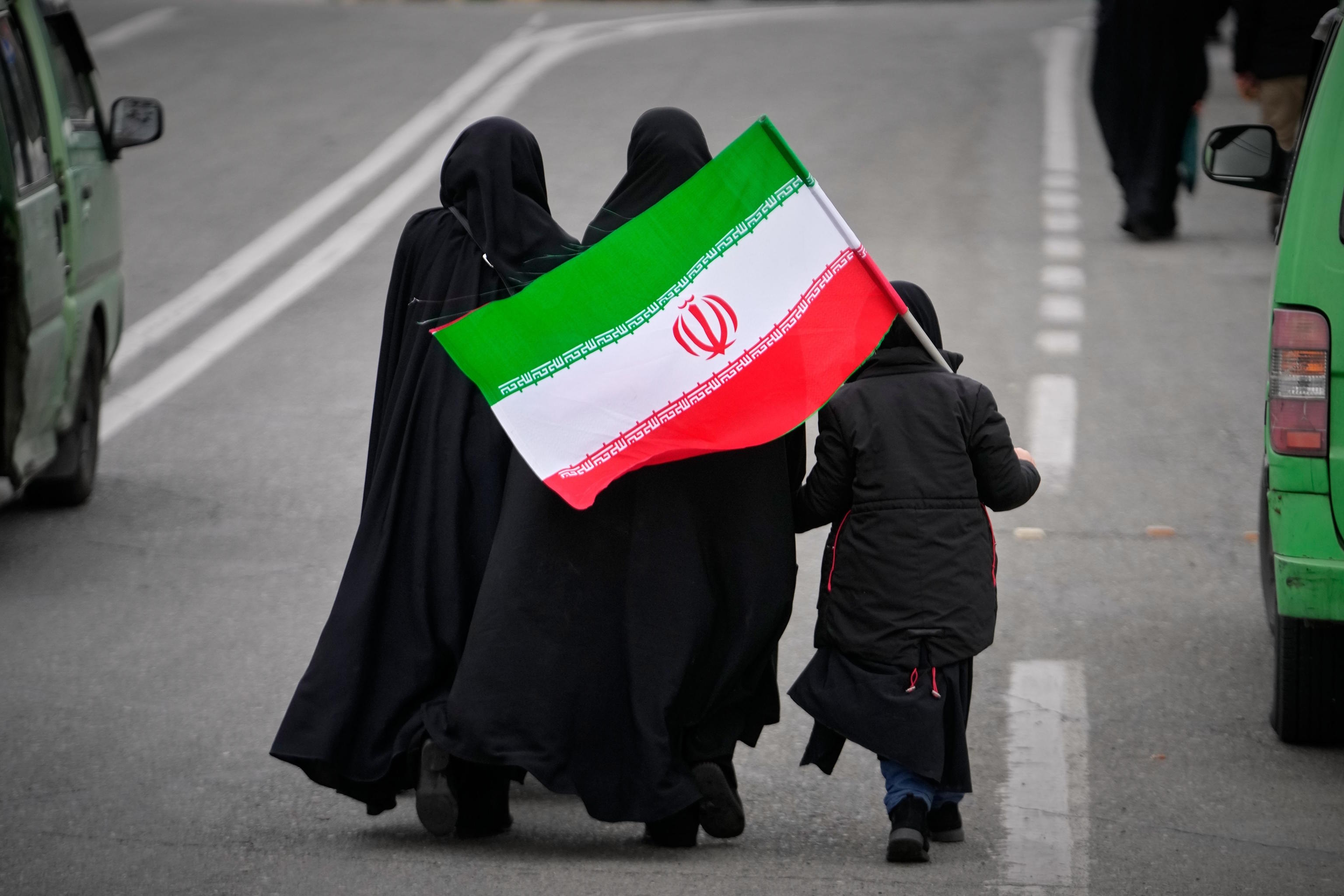
Israel has launched a new wave of attacks against infrastructure of the "Iranian terrorist regime" in Teheran hours after activating its defense systems to intercept a new barrage of missiles launched from Iran towards its territory.
Furthermore, the Persian regime has once again attacked its neighbors in the Gulf, while the Revolutionary Guard has renewed threats if Donald Trump fulfills the ultimatum to "annihilate" Iran's power plants if it does not reopen the Straits of Hormuz within 48 hours. The statement from the Iranian paramilitary group, read on state television, ensures that if the US does so, Iran will attack power plants in all areas supplying US bases, "as well as economic, industrial, and energy infrastructures in which Americans have stakes."
In this context, China warned of the risk that "the entire region could be plunged into an uncontrollable situation" and demanded a ceasefire. A spokesperson for the Asian country's Foreign Ministry strongly criticized US and Israeli bombings and implicitly the Iranian attacks against countries in the region and the blockade of the Strait of Hormuz.
Iran threatens to mine "the entire Persian Gulf" if its islands are attacked by the US
Iran threatened on Monday to mine all access routes and communication routes in the Persian Gulf if its islands are attacked by the United States, a country that pointed out yesterday that the invasion of the island of Jarg, where Iran's main oil center is located, is on the table.
"Any attempt by the enemy to attack Iranian coasts or islands will naturally and in accordance with standard military practice lead to the mining of all access routes and communication routes in the Persian Gulf and its coasts with different types of naval mines, including floating mines deployable from the coast," warned the Iranian Defense Council, according to Efe.
2% drops for Europe amid fears of the worst oil crisis in decades
European stock markets start the fourth week since the outbreak of the war in the Middle East with significant losses, exceeding 2% among the main indices. Oil remains the central concern, especially after the warning from the International Energy Agency (IEA) speaking of a historical seriousness in the crude oil market situation.
Read the full article, by Laura de la Quintana
China warns of the risk of an "uncontrollable situation" in the Middle East after Trump's ultimatum
China warned on Monday of the risk that the situation in the Middle East could become "uncontrollable" if Donald Trump fulfills his threat to destroy Iran's power plants. "If the war spreads and the situation deteriorates further, the entire region could be plunged into an uncontrollable situation," said a spokesperson for the Chinese Ministry of Foreign Affairs, Lin Jian, as reported by Afp.
Donald Trump declared on Saturday that the United States would "annihilate" Iranian power plants if Tehran did not reopen the Strait of Hormuz within 48 hours.
IEA warns that the current energy crisis is "very serious" and surpasses that of 1970
The Executive Director of the International Energy Agency (IEA), Fatih Birol, warned on Monday that the situation is "very serious" and surpasses the energy crises of the 1970s, in a context marked by the blockade of the Strait of Hormuz and attacks on energy facilities in the Middle East.
During an intervention at the National Press Club of Australia in Canberra, Birol pointed out that the current crisis is equivalent to "two oil crises and a gas collapse combined," referring to the energy crises of 1973 and 1979 caused by embargoes and production cuts of crude oil in the Middle East, posing a "greater threat" to the global economy.
"No country will be immune if the situation continues in this direction," he emphasized during his one-day visit to Australia, where he is also scheduled to meet with Prime Minister Anthony Albanese before continuing his tour of Asia.
Birol warned of the damage suffered by the regional energy sector, indicating that at least 40 infrastructures have been "severely or very severely" affected in nine countries, exacerbating uncertainty about the supply.
The head of the IEA highlighted that the reopening of the Strait of Hormuz, a key passage through which nearly 20% of the world's oil and gas trade transits, is the main way to alleviate energy tensions.
Starmer spoke with Trump about the need to reopen Hormuz
British Prime Minister Keir Starmer spoke on Sunday night with US President Donald Trump about the need to reopen the Strait of Hormuz to ensure the stability of the global energy market, a spokesperson for the official residence of 10 Downing Street reported, as cited by Efe.
The leaders discussed the current situation in the Middle East and, in particular, the importance of reopening Hormuz to resume global maritime transport, the source added. "They agreed that the reopening of the Strait of Hormuz is essential to ensure the stability of the global energy market. They agreed to speak again soon," the source added.
The Prime Minister is expected to chair a meeting of the Cobra emergency committee, composed of key ministers, to address the economic impact of the war in Iran.
The British government has emphasized that the UK continues to support defensive actions against Iran but will not be dragged into the war. On Friday, Starmer's administration announced that it has authorized the US to use British bases for specific defensive operations in the conflict in the Middle East.
Israel attacks "Iranian regime infrastructure" in Teheran
The Israeli Army reported on Monday the start of a broad wave of attacks against infrastructure of the "Iranian terrorist regime" in Teheran, according to a statement released by the Israel Defense Forces (IDF).
The offensive comes hours after Israel reported the activation of its defense systems to intercept a new barrage of missiles launched from Iran towards its territory. Through its official Telegram channel, the IDF indicated that caution alerts were sent to mobile phones in the affected areas, urging the population to go to shelters and stay there until further notice. Reported by Efe.
Oil prices rise and Asian stocks fall
Oil prices rose on Monday in Asian trading, where stock markets plummeted across the region following the ultimatum from US President Donald Trump to Iran.
The West Texas Intermediate (WTI) barrel, a benchmark for the US oil market, rose to $99.86. The Brent North Sea barrel, a benchmark for the global market, rose by 0.7% to $112.98.
Meanwhile, the Seoul and Tokyo stock exchanges, which were growing strongly before the war, closed Monday with significant declines. The Nikkei index in Tokyo closed with a 3.47% drop, while the Kospi in Seoul plummeted by 6.5%, in a market weighed down by oil imports.
The South Korean won fell on Monday to its lowest level against the dollar since 2009, dropping below 1,510 won per dollar.
Similarly, the Hong Kong stock market lost 3.8%, while other Asian stock markets had more moderate declines, such as Taipei (-2.5%). Sydney, on the other hand, fell by -0.7%. Reported by Afp.
US says it has attacked an Iranian plant producing engines for attack drones
The US Central Command (CENTCOM) stated on Monday that it has attacked an Iranian plant producing engines used in attack drones and aircraft of the Revolutionary Guard of the Persian country.
The plant, located in the province of Qom (north-central Iran), "manufactured gas turbine engines for attack drones and aircraft components used by the Islamic Revolutionary Guard Corps of Iran," said CENTCOM on the X platform.
The US command shared images of the factory before and after the attack, specifically a photograph dated March 6, 2026, showing the apparently intact facilities, and another taken "three days later, after a devastating attack." Reported by Efe.