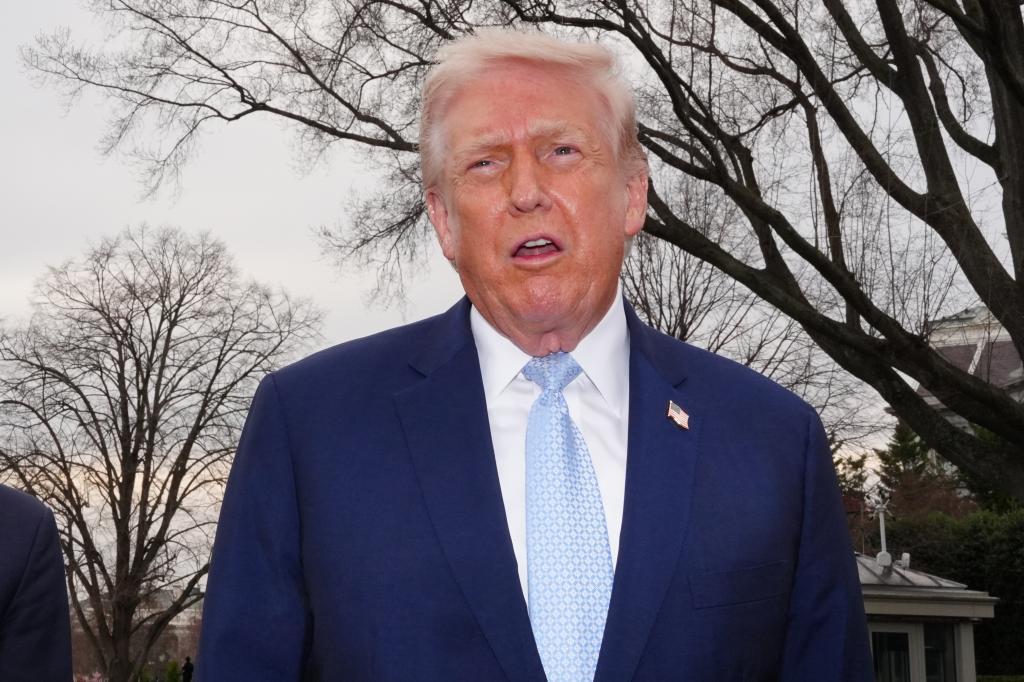
The war in Iran continues to escalate out of control. In a message in his usual defiant tone, President Donald Trump warned that the United States will "annihilate" power plants in Iran if the Islamic Republic does not fully open the strategic Strait of Hormuz within 48 hours. He also goes further by stating that he will "destroy" several power plants "starting with the largest one." The blonde president has no qualms about threatening something that is essentially a war crime as it targets civilian infrastructure.
In response, the regime of the ayatollahs told Trump: "All energy, information technology, and desalination infrastructures belonging to the US" in the region will become targets. Subsequently, Iran's representative to the International Maritime Organization (IMO) stated that the Strait of Hormuz remains open to international navigation, except for Israel and the United States. As this journalist was able to verify this week, this is an assertion that is not true. Out of the 150 oil tankers that usually pass through the strait daily, only about 90 have managed to do so in two weeks, mostly linked to Iran or China. The rest of the countries cannot enter or exit the Persian Gulf under the threat of attack.
In reality, attacks on energy facilities are not new. Vladimir Putin has used this form of terror against the civilian population of Ukraine, which has endured harsh conditions during the past winter. Now the US is threatening Iran with the same type of bombings.
Events indicate that the war in the Middle East, now in its fourth week, was advancing in a new and dangerous direction. With these statements, he may have been referring to the Bushehr nuclear power plant, the largest in Iran, which was already hit last week, or to Damavand, a natural gas plant near Tehran, the capital of Iran. Meanwhile, the United States is deploying two complete amphibious groups of 5,000 marines in total, one from the US coast and the other from the Sea of Japan. It will take them a week to reach this region.
Early Sunday, Iran warned that any attack on its energy facilities would result in attacks on energy and infrastructure assets of the United States and Israel, specifically information technology and desalination facilities in the region, according to a statement quoting an Iranian military spokesman disseminated by state media and semi-official websites, reports Efe.
Additionally, Iranian authorities informed the International Maritime Organization (IMO) that maritime traffic through the Strait of Hormuz is allowed for most vessels, although they warned that this authorization does not extend to vessels linked to "enemy countries", indicating that Tehran would determine which vessels are allowed passage. Iran has already approved the passage of ships through the maritime route to China and other Asian destinations.
This was stated by Iran's permanent representative to the UN-affiliated organization, Seyed Ali Mousavi, in statements collected this Sunday by the semi-official agency Mehr, where he reiterated Tehran's willingness to collaborate with the IMO to enhance security in the Persian Gulf.
The Strait of Hormuz, which connects the Persian Gulf to the world's oceans, is a crucial route for global oil flow. Attacks on commercial vessels and threats of new strikes have halted almost all tankers carrying oil, gas, and other goods through the strait, leading to production cuts by some of the world's largest oil producers because their crude has nowhere to go.
Several Iranian missiles hit the southern cities of Dimona and Arad, two areas near the main nuclear research center of Israel, leaving dozens injured and apartment buildings destroyed.
Also on Sunday, Qatar confirmed the death of seven people in a Qatari helicopter accident in the territorial waters of the Persian Gulf nation that occurred the day before.
The Israeli military said it could not intercept these missiles that hit the largest cities near the nuclear center in the Negev Desert. It was the first time that Iranian missiles penetrated Israel's air defense systems in the area. "If the Israeli regime is unable to intercept missiles in the heavily protected Dimona area, operationally, that is a sign that we are entering a new phase of the battle," said X Mohammad Bagher Ghalibaf, Speaker of the Iranian Parliament.
Rescue teams said that at least 64 people were transported to hospitals after the direct impact in Arad. Dimona is about 20 kilometers (12 miles) west of the nuclear research center and Arad is about 35 kilometers (22 miles) north.
Israeli Minister of National Security, Itamar Ben-Gvir, a hardliner, visited the southern city of Arad on Sunday and said that Israel is in a "historic battle" against Iran and that it must "continue until victory."
Israel is believed to be the only country in the Middle East with nuclear weapons, although its leaders refuse to confirm or deny their existence. The UN nuclear watchdog stated in X that it had not received reports of damage to the Israeli center or abnormal levels of radiation.