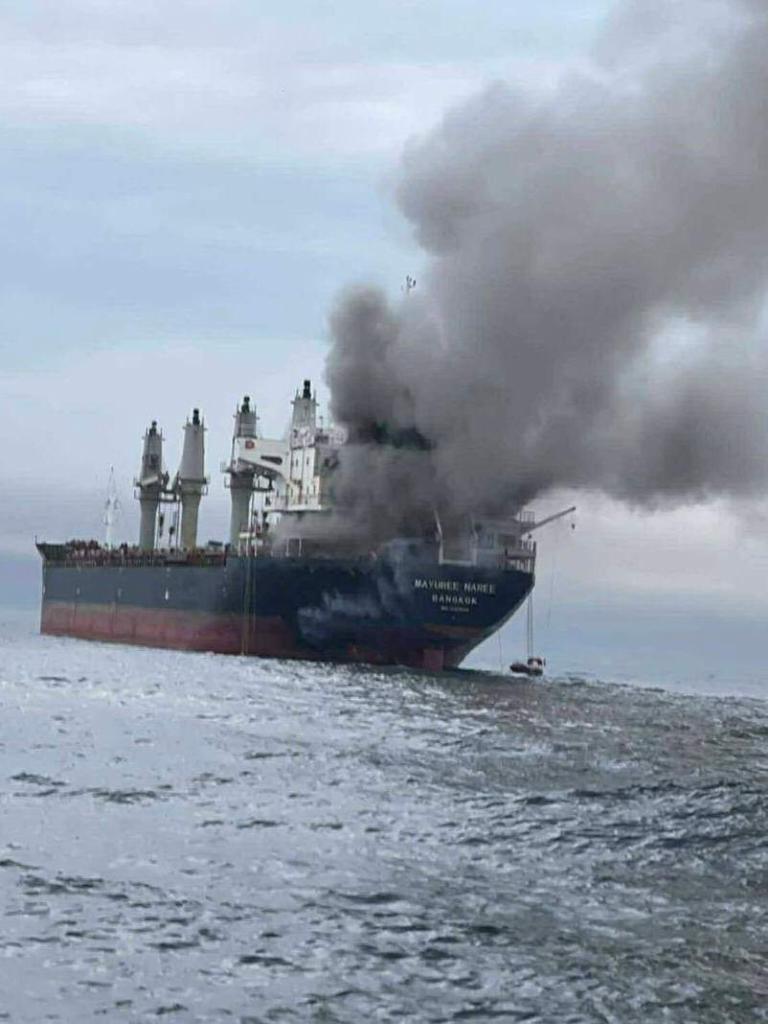
The chaotic nature of the operation to overthrow the Iranian regime is becoming increasingly concerning for its sponsors. This Friday, military plans that Washington is preparing to take control of the Strait of Hormuz from the ayatollahs or at least force them to reopen vessel traffic have begun to leak. For the twelfth time since this conflict began, last Saturday Donald Trump stated that the war is won, but we are already in the third week of bombings and the signs, which are everywhere, say otherwise.
According to the news portal Axios, the United States is considering occupying the island of Jark to have a powerful leverage that would force Iran, in turn, to loosen the closure of the Strait of Hormuz, where the Tehran regime has a clear strategic advantage.
With just 20 square kilometers of surface area and located 25 kilometers from the Iranian city of Bushehr, at the northern end of the Gulf, the oil terminal on the island of Jark exports around 90% of Iranian crude and is supplied through pipelines from nearby offshore fields. The United States and Israel have bombed the island's military installations, but not the oil facilities, something that could mean the end of Iran as a viable state. Many analysts believe that this has not yet happened because Washington, unlike Tel Aviv, still wants to have a counterpart on the other side to negotiate with.
The report itself, accessed by Axios, reveals that this is a plan currently under consideration, although Trump has not made a final decision. It is to be assumed that the Iranians have the island well defended even before this leak became known.
In parallel, the US has deployed the 31st Marine Expeditionary Unit, a rapid response force composed of about 2,500 Marines, which is currently moving to the Middle East, although no one has specified the mission they will be assigned and whether it is related to landing on the island of Jark.
This expeditionary group is not yet close to the Persian Gulf and would still take a week to arrive. If the plan is carried out and aims to take that island, the ships will have to pass through the Strait of Hormuz first, within range of Iranian anti-ship missiles and drones, risks that are not as significant as the actual landing, one of the most complex maneuvers in modern warfare.
The mission could be currently being prepared with attacks in the area of the Strait of Hormuz to facilitate the entry of US warships. According to The Wall Street Journal, "The United States and its allies have intensified the battle by sending low-flying attack aircraft over maritime routes to attack Iranian navy ships and Apache helicopters to shoot down Iran's lethal drones."
According to several intelligence analysts, Iran's boats have mined the southern part of the Strait, so ships must approach the Iranian coast if they want to avoid setbacks. The United States has minesweepers, but this operation to clear the sea would be under the threat of enemy fire.
This mission, landing on an island near Iran, poses enormous risks for the US army and navy. "We need about a month to weaken the Iranians... and then take the island," they have said at the Pentagon. Even if they can neutralize all external defenses, these Gulf islands are full of caves and underground bunkers dug for decades and even formed naturally.
President Donald Trump has described, in a message where he once again insults his NATO allies, as "a simple maneuver." History shows otherwise. Facing a landing on a well-defended beach requires a huge superiority over the defender, days of artillery preparation, and complete air dominance. Nevertheless, casualties are usually high. Just think of other island landings, such as Guadalcanal, Iwo Jima, Malvinas, Grenada, or Crete, the latter conquered in a costly airborne operation.
Jark is only 25 kilometers from the coast. In military terms, it is within the range of Iran's short-range missiles, drones, and artillery. It lacks strategic depth and room for maneuver. It is, militarily speaking, being forced to operate within the enemy's weapons system, not outside of it. Jark may be an accessible target on the map, but militarily it is a trap: easy to reach, difficult to hold, and almost impossible to isolate from Iranian fire.