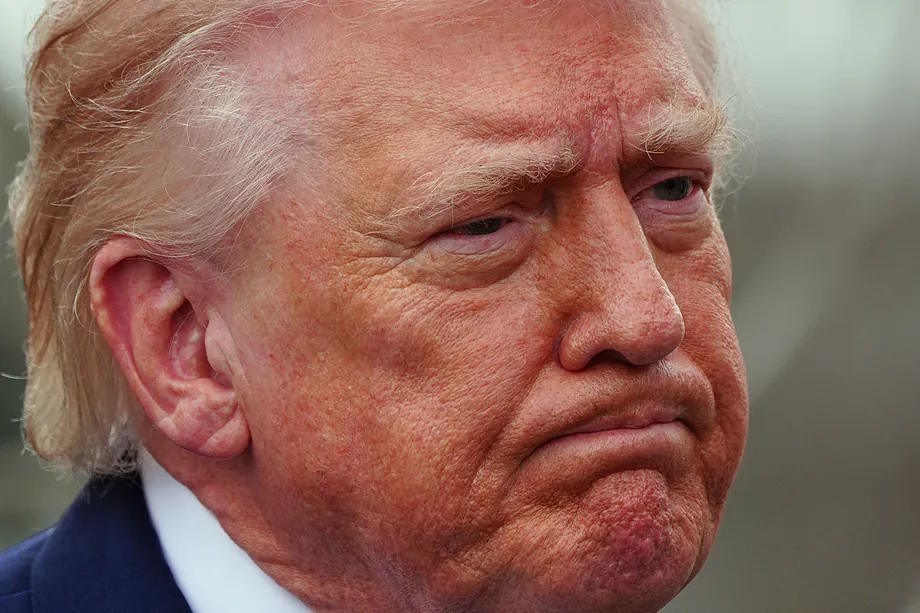
The President of the United States, Donald Trump, has gone from announcing the annihilation of the Tehran regime to negotiating with it. This Monday, he stepped back from his plans to attack Iran's electrical grid, stating that Washington and Tehran have had "constructive" conversations and that any offensive against energy infrastructure will be postponed. The decision comes after Iran threatened to attack power plants in Israel and those supplying U.S. bases in the Gulf region if Washington strikes its power grid. Trump added that the discussions will continue throughout the week, Reuters reports. Shortly after, Iran communicated through its Fars agency that it is not engaged in "direct or indirect talks" with the United States.
In a message on Truth Social, Trump stated that both parties have had "very good and productive conversations" in the past two days aimed at a "complete and total resolution" of hostilities in the Middle East. Meanwhile, the U.S. had ordered the deployment of two amphibious Marine groups with 5,000 troops on board heading towards the Middle East.
Trump also ordered the Department of Defense to delay any attack on Iranian power plants and energy infrastructure for five days, conditioned on the progress of the ongoing negotiations. "The markets reacted immediately: the dollar fell and stocks rose." The price of Brent crude oil plummeted by up to 13% in Europe. Iran later denied this.
The decision comes after Trump warned on Saturday that Iranian power plants would be destroyed if Tehran did not "completely open" the Strait of Hormuz to maritime traffic within 48 hours, setting the deadline for Monday night. At this moment, Iran still controls the same strait and there is no evidence that it is allowing the passage of vessels through it, beyond its own tankers or those of China.
Iranian attacks have effectively closed the strait, through which nearly a fifth of the world's oil and liquefied natural gas transit. The conflict, initiated by the United States and Israel on February 28, has caused more than 2,000 deaths and has shaken global markets, driving up energy costs, fueling inflationary fears, and straining the Western alliance.