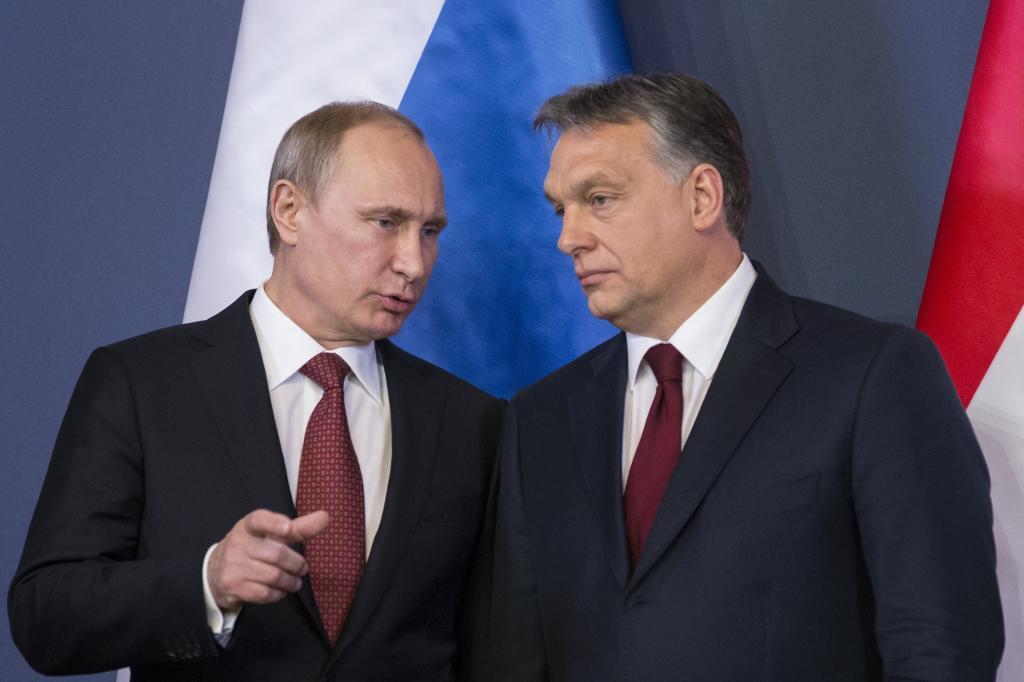
The European Commission demands explanations from Hungary after The Washington Post reported this weekend that Orban's government has been informing Russia about discussions in the Council for years. "Reports that the Hungarian Minister of Foreign Affairs may have disclosed confidential ministerial-level discussions in the Council to his Russian counterpart are very concerning, and a relationship of trust between Member States and between them and the institution is fundamental to the functioning of the EU. We expect the Hungarian government to provide clarifications," a spokesperson for the European Commission stated on Monday.
The information from the mentioned media outlet suggests, among other things, that Hungarian Foreign Minister Péter Szijjártó regularly calls his Russian counterpart, Sergey Lavrov, to provide "direct reports" on what is being discussed in Council meetings. And he does so during the breaks of these meetings, meaning it is confidential and real-time information.
The Commission has refrained from further comments, although they acknowledged that in these meetings, of course, "classified information" is discussed. However, they want to wait for a response from Viktor Orban's government before making further decisions.
This situation, however, has not come as a surprise to many in Brussels or in the EU capitals. Probably the most direct has been the Prime Minister of Poland, Donald Tusk, who yesterday stated on his X social media profile that "the news that Orban's people inform Moscow about EU Council meetings in great detail should not surprise anyone."
"We have been suspecting it for a long time. That is one of the reasons why I only speak when strictly necessary and say only what is essential," he added. This means that Tusk avoids speaking openly during meetings of heads of government and prime ministers.
The Hungarian government, on the other hand, has already stated that the information is false, and Szijjártó himself also responded to Tusk on social media. "Instead of spreading lies and fake news, come to Budapest to support the opposition! Last time it worked... for us...," he said.
Szijjártó refers to the upcoming elections in the country, scheduled for April 12, in which Tusk is very active. These elections could end Orban's 16-year rule, and are also the reason why the Hungarian government is pushing its anti-European stance to the limit in Brussels.
Orban consistently opposes decisions being attempted in the Council, and is undermining the €90 billion credit that the EU wants to grant to Ukraine despite previously stating that he would allow it. And Vladimir Putin would be getting real-time updates on all these discussions, as that is what Szijjártó would be transmitting to Lavrov.