The war in the Middle East enters its fourth week amid major thunderstorms in the Persian Gulf. After enduring bombings by the United States and Israel, Iran's regime may have no planes flying or ships floating, but its army remains standing, capable of launching hundreds of drones and missiles daily, influencing the global economy. The ayatollahs have sent over 1,500 drones and nearly 400 ballistic missiles to the United Arab Emirates since the start of this disaster. A very high rate of 90% of them, which speaks highly of their anti-aircraft defenses, have been shot down.
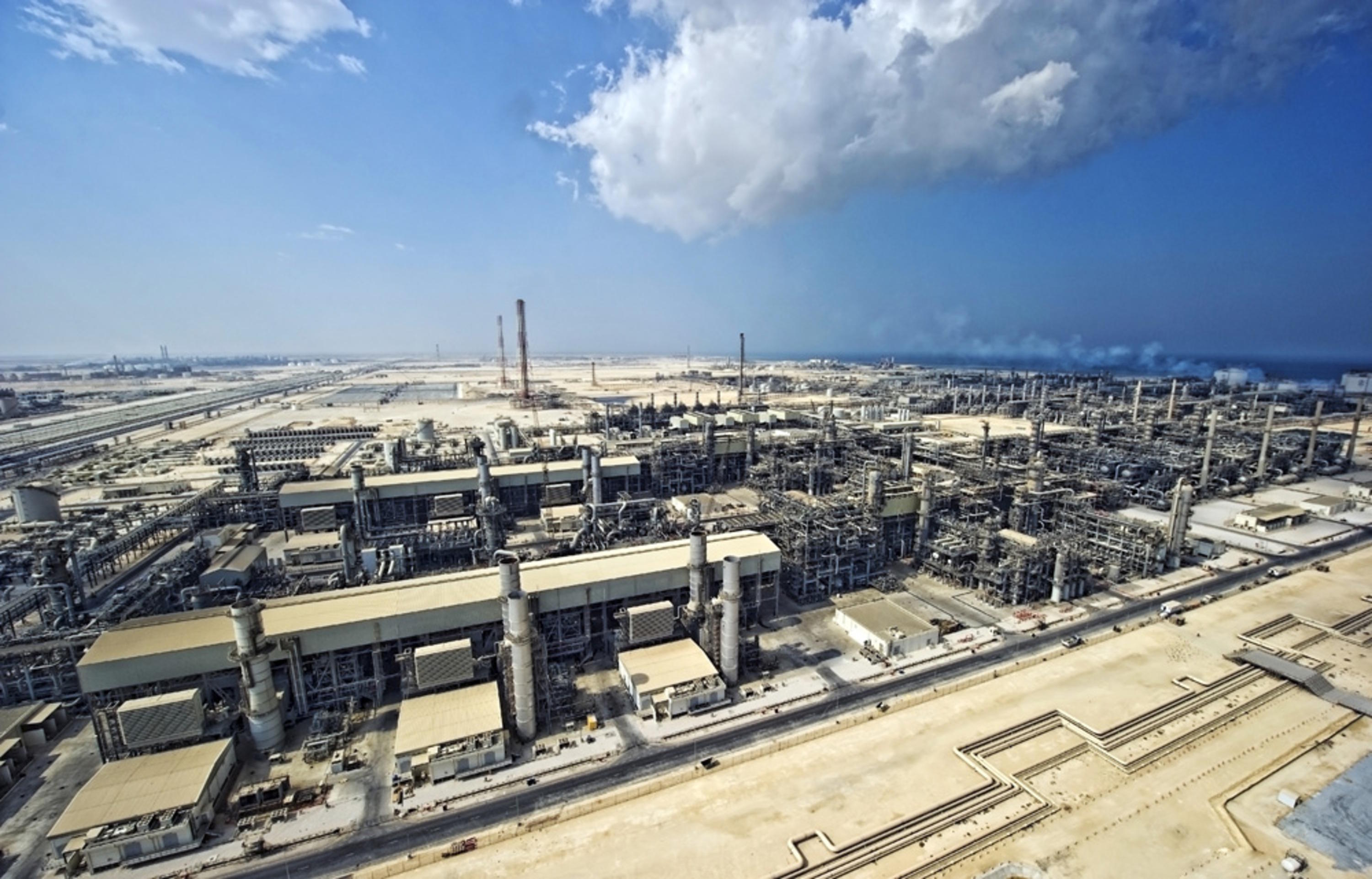
The Gulf monarchies have quickly shifted from an uncomfortable neutrality to a tacit alignment with the United States, driven by a new reality: Iranian attacks have shifted from being indirect to direct threats on their territory, infrastructure, and economic model. Every time Trump has threatened Iran, Tehran has retaliated, specifically targeting the countries in the Persian Gulf, either by pointing to their oil facilities or vital desalination plants.
The United Arab Emirates, Saudi Arabia, or Qatar have hardened their stance, denouncing a violation of their sovereignty and bolstering their defense systems while intensifying coordination with Washington, although officially they have not joined any coalition to break the Iranian blockade of the Strait of Hormuz. The underlying message has changed: it is no longer just about avoiding war but also about reducing Iran's ability to project that threat in the future.
However, this toughening stance has clear limits. None of these countries want to cross the line into open confrontation that could turn them into the main battleground of the conflict. It is logical: they all fear that the Iranian regime will survive and extend its attacks on them, which could pose a huge problem for their economy. Their strategy remains essentially the same, albeit more tense: indirectly support pressure on Iran while trying to contain the escalation on their own territory. It is a fragile balance between deterrence and prudence, where the Gulf seeks to gain security without bearing the full cost of war, aware that direct involvement would not only jeopardize their stability but also the heart of their economic prosperity.
The war is reshaping the entire diplomatic architecture of the Persian Gulf, especially due to Iranian attacks on countries that had not attacked them before, such as the United Arab Emirates, Qatar, Bahrain, or Kuwait. In a surprising statement, the Foreign Minister of the United Arab Emirates, Abdullah bin Zayed, stated: "We will never allow ourselves to be blackmailed by terrorists".
Saudi Arabia's Foreign Minister, Faisal bin Farhan al Saud, has denounced the Iranian attacks as an "unacceptable aggression that threatens the stability of the entire region," insisting that Riyadh reserves the right to defend its territory while emphasizing the need to avoid total escalation. Similarly, Bahrain's King Hamad bin Isa al Khalifa has warned that his country "will not tolerate attacks on its sovereignty or the security of its citizens," reinforcing military cooperation with Western allies.
Qatar's Ministry of Foreign Affairs, under the leadership of Mohamed al Thani, has described the attacks as "a serious violation of international law," although Doha maintains its traditional role as a mediator and simultaneously calls for restraint from all parties. Even more significant is Kuwait, which has been targeted in numerous attacks on its oil infrastructure, with the government condemning the attacks as "a dangerous escalation that jeopardizes the collective security of the Gulf", while raising its defensive alert level.
Michael Knights, an analyst at the Washington Institute for Near East Policy, states that these countries "are now more willing to support pressure on Iran but remain reluctant to directly engage in the conflict." Farea al Muslimi, from the Chatham House think tank, believes that "Gulf countries are trying to walk a fine line between confronting Iran and avoiding total war on their own territory."
Meanwhile, Trump claims to be holding talks that Iran denies. Each actor is negotiating and escalating simultaneously. Each statement contains some truth and some falsehood. These alleged "productive talks" are indirect and took place through Turkish, Egyptian, and Pakistani intermediaries who held separate discussions with White House envoy Steve Witkoff and Iranian Foreign Minister Abbas Araghchi, according to Axios. Iran must deny them to survive internally.
The Gulf countries have not severed communication with Iran and are trying to reduce tensions while preparing to defend their most precious facilities and population. It is also true that not all Gulf countries speak with the same voice: Bahrain (home to the US Fifth Fleet) is the most aligned. The United Arab Emirates and Saudi Arabia support it, but cautiously. Qatar and Oman maintain a more mediating stance.
For now, their defense system is acting as a true iron dome, following the well-known Israeli model of layered defenses. So much so that in recent days, the UAE has begun receiving some of the residents who decided to leave during the first three days of the conflict. Now, planes are no longer landing empty in Dubai.