"We are not surprised"; "it was something that many suspected"; or "it is very, very possible". Diplomatic sources from different countries and very different latitudes tell this newspaper that yes, many in Brussels already knew or feared that Hungary was passing information to Russia, and that now this has become a certainty in the capitals of the Member States.
"It would be naive to think otherwise," respond from a fourth country to the question of whether they believe that Moscow has had access to confidential EU information. The publication by The Washington Post of information stating that the Minister of Foreign Affairs, Péter Szijjártó, would regularly call his Russian counterpart, Sergey Lavrov, to offer real-time information during EU meeting breaks has shaken Brussels.
Initially, this activity would be limited to the Foreign Affairs Council, a forum where relevant but not as crucial information is discussed compared to what can be addressed at the European Council, that is, at the meetings of presidents and prime ministers. But Poland's leader, Donald Tusk, already hinted on Sunday on his X social media profile that he has been very cautious during his interventions for some time, precisely at the highest level meetings.
"The news that Orban's circle informs Moscow in detail about EU Council meetings should not surprise anyone. We have long had suspicions about this. That is one of the reasons why I only intervene when strictly necessary and say only what is essential," he stated. This is, he raised the suspicion to the highest European level.
The European Commission has already demanded explanations from the Hungarian government, which of course claims that everything is absolutely false. "Fake news," as also posted by Szijjártó himself on social media. No one believes him in Brussels, of course. Many voices emphasize that the proliferation of working groups with a reduced number of countries is largely an attempt to prevent Hungary from knowing plans and proposals in advance. And it is suggested that if Hungary has done this within the EU, why wouldn't they do it in NATO as well.
From the Alliance's perspective, there are currently no suspicions of this, that Hungary's behavior as part of the North Atlantic Treaty Organization is more responsible than within the EU framework, and that many issues are dealt with at a technical level and this is entirely political. But the concern in Brussels is palpable.
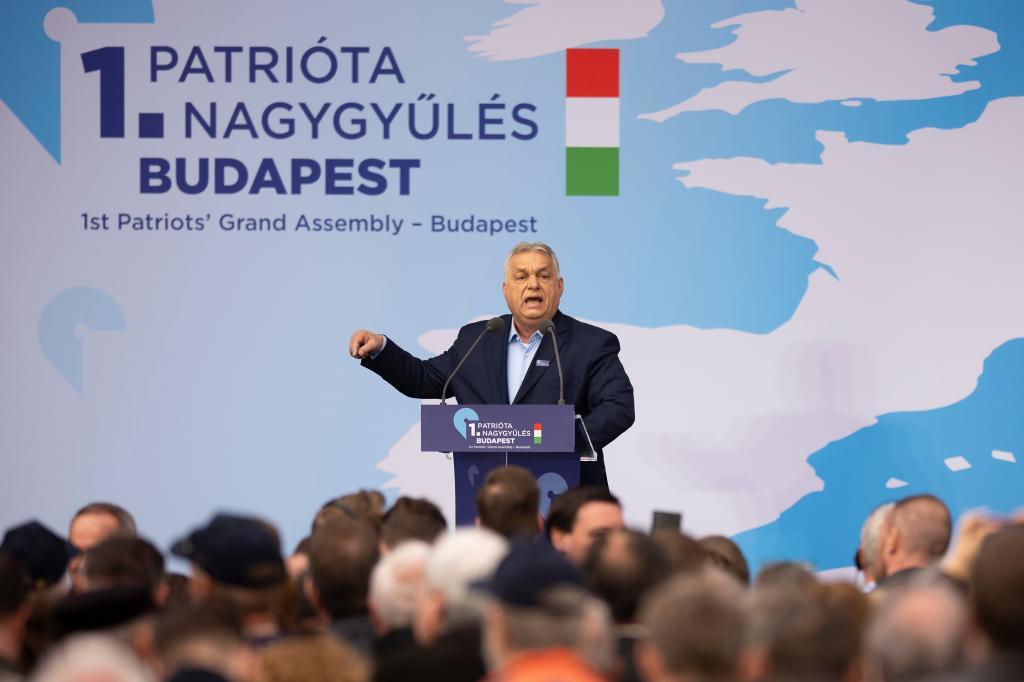
The diplomatic sources consulted also point out that the fact that Hungarian elections are very close has been crucial in the leakage of possible Hungarian espionage. And similarly, EU institutions and countries will not make any moves until the elections are held. "That is what [Viktor] Orban would want to gain national political benefits," they emphasize.
In Brussels and in the capitals, they are now crossing their fingers for him to lose the elections on April 12 and everything becomes much easier. In terms of possible espionage for Russia and also for Hungary to stop blocking the €90 billion credit that the EU has already approved for Ukraine and that the Hungarian Prime Minister is vetoing. Currently, polls indicate that the victory would indeed be for Péter Magyar, the opposition leader who belongs to the political family of the European People's Party. He may not be the most pro-European politician on the continent, but certainly much more so than the current leader.
"According to current information, Szijjártó seems to be conspiring with Russia, thus betraying Hungarian and European interests. If confirmed, this would amount to treason, which carries a possible life sentence. A future Tisza government will investigate the matter immediately," Magyar himself posted on his X profile yesterday. Exactly what they want to hear in Brussels.