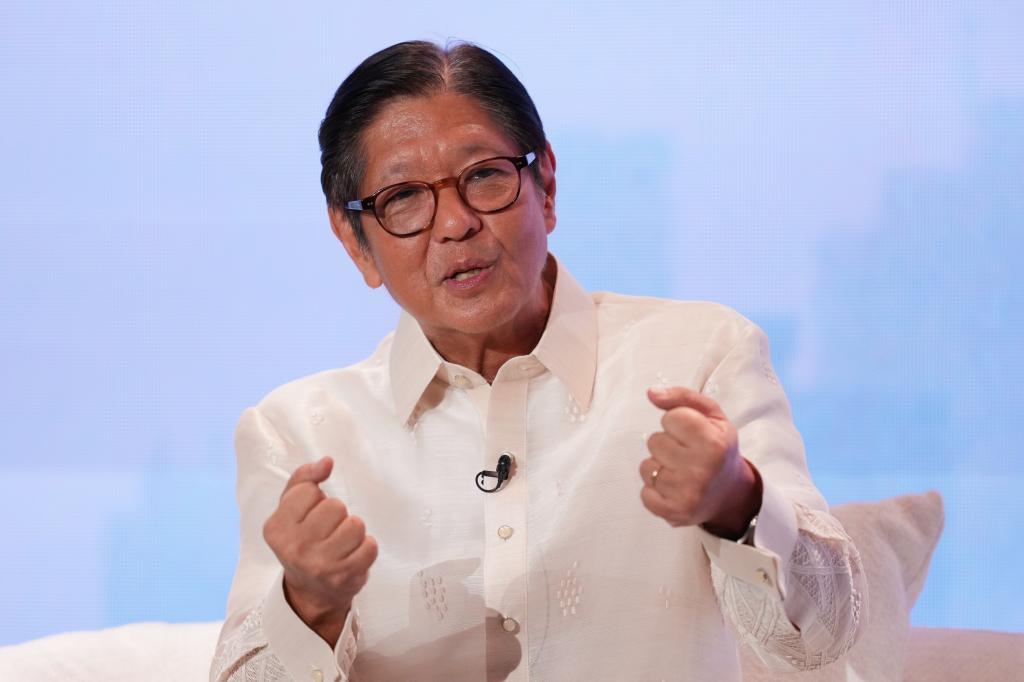
The Philippines has been the first in South Asia to hit the energy panic button. President Ferdinand Marcos Jr. has declared a national energy emergency in response to what his government describes as an "imminent danger": the partial collapse of oil and gas flow caused by the war in the Middle East and the de facto blockade of the Strait of Hormuz, the artery through which the global energy system breathes.
The measure, formalized on Tuesday night (local time) through an executive order, is not just preventive; it is a recognition of structural vulnerability. The Philippines imports most of its energy (almost 100% of the oil it consumes) and lacks sufficient strategic buffers. In this context, any prolonged disruption in the Persian Gulf almost automatically translates into inflation, social tensions, and the risk of blackouts.
The war initiated by the United States and Israel against Iran has blocked traffic in Hormuz, through which nearly a fifth of the world's oil flows. For Asia, the dependency is even more acute: almost 90% of the hydrocarbons crossing that maritime passage are destined for Asian economies.
In Pakistan, schools have temporarily closed and the public sector has adopted four-day workweeks. Sri Lanka is following a similar path. In Bangladesh, universities are closed and exams canceled. In Southeast Asia, facing a scenario with very limited oil reserves, countries like Vietnam or Thailand are promoting telecommuting to reduce transportation and save energy.
In Manila, the response combines urgency and pragmatism. Marcos' government has established an inter-ministerial committee with expanded powers to ensure the logistics of fuels and essential goods, from food to medicines. According to Energy Secretary Sharon Garin, current reserves barely cover 45 days, a figure that would be manageable in normal times but now takes on a countdown tone.
The most controversial decision is the tactical return to coal. Faced with the rising cost of liquefied natural gas (LNG), the Philippines will temporarily increase thermal generation with coal, an effective short-term solution but contradictory to its climate commitments. It is the classic dilemma of emerging economies: energy security versus ecological transition.
But what is happening in the Philippines is just one piece of a broader puzzle. In East Asia, in Japan and South Korea, highly dependent on imports, governments have activated strategic reserves and are negotiating emergency contracts with alternative suppliers like Australia or the United States. India has chosen to further diversify its energy mix, increasing purchases especially from sanctioned Russia and accelerating domestic renewable projects to cushion the blow.
In China, the response for now is quieter but equally significant: increased inventories, internal price controls, and strengthening of land routes within its Belt and Road Initiative (the new Silk Road), seeking to reduce dependence on the most vulnerable maritime points.
The blockade of Hormuz has once again exposed the fragility of a highly concentrated global energy system. For countries like the Philippines, the current emergency can become a catalyst for structural reforms, starting with greater investment in renewable energies and more supplier diversification. But these transformations require time, precisely the scarcest resource when oil and gas stop flowing.