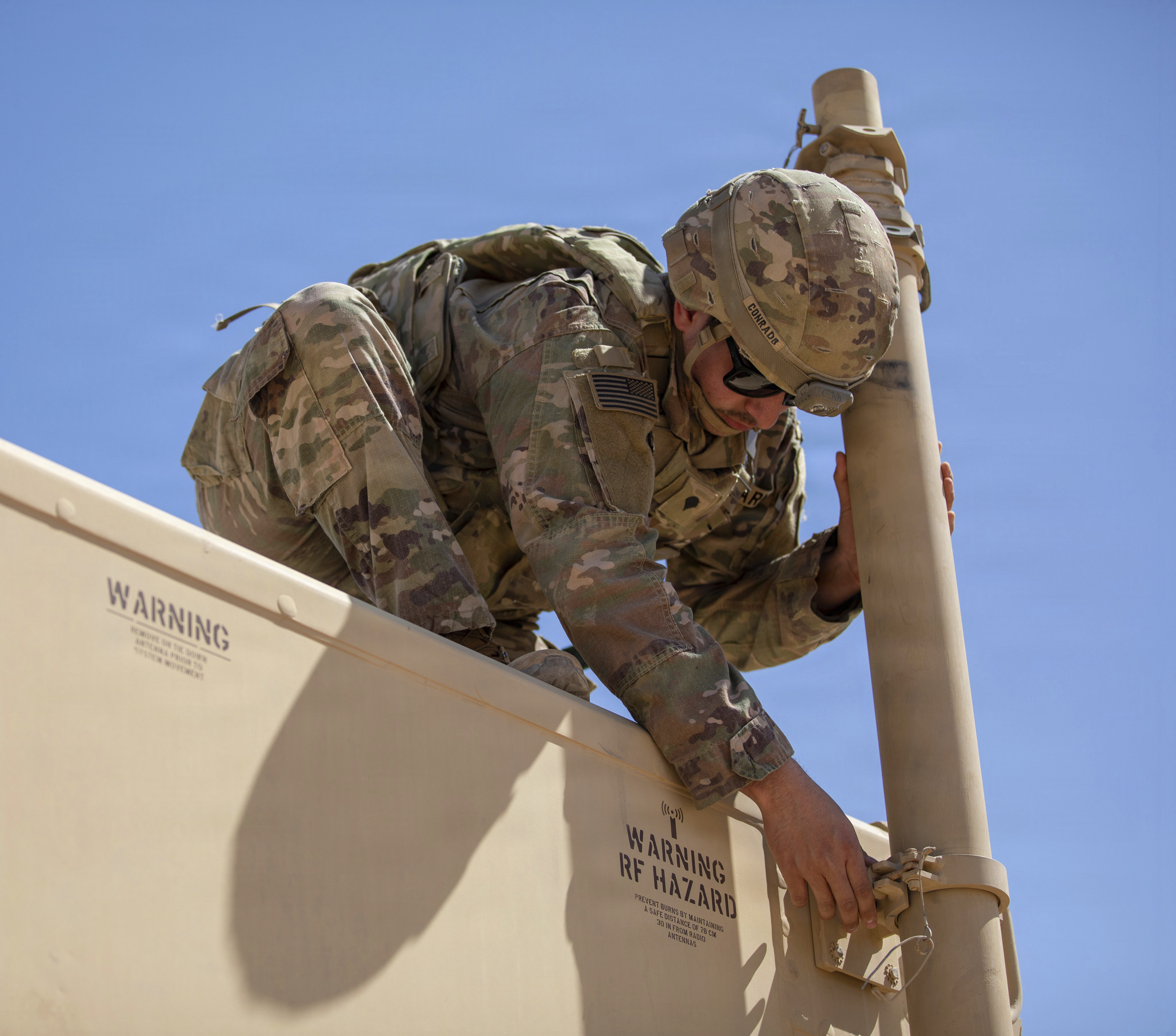
While Donald Trump stated that there were positive talks with Iran and Tehran denied it, a significant part of the US military elite was moving to their bases in the Persian Gulf: special forces like the Navy Seals and Rangers, and a complete brigade of the 82nd Airborne Division. They will be joined on Friday by the amphibious group aboard the USS Tripoli and USS New Orleans with 2,500 marines on board.
Friday, by the way, is the day that marks the end of Donald Trump's ultimatum, initially set at 48 hours and then extended. Several analysts believe that the change in dates serves two purposes: the first is to calm the markets and try to lower oil prices. The second is to gain time to amass troops in the area. The first goal has been partially achieved, and the second is being consolidated.
What kind of forces have just arrived in the Gulf? A Navy Seal team similar to the one that killed Osama Bin Laden in Abbottabad, the 75th Ranger Regiment, the 160th SOAR of the Air Force (responsible for the swift capture of Nicolás Maduro last January), the 5th Special Forces Group (specialized in counterterrorism), or the 1st Delta Force Regiment, responsible for the most dangerous rescue missions or against rival leaders... In other words, the most specialized troops in infiltrating enemy lines and conducting raids are now at bases in the Persian Gulf. Saudi Arabia has even reopened spaces it had closed to accommodate them, such as the King Fahd Air Base.
The Arleigh Burke-class guided-missile destroyer USS Winston S. Churchill (DDG 81) conducts a replenishment at sea with the Henry J. Kaiser-class fleet replenishment oiler USNS Kanawha (T-AO-196)US Army
In addition, the US has mobilized a complete brigade (about 3,000 paratroopers) from the 82nd Airborne Division, who are already stationed in Jordan and known for being parachuted over Normandy the night before D-Day in 1944. This offers some clues about the Pentagon's plans to target valuable objectives in the region, whether it be Jark Island, in the heart of the Gulf, which serves as the main export center for 90% of Iranian oil, or the strategic islands in the Strait of Hormuz, especially Qeshm and Larak, islands whose dimensions match those of Okinawa and Iwo Jima, two Pacific islands whose conquest by the Marines was bloody.
Anthony H. Cordesman, an analyst at the Center for Strategic and International Studies, points out that "Any US attempt to take or neutralize key Iranian facilities in the Gulf would face serious risks due to Iran's layered defenses and its ability to escalate the conflict throughout the region."
It is precisely the Marines, specialized in amphibious landings, who will arrive next Friday. That day seems to mark the beginning of operations, considering that all resources will already be deployed, and the commodity futures market (with a focus on oil) will close that same Friday night.
What kind of operations can these troops undertake? The US military, through statements from some prominent military personnel, has considered three options: military escort of oil tanker convoys with their warships, which does not eliminate the Iranian threat in the Strait and their ability to launch drones at these oil tankers.
The second option is to seize, through a combined operation using paratroopers and landing troops, the islands in the Strait, a risky scenario since Iran has a significant strategic and geographic advantage in that area, forcing US military forces to operate under Iranian defensive fire with complex logistics. Additionally, these islands are full of natural caves, facilitating their defense, with small beaches, steep cliffs, and few escape routes, a nightmare for any amphibious operation against a motivated and responsive enemy army.
Analyst Michael Knights, from the Washington Institute for Near East Policy, believes that "the Gulf coastline is one of the most dangerous environments for amphibious operations, as Iran can quickly concentrate fire against any landing force."
Perhaps the closest historical reference is Gallipoli, in Turkey, during World War I, where Allied troops were stuck for months on beaches with no way out, attacked from above by the Ottomans under General Mustafa Kemal Atatürk. The Seals, Rangers, and Delta forces would have to secure positions of great value such as communication stations, radars, enemy bases, and ports to prevent the Iranian Revolutionary Guard from operating normally and receiving reinforcements.
The third option is to take Jark Island hostage. This territory holds significant energy value for Iran, and if it falls into US hands, it could lead to Tehran becoming a non-viable state since 90% of its oil is exported through that island. Possessing this island could force Tehran to release the Strait of Hormuz as part of a deal.
US Navy sailors throw a mooring line aboard the Arleigh Burke-class guided-missile destroyer USS Winston S. Churchill (DDG 81) during a replenishment at sea.US Army
The risks of conquering it are no different from those of the islands in the Strait, but the participating vessels must also pass through Hormuz. Some sources claim that Iran has placed 10 mines of the Maham 3 and Maham 7 types along the Oman coast, precisely where the supertanker traffic was passing, which now must approach the Iranian coast and be exposed to various types of weapons, including artillery. Bryan Clark, a military expert at the Hudson Institute, believes that "the Gulf coastline is one of the most dangerous environments for amphibious operations, as Iran can quickly concentrate fire against any landing force."
The deployment is significant enough to serve as a deterrent, prompting Iran to negotiate and agree to deliver its enriched uranium, end its nuclear program, ballistic missiles, and stop financing allied militias in the region, such as Hezbollah, Hamas, or the Houthis in Yemen. Meanwhile, Iran has published a list of new demands to the US and Israel to reopen the Strait of Hormuz: close all US bases in the Persian Gulf, pay for all damages caused by bombings, recognize Iran's authority, and, as the controller of Hormuz, lift all secondary sanctions against Iran and sign binding guarantees that Washington will not interfere in Iran's internal affairs again. Both positions could not be further apart.