Pakistan has burst onto a board that traditionally seemed distant. While the Middle East is ablaze with the open war between the United States and Israel against Iran, Islamabad is trying to occupy the unexpected role of the main mediator. In terms of energy security, it is the most interested in ending the conflict: 81% of all the energy it imports passes through the now blocked Strait of Hormuz. There is no other nation with such a dependence on oil and gas from the Gulf.
But what is surprising is that Pakistan is trying to act as a mediator in Iran while being immersed in a full-blown war with its neighbor Afghanistan since late February. Border clashes resumed on Tuesday after a five-day truce between the two countries.
In the Middle East, the Pakistani Army Chief, Asim Munir, and the Prime Minister, Shehbaz Sharif, have activated a dual diplomatic channel that connects directly with Washington and Tehran. Munir spoke with Donald Trump on Sunday, while Sharif did the same with Iranian President Masoud Pezeshkian on Monday. Two calls aimed at opening a window to halt the escalation.
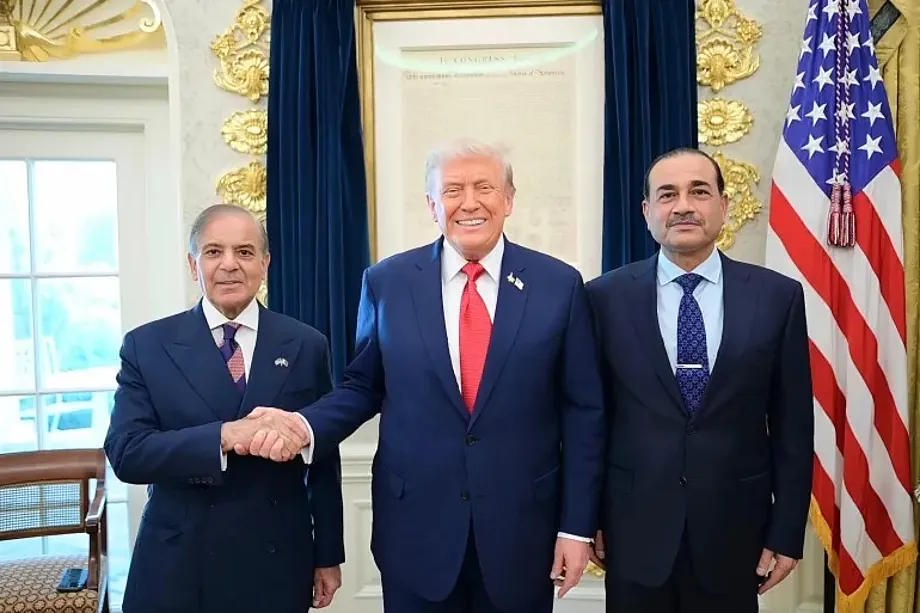
General Munir already attracted some international attention last year when he accompanied Sharif to Washington and was received at the White House by Trump, who referred to him as his "favorite field marshal". It was quite surprising that the US invited a Pakistani military leader from a country formally governed by a civilian executive. Officials from both countries have stated that they have maintained a close relationship since then.
Several media outlets have reported that Pakistan has offered its capital as the venue for an imminent round of negotiations between high-ranking US and Iranian officials. It would not be a formal mediation (Tehran insists on not negotiating directly with Washington), but rather a discreet channel to exchange messages in the midst of the war.
The context explains the urgency. Trump had threatened to "obliterate" Iranian energy infrastructure, but then toned down his rhetoric after what he described as "productive" contacts with Tehran. The market reacted immediately: oil prices fell, a sign that investors interpreted a possible diplomatic shift. No one in the White House confirms Pakistan's role, but neither do they deny it.
Islamabad is not alone in this endeavor. Turkey has reactivated its own channels, with its Foreign Minister, Hakan Fidan, coordinating with his Pakistani counterpart Ishaq Dar. Egypt and Qatar are also involved in a network diplomacy seeking, at the very least, a tactical ceasefire.
However, the spokesman for the Iranian Foreign Ministry, Esmaeil Baqaei, was clear: there are no direct negotiations with the US. What the Iranian regime does acknowledge is the receipt of messages through "friendly states". This is where Pakistan comes in, whose profile as a mediator fits better than it seems.
Unlike other US regional allies, it does not host US bases and has a foot in each side of the Islamic board: it is the second country with the largest Shia population in the world, but maintains close strategic ties with Saudi Arabia, with whom it recently signed a defense pact. Furthermore, its extreme dependence on Gulf energy makes this mediation primarily for economic survival. This balance, according to some analysts, makes it an acceptable intermediary for all parties. Just what is needed in a war without trust.
Pakistani officials are reportedly facilitating indirect contacts between Tehran and Trump's envoys such as Steve Witkoff and Jared Kushner these days. Publicly, Pakistan speaks of "a constructive role". Privately, diplomats in the region place it as the main active channel between Washington and Tehran at this moment.
The question is whether Pakistan truly has the capacity to play in two wars. While trying to extinguish a fire thousands of kilometers away, its own conflict continues to ignite on the border with Afghanistan. Clashes between Pakistani forces and the Taliban have been intensifying for weeks. It is a low-intensity but constant conflict, including Pakistani bombings in Kabul. The latest one, last week, left around 400 dead in a hospital dedicated to treating drug addicts roaming the streets of the Afghan capital.