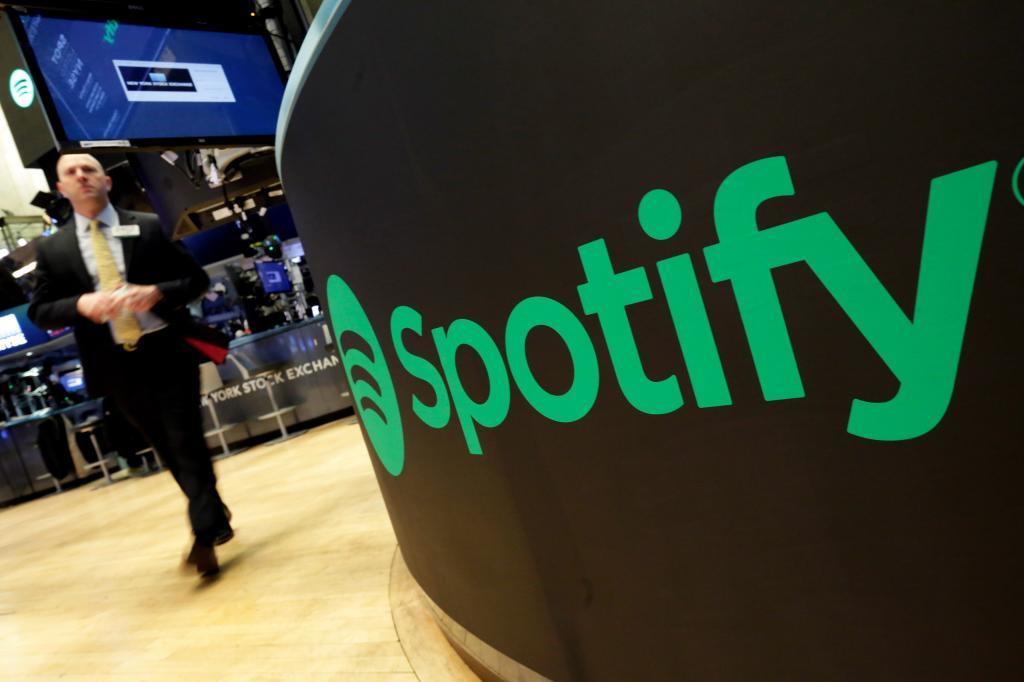
There was a time when Spotify was the internet's fulfilled promise: all the world's music in your pocket for the price of a couple of coffees a month. A technological miracle that seemed to have suddenly solved piracy and the nostalgia derived from MP3. All of this, simply, by tapping on a black logo with a green circle on the screen. And, voilà! Magic happened. But digital miracles often come with fine print. When a company becomes the invisible hand of how and how much we listen, we discover that it not only distributes songs: it also decides what plays and who survives.
Complaining about Spotify is now a leitmotif in the music industry. For a decade, there have been talks of low payments, opaque algorithms, and playlists that turn music into a permanent background noise. But the feeling now is different. A series of fires threaten to turn into a blaze, putting the Swedish giant in front of the fire extinguisher.
Let's be clear from the start: Spotify remains the hegemonic leader in global streaming and crowns the most listened-to artists on the platform (such as Quevedo, Aitana, or Rosalía, at a national level). It has shaped how we listen to music, how an album is released, and even how it is composed. But that leadership is no longer just synonymous with success; it also concentrates cultural, economic, and political tensions. These are just a small part of the so-called streaming wars.
"Spotify currently controls 751 million users worldwide. It is a company that usually leads the debates, trying to impose its narrative on diversity, creating value for artists, or environmental impact. The situation generated in recent months is very relevant, but it cannot yet be seen in the company's accounts," says Ignacio Gallego, researcher and co-director of the Master's in Music Industry and Sound Studies at the Carlos III University of Madrid.
Not only is the user data significant, but also that of the creators who upload their music to the platform, which now exceeds 10 million: "Twenty years ago, the music industry was practically devastated by piracy. And when you entered a record store, at best you found between 3,000 and 4,000 CDs, which limited the visibility and opportunities for any artist to make a living," says Melanie Parejo, Head of Music at Spotify in Southern and Eastern Europe. "Now, any artist has the same chance of finding their audience: they can self-produce and distribute their music easily."
"The music ecosystem is one where systemic imbalances operate. Spotify and other platforms have only exacerbated them," argues Ainara LeGardon, artist and intellectual property expert. "Their use is so widespread among the general public that the only thing that would truly challenge Spotify would be an informed and critical audience, something impossible to achieve given the general context in which they operate and from which the platforms feed."
The essay Mood Machine: The Rise of Spotify and the Costs of the Perfect Playlist (not yet published in Spanish), by American journalist Liz Pelly, almost serves as a notarial record of that controversial reality. After conducting a hundred interviews with employees, musicians, and industry executives, Pelly describes an increasingly monopolized, automated, and ultimately playlisted industry. The thesis is uncomfortable: the model not only distributes music but also reconfigures it. And it does so based on retention rather than artistic risk.
"Streaming offers many opportunities for music as art and for the people who create it. The issue is that a strict, limited, and limiting model has been imposed," states Mark Kitcatt, director of Everlasting Records and president of WIN, the international organization representing independent music companies. "In addition to the economic harm, Spotify's new payment policies also hinder cultural and geographical diversity," adds their CEO, Noemí Planas.
On paper, Spotify talks about a "bilateral market": listeners who pay with money and data; musicians who provide the content. But the platform does not remunerate based on what each user listens to but according to the global proportion of plays. Even if someone exclusively consumes independent artists, their monthly fee ends up fattening the pockets of Taylor Swift, Bad Bunny, or Rosalía, and consequently, the major labels' extensive catalogs. "To survive in there, the independent artist must blend in with what already succeeds. The listener, if not actively trying to break the bubble, will be fed with the same pre-filtered, prefabricated, and recycled products," explains Frankie Pizá, journalist, cultural disseminator, and content creator. "Today the system rewards volume and retention, pushing for the replacement of the average musician with increasingly cheaper and disposable content."
"The system rewards volume and retention, pushing for increasingly cheaper and disposable content"
"As a creator, you don't have access to certain advantages if you don't reach a number of followers and monthly listeners. You can't promote your concerts, announce a release, or ask them to pre-save songs before they come out," says Gabriel Cañestro, musicologist and independent artist who started uploading his songs to Spotify in 2018.
Although the established payment for authors is 0.003 cents per play, starting in 2024, songs that do not exceed 1,000 annual plays do not generate revenue. For an emerging musician, that number can make the difference between earning a meager amount or nothing at all. The measure was presented as a way to combat the fraud of "functional recordings" - white noise, nature sounds, machine noises, sound effects, voiceless ASMR, and endless silences - but has been seen by many creators as a filter that further pushes them to the periphery. "The total remuneration I received in 2025 did not even reach five euros.
But the issue is not just the meager benefits you generate through the platform; there is also a black hole with the distributors, who are the ones who position you on the charts. And all of that costs a lot of money," says Cañestro, who has an average of 125 monthly listeners. "It has become a pay-to-win spiral. You spend more time promoting your music than writing it." Planas states that Spotify has not addressed many of WIN's requests and that the new trends are concerning: "The reallocation of royalty revenues is creating a reverse Robin Hood effect, with a music market channeling revenues to the established players."
However, Spotify denies that its system only favors the most famous artists: "We want all artists to feel comfortable, regardless of their success or notoriety. Our payments in Spain have steadily increased over the years, and over 60% of our revenues go to independent artists and labels," assures Parejo. She also points out that the number of artists generating royalties at different thresholds has tripled since 2017, and that the number of Spanish authors generating between 10,000 and 100,000 euros doubled between 2019 and 2024: "Ten years ago, the highest-earning artist on Spotify produced just over five million dollars. Today, over 200 artists have surpassed that figure."
In addition to structural tension, there is controversy surrounding the playlists. Testimonies collected by Liz Pelly point to the inclusion of plagiarized and low-cost music in popular playlists like Deep Focus or Chill Beats. Meanwhile, there is a proliferation of songs generated with artificial intelligence flooding the catalog's background. These are the so-called "ghost artists", who compete algorithmically on equal footing with human creators. "There are thousands of users backed by opaque companies generating tons of AI music at zero cost and then hiring bot farms to boost the plays of that material. The unfairness here is not the AI, but the advantages resulting from the lack of regulation and the weak tools against impersonation," argues Pizá. The result of these recent practices is what critics like him call "musical slop": flat pieces designed to accompany moods and become "optimized atmosphere." The more neutral and replaceable, the easier to program, monetize, and automate.
On the legal front, the Mechanical Licensing Collective filed a lawsuit against Spotify in 2024 regarding the calculation of royalties on its premium subscriptions after reclassifying certain plans as "bundles," a pricing strategy that combines several products and offers them at a reduced price—similar to a supermarket discount pack. According to the plaintiffs, this maneuver significantly reduced payments to songwriters and publishers. Although Spotify prevailed and won the case, it adds to a growing climate of organized musicians demanding a more transparent and sustainable distribution model.
But the discontent generated by the streaming giant has transcended economic and legal issues. The alleged investments of its former CEO, Daniel Ek, in companies linked to Israeli military technology have sparked calls for a boycott in various countries. These investments are not confirmed, according to experts. "There are no official sources that corroborate Spotify's direct connection to the conflict in Gaza." "Yes, with the arms industry or defense technologies, as is the case with Helsing, but not with Israeli companies," LeGardon points out.
The airing of ICE recruitment ads—the US immigration enforcement agency—on free plans last fall ignited another spark. Spotify's participation in a pre-inauguration event for Donald Trump and its financial contribution to the official ceremony were also questioned. For some users, the platform has ceased to be a mere cultural intermediary and has become a political actor. This is why, in Catalonia, more than 70 artists announced their departure from the platform in protest a few weeks ago. Among them were Salvador Sobral and Clara Peya. "I don't want my music to contribute to a massacre. Of course, I fear my career will suffer the consequences, but I prefer to live with them than with the death of an innocent person, indirectly related to my music," Sobral told EL MUNDO.
"Helsing is a personal investment of Daniel Ek and has no connection whatsoever with Spotify; it is a completely independent company operating in Europe, linked to the war in Ukraine, not Israel, as has been repeatedly claimed," Parejo emphasizes. He insists on clarifying that they do not support any kind of violence and that the ads about ICE belonged to an official US government recruitment campaign disseminated through major media outlets and platforms: "It was not our own campaign and it has already been removed from Spotify. We ensure that users can submit feedback and choose what content they do not wish to see on our platform."
"We are developing an unprecedented tolerance for mediocrity. Content is artificial, and human works themselves tend toward homogenization."
But the boycott is not just a symbolic gesture; it points to something deeper: the perception that Spotify is nothing more than an infrastructure whose values, investments, and editorial decisions impact culture. For Sobral, the main promoter of the Boycott Spotify campaign, it's a question of power: "Artists have no say in the process of selling the results of their work, while large companies want to extract profit by any means necessary. We need to recover structures of participation and control over music production, and refocus on the relationship between the artist and their community." The Boycott Spotify website presents other, "more artist-friendly" streaming services. They encourage migrating all music (both produced and streamed) to Qobuz, Mirlo, or Faircamp, and even provide detailed instructions for doing so quickly and easily.
"No matter how much exile or boycott is proposed, the user base will always grow faster and more gradually than the number of users who quit. If Spotify has one thing that sets it apart from other platforms, it's the immense sense of belonging it generates among users," argues Pizá. "Many young people see Spotify as their gateway to music; they don't even think of it as a platform with an opaque and manipulated system."
Meanwhile, the company is undergoing its own metamorphosis. Changes in executive leadership and staff adjustments, the addition of a chat feature to the app to transform it into a social network, experiments with audiobooks and music videos, and the potential price increase for subscription plans paint a picture of transition. Music streaming, which for years grew almost effortlessly, now faces a more mature and innovative market.
Spotify has expanded access to music on an unprecedented scale and reduced piracy in many markets. Parejo points out that, in 2025, they paid $11 billion to the global music industry, "the largest payment ever made by a distributor," according to their latest Loud & Clear report. But the cost of that efficiency—in revenue, diversity, and creative autonomy—is being increasingly debated.
"As a society, we are developing an unprecedented tolerance for mediocrity. Not only is content artificial, but human works themselves are tending toward homogenization. Our taste is becoming flattened, and our capacity to appreciate complexity and to desire anything outside the average is disappearing," warns LeGardon. "Before, as a user, you could discover new artists with very few listeners, something that doesn't happen now with pre-made playlists," Cañestro recalls. However, he doesn't consider migrating to another platform: "As a small musician, that would be suicide." It's already difficult enough for a video to go viral on TikTok and for someone to click on the link that takes them to my Spotify profile, let alone in a less mainstream environment. We're talking about a terrifying monopoly, but it undoubtedly gives you a certain level of visibility.
"Cultural creation can't depend solely on the market because it's part of a larger ecosystem: from class issues to the visibility of the works."
What's at stake isn't just how much a platform pays per stream or what happens when the algorithm decides what deserves to be heard and what gets lost in the background, but rather the extent to which listeners are aware of the architecture that organizes their daily experience.
According to Gallego, the transformation of digital infrastructure is fundamental to "reducing our dependence on large technology conglomerates" and the companies that control rights: "There are already interesting examples, such as Subvert, but in Europe we must go further and consider how to integrate public communication services into this equation." The UC3M researcher insists that cultural creation cannot depend solely on the market or subsidies: "It's part of a larger ecosystem: from class issues, such as access to housing and daily survival, to the very visibility of the works."
"To have any chance of weakening this cultural apparatus, we would have to make not using Spotify aspirational, a contagious trend. But we are very far from that. The majority of the audience is passive and conformist, and most creators are caught between a rock and a hard place," Pizá concludes.
Undoubtedly, Spotify has achieved something extraordinary: becoming synonymous with listening to music on mobile phones. The current moment doesn't seem like the beginning of the end, but rather a turning point. The question is no longer whether the model works - because it does - but for whom and at what price.