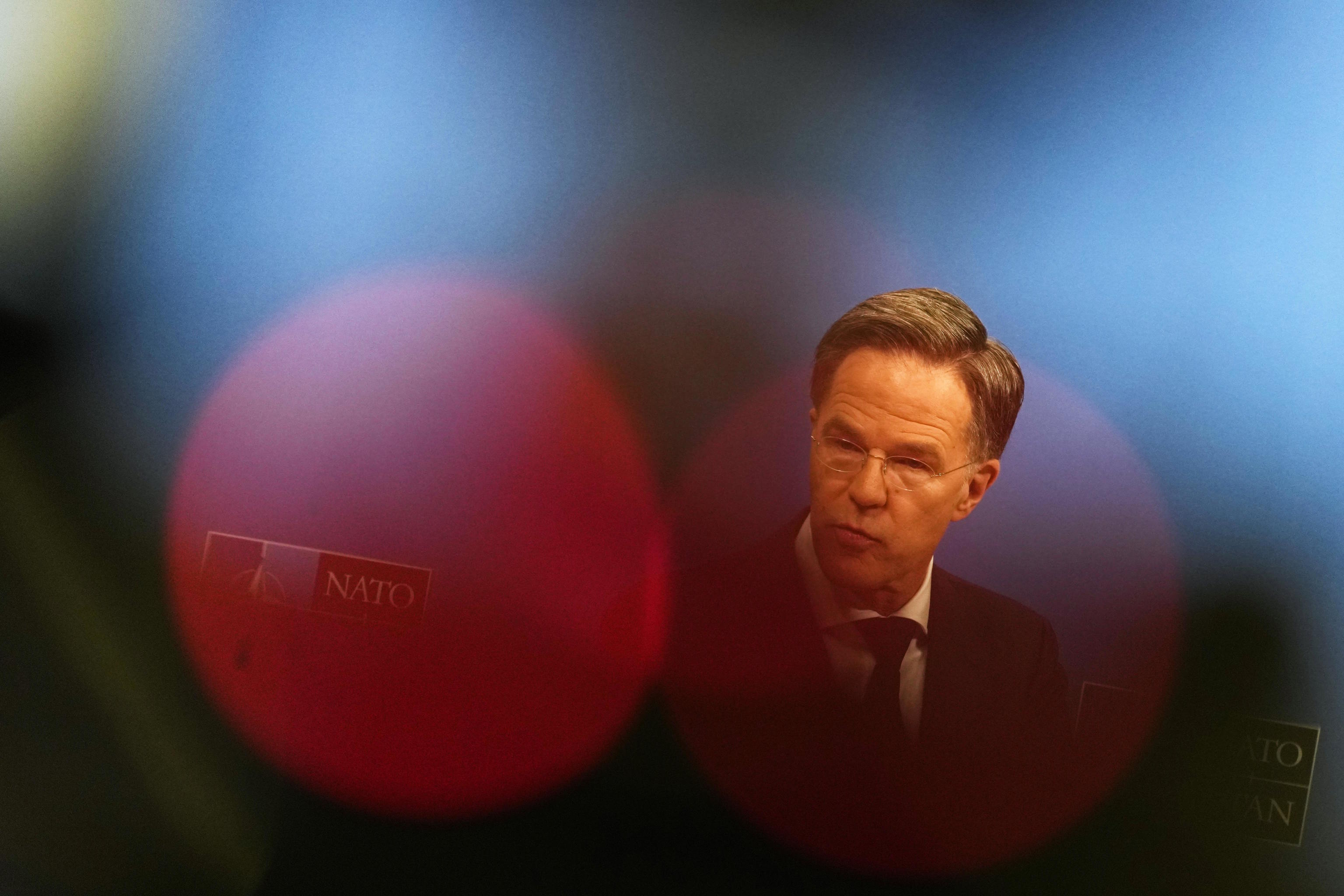
No hint of reproach or criticism. Nothing. The Secretary-General of the North Atlantic Treaty Organization (NATO), Mark Rutte, avoided at all times coming to the defense of the allies whom the President of the United States, Donald Trump, had harshly criticized just a few hours earlier.
"The NATO nations have done absolutely nothing to help the now militarily decimated lunatic nation of Iran. The United States does not need anything from NATO, but "never forget!" this important moment", he assured on his social network Truth Social. These words, furthermore, added to even harsher ones that the magnate had already launched for the same reason, even calling the Alliance countries "cowards" for not supporting him in his war in Iran.
There were, therefore, plenty of reasons for the head of the Organization to offer some kind of support to the rest of the allies. But not only did none of this happen, but the former Prime Minister of the Netherlands responded to questions on the matter by praising the President of the United States.
"Let me be clear. As Secretary-General, of course, the Alliance is very important to me. Otherwise, I would not hold this position. But the United States, with this president, is doing crucial things for the Alliance", Rutte replied during the press conference where he presented NATO's annual report when asked about Trump's statement. That is, yes, the group of countries that make up the Organization is important. But what is really important is the United States. "Reopening dialogue with Russia, breaking the deadlock, launching the peace process, and ensuring that the Alliance reached 2%. I am not sure, again, that we would have reached that level by the end of last year without President Trump," he added.
But he did not stop there because he went on to somehow justify Trump's words and criticisms, also seeing it as entirely normal that he did not inform the other NATO countries of his intentions in Iran and even placing some responsibility on the shoulders of European countries. Or a lot.
"What I have perceived is some frustration on his part [referring to Trump] regarding the fact that Europeans need time to react to his requests regarding ensuring that maritime routes remain open," he explained. And the reason for this delay, he continued, is that "for justified reasons, the United States could not consult with the allies as they wanted to keep the operation secret." "To ensure that no one knew what happened that Saturday morning. As always, if too many people are informed, there could be leaks. But that has also created the inconvenience that it takes Europeans some time to organize," he explained. The exercise of justification and praise for Trump was astonishing.
And, of course, Rutte said absolutely nothing about how absurd it is for Trump to mix NATO with an attack on a country. Because the Alliance is an organization of collective defense, which ensures the security of the countries that are part of it and to which, moreover, the President of the United States has demanded to take care of its own security. Nothing seems to make much sense.
Beyond Trump, Rutte was also asked about the fact that the Hungarian Minister of Foreign Affairs, Péter Szijjártó, has admitted to speaking with his Russian counterpart, Sergey Lavrov, "before and after" EU meetings, and whether a similar situation could have occurred within NATO.
"The 32 allies agree that Russia is our most significant threat. There is no debate about that threat to our security, neither now nor in the long term. And also that the 32 allies are fully committed to ensuring that we have an effective collective defense," he pointed out. The 32 includes Hungary, and it does not seem that the current government of that nation has the same certainty.