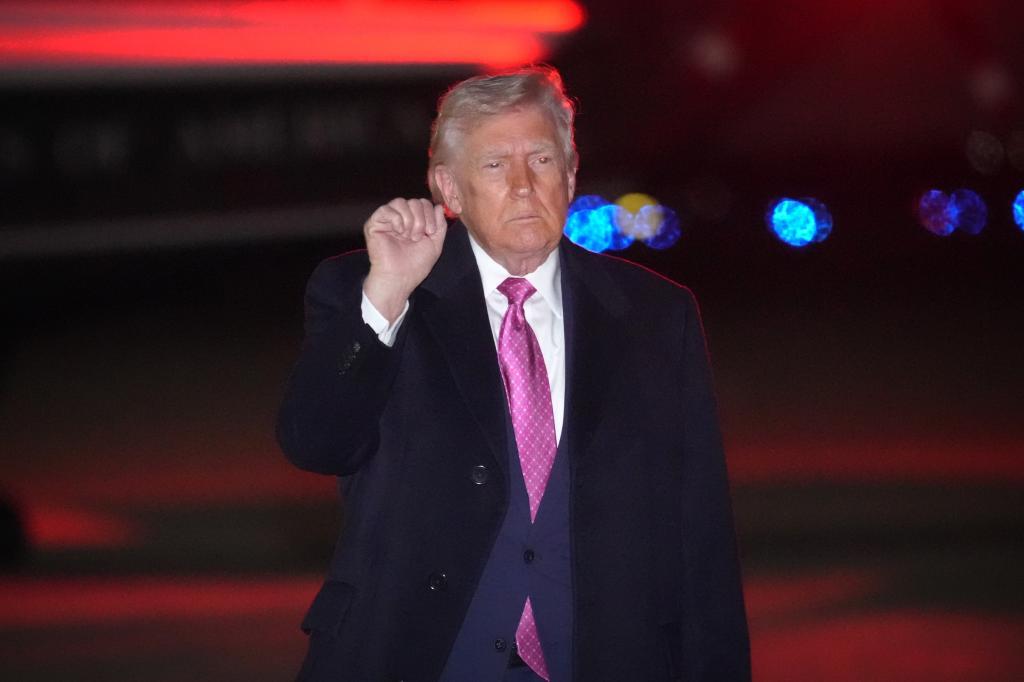
During press statements aboard Air Force One, the president pointed out that the deaths of numerous Iranian leaders during this first month of hostilities have left the country under a "completely different leadership," making him "fairly confident" of reaching a peace agreement soon.
This rhetoric aims to calm extremely nervous global markets due to the lack of prospects for ending the conflict. The price of a barrel of West Texas Intermediate (WTI) oil has risen to $102.86, while Brent stands at $115.89. Trump linked economic stability to Iran's alleged promise to allow the passage of 20 oil tankers through the Strait of Hormuz, a strategic point blocked since the beginning of the war and through which 20% of the world's oil production flows.
However, the military reality suggests a persistent escalation. The Israeli army confirmed the bombing of a key missile production center in Iran, while Tehran and its surrounding areas experienced massive blackouts following attacks on its electrical infrastructure. Despite Secretary of State Marco Rubio ruling out the need to send ground troops, leaked Pentagon reports mention plans for special forces incursions into Iranian territory. The arrival in the region of an amphibious assault ship with 3,500 marines has reinforced fears of a ground offensive.
From Tehran, Parliament President Mohamad Bagher Qalibaf denounced that Washington is planning a "secret" offensive while maintaining public diplomatic efforts, and warned that his men are prepared to "punish" US soldiers if they set foot on the ground. Amid this geopolitical tension, the Iranian civilian population expresses their distress; Farzaneh, a 62-year-old citizen, summed up the general sentiment by stating that "nobody really wants war" in a future that is becoming increasingly uncertain.