G7 ministers agreed on Monday to "take all necessary measures to preserve the security and stability of the energy market," while expressing concern about the impact of the conflict in the Middle East on economic growth and financial markets.
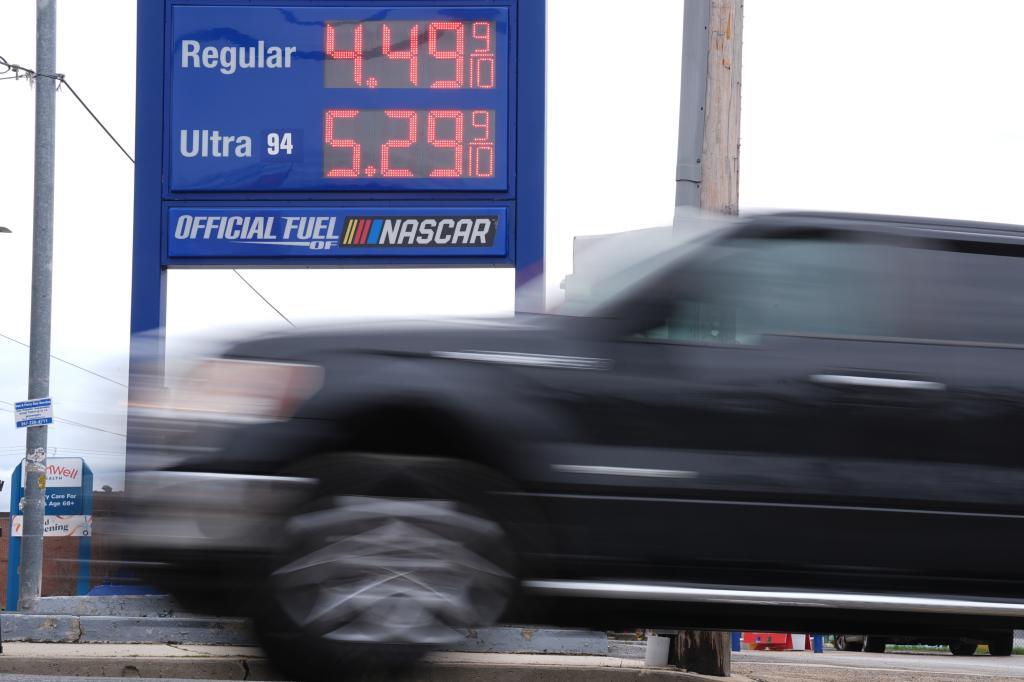
With the price of a barrel of oil reaching $114.9 at the start of the second month of the Iran war, and concerns about the blockade of the Strait of Hormuz and future military actions by the United States and Israel, G7 Economy and Energy Ministers went a step further than two weeks ago when they supported the International Energy Agency's decision to release over 400 million barrels of crude oil from strategic reserves.
The video conference meeting convened on Monday by France, which currently holds the G7 presidency, concluded with a joint statement in which the Economy and Energy Ministers of the seven most industrialized countries expressed their willingness to "limit the indirect economic effects of the recent volatility stemming from the war."
The seven countries (USA, France, UK, Germany, Italy, Japan, and Canada) committed to continue weathering the energy and economic storm in close collaboration with their partners, while also urging countries to "refrain from imposing unjustified restrictions on the export of hydrocarbons and related products" (referring to actions like India's decision to impose taxes on diesel and kerosene intended for export to ensure greater availability of these products in the domestic market).
G7 Finance and Energy Ministers emphasized the need to ensure "stable and transparent energy markets," as well as maintaining an adequate supply of oil and gas, despite increasing signs that the release of strategic oil reserves has not been sufficient to contain prices or meet demand.
"We continue to closely monitor the evolution of events and their potential impact on global growth and financial market conditions," the joint statement reads, highlighting the commitment of central banks to maintain price stability and "ensure the continued resilience of the financial system."
The statement also makes explicit reference to "monetary policy" and leaves open the possibility of reviewing interest rates "based on data" such as inflation or economic activity.
In an indirect reference to the situation in the Strait of Hormuz, the G7 reiterated "the importance of restoring safe and uninterrupted trade flows, including freedom of navigation and the protection of critical maritime infrastructure."
G7 ministers once again expressed their support for the efforts of the International Energy Agency to "maintain adequate supply in global gas and oil markets" and took note of the "options" outlined by the IEA itself to manage demand, "based on the specific circumstances of each country to help smooth market conditions and limit excessive volatility."
The first anticipated step for the IEA was taken on March 19 with the release of over 400 million barrels from the strategic reserves of its 32 member countries (including Spain). The United States led the initiative contributing 172 million barrels, followed by Canada with 23.6 million.
Each G7 member has taken complementary measures. For example, Germany has allowed gas stations to raise fuel prices only once a day (at noon), although prices can decrease at any time. Violating this provision can result in fines of up to 100,000 euros.
France, on the other hand, has decided to take specific sectoral measures, in contrast to the general "ceiling" on energy prices after the Ukraine war. The French government has approved 70 million euros in fuel subsidies for sectors such as transportation, agriculture, and fishing, as well as 150 euros in aid for 3.8 low-income families to cope with energy prices. In the UK, there is also a package of assistance for families worth 60 million euros.
Italy, for its part, agreed to allocate 417 million euros to reduce fuel taxes until April 7, although the industry is pushing to extend the date and implement more effective measures. Japan, on the other hand, has been one of the most proactive countries, with subsidies totaling around 5,000 million euros to try to keep gasoline prices stable (170 yen per liter).