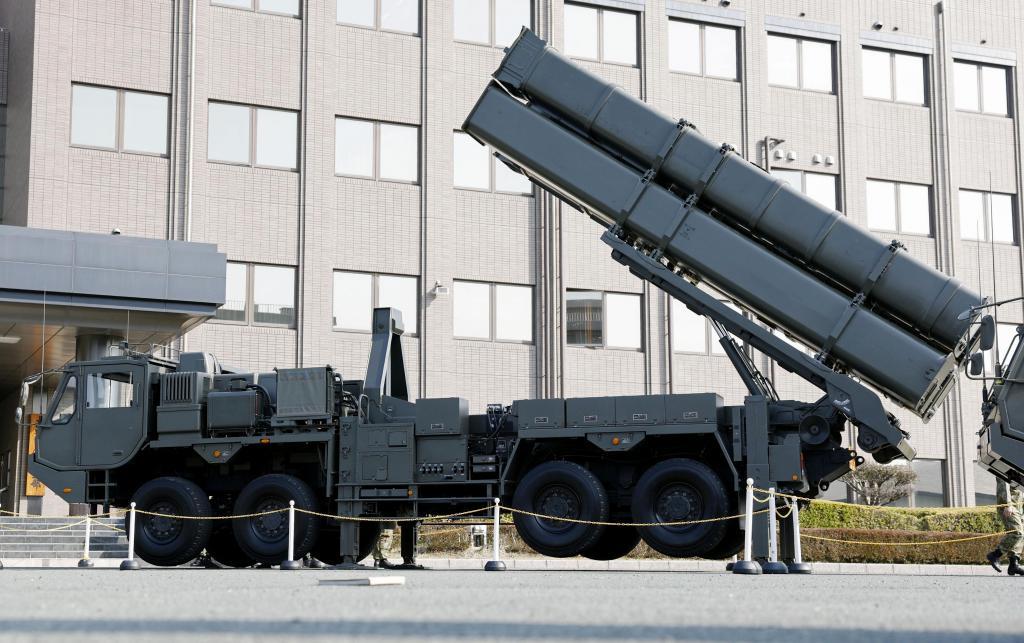
Japan has taken a decisive step towards transforming its security posture by deploying domestically manufactured long-range missiles for the first time at two strategic bases, located in the southwest and center of the archipelago. The announcement, made on Tuesday by the Ministry of Defense, emphasizes that Tokyo has acquired "counterattack capability with the aim of strengthening deterrence", marking a shift that breaks with decades of strict pacifist policy enshrined in the post-war Constitution.
At Kengun camp in Kumamoto prefecture, the Ground Self-Defense Forces have installed a land-based version of the enhanced Type 12 guided land-to-ship missile, with an estimated range of 1,000 kilometers, sufficient to reach coastal areas of China and the waters surrounding Taiwan. At Fuji camp in Shizuoka, hypervelocity gliding projectiles have been deployed, a technology that significantly enhances Tokyo's ability to neutralize distant threats.
"This is a crucial effort to strengthen our deterrence and response capabilities in the most severe and complex post-war security environment," stated Defense Minister Shinjiro Koizumi, also indicating that this year there are plans to expand missile deployment to other bases.
Japanese rearmament does not occur in isolation. Following the defeat in 1945, the U.S. occupation imposed a Constitution that abolished the army and enshrined pacifism. However, the outbreak of the Korean War in 1950 altered that strategy: Washington began to view Japan as a key ally in Asia, leading to the creation of the current Self-Defense Forces, an army with strict limitations on doctrine and weaponry.
Since then, Tokyo has gradually expanded its operational scope. In 2015, under the government of Shinzo Abe, the Constitution was reinterpreted to authorize "collective self-defense." In 2022, under former leader Fumio Kishida, a plan was approved to increase military spending to 2% of GDP and equip Japan with long-range counterattack missiles.
That year, national security policies were updated to formally introduce the concept of "counterattack capabilities": the ability to target enemy missile launch sites or other military targets if the country is attacked.
The current conservative Prime Minister, Sanae Takaichi, appears willing to accelerate this rearmament process. Last year, she triggered a diplomatic crisis with Beijing by suggesting that a Chinese attack on Taiwan could justify Japanese military intervention. China's response was immediate: economic pressures and heightened tension in the Taiwan Strait, keeping Tokyo on high alert.
The Takaichi government approved a record defense budget, exceeding nine trillion yen (around 50 billion euros) for 2026, 9.4% higher than the previous year, aimed at strengthening the aforementioned counterattack capabilities and coastal defenses through land-to-ship missiles and drones. The newly deployed domestic missiles on Tuesday complement the operational U.S. Tomahawks on several islands, creating an unprecedented integrated defense system in the country.
The shift in Japanese society's perception of military matters is also notable. A government survey at the end of 2025 revealed that 45.2% of citizens supported strengthening the Self-Defense Forces, compared to 9% in 1991.
"Japan is not becoming militaristic in the classic sense, but it is moving away from the strict pacifism that defined the post-war era. It is a historic change, albeit gradual," explained political scientist Hiroshi Tanaka from the University of Tokyo in an interview with this newspaper. Keiko Matsuda, a researcher at the Japan Institute for International Affairs, added that the increase in military spending is understood in the context of specific threats: China, North Korea, and the war in Ukraine have altered the risk perception among the Japanese.
The southern part of the archipelago, especially the Ryukyu Islands, has become the epicenter of this strategic transformation. The largest island, Okinawa, hosts the highest concentration of U.S. bases and recently saw the deployment of a regiment with anti-ship missiles.
The Ryukyu Islands extend towards Yonaguni, just 112 kilometers from Taiwan, placing Japan in a critical position in any conflict in the strait. Additionally, Tokyo maintains a territorial dispute with China over the Senkaku Islands. Although controlled by the Japanese, Beijing routinely sends coast guard vessels to the surrounding waters to assert its claim. Maritime security is vital in all these waters: any conflict that disrupts these routes would interrupt trade essential to the Japanese economy.
The current deployment of domestic long-range missiles goes beyond technological milestones: it symbolizes a paradigm shift in Japanese security and a transition towards a more aggressive deterrence model.