The race against time was won by the United States. In a bold and risky operation, beyond enemy lines, several special forces units managed to reach the second crew member of the F15 fighter jet before anyone else. They also managed to extract him from a mountainous area in Iran, a few kilometers from where he landed after ejecting along with his pilot last Friday, and do so safely despite his injuries. Undoubtedly, someone will turn his ordeal into an action movie. Senior US military officials described this rescue operation as "one of the most complex and difficult in the history of special operations".
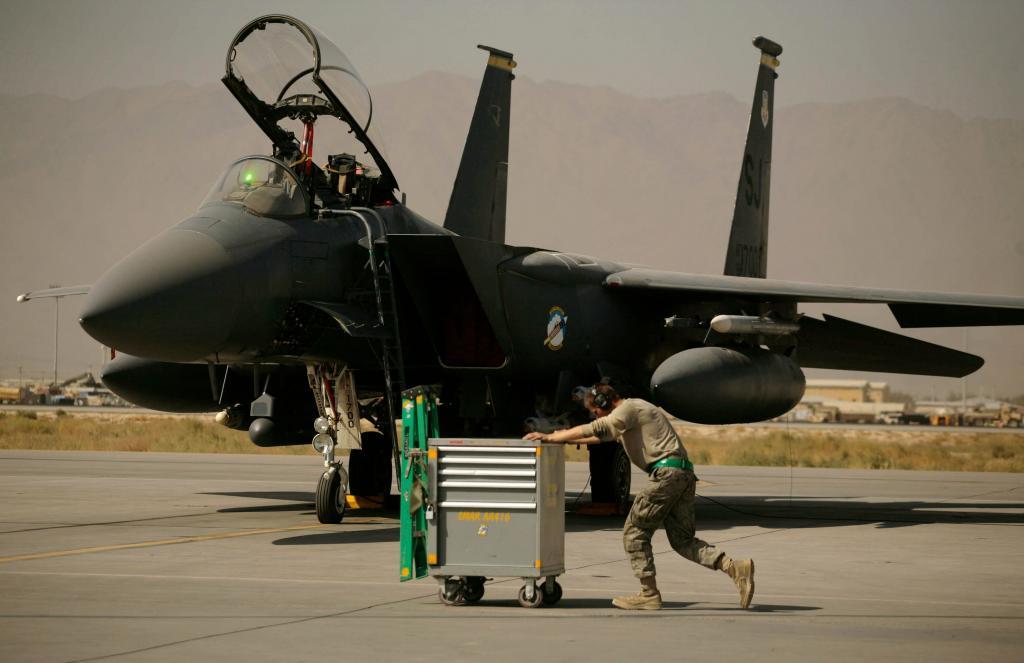
The official communication came when this second F15 crew member was already safe at a US base. Hundreds of special forces personnel, dozens of US warplanes and helicopters, as well as members of cyber and space intelligence handling spy and attack drones, were able to locate the missing crew member. This F15 aircraft, which made its first flight in 1986, is by no means the most modern in the US arsenal, nor does it have stealth characteristics like the F35.
The newspaper The Wall Street Journal reports that the CIA launched a deception campaign hours before spreading the idea within Iran that US forces had already found him and were transporting him by land for extraction from the country. The goal was to demoralize his pursuers. They then proceeded with the actual mission. According to several OSINT analysts (Open Source Intelligence, intelligence obtained from open sources), the location of the site is about 50 kilometers from the Iranian city of Isfahan, an important Iranian military hub.
The crew member, a colonel and weapons officer, had been evading his Iranian pursuers as per his training for two days despite being injured, without it being disclosed what type of injuries he had. The military ascended a total of 2,700 meters and, when he reached the mountaintop, he contacted his rescuers via a radio system. It was then that they were finally able to locate him, as the default beacon in his flight suit did not emit his GPS-encoded position, something that did happen with his companion. The US aviation then created a security perimeter and carried out attacks against Iranian columns to prevent them from approaching the crew member's location, who took refuge in a mountain crevice.
For 48 hours, he was pursued by these Iranian militia members of the Revolutionary Guard along mountain paths until they were eliminated by MQ-9 Reaper drones, equipped with night vision and thermal imaging, a significant technological advantage over Iranian forces. This is why the United States launched the two rescue operations at night, as it is technologically far superior to its Iranian enemies.
US forces converged on the downed aviator in a helicopter. It was a US Navy Seal team, specialized in infiltrations beyond enemy lines, famous for having eliminated Al Qaeda leader Osama bin Laden in his hideout in Abbottabad, Pakistan, in 2011. They then unleashed intense covering fire towards the Iranian positions. According to local sources, three members of the Revolutionary Guard died at that moment.
This helicopter immediately took them all to an old Iranian military installation with airstrips about eight kilometers away, the perfect place for extraction. Two HC-130J Combat King II transport planes landed on those airstrips to take the crew member out of Iran, but both aircraft ended up with their wheels sunk in a sandy area, indicating that the installation had been abandoned for some time. The mission leaders decided to fly them out to prevent them from falling into enemy hands and requested three new, lighter aircraft to land in the same place and complete the mission with zero casualties.
The operation has cost over 300 million dollars because the Americans had to abandon the two stuck C-130 planes and four MH-6 Little Bird helicopters. The US Air Force had to use several bombs to destroy all the abandoned and burnt aircraft on that airstrip. Additionally, the Iranians shot down two MQ-9 Reaper drones. But the cost of losing the two F15 crew members would have been much higher. The remains of all the abandoned and incinerated aircraft were left scattered at the site.
President Donald Trump then wrote on his social media platform Truth: "WE DID IT! We got him, fellow citizens. In the past hours, the US Armed Forces carried out one of the boldest search and rescue operations in US history to rescue one of our incredible crew officers, who is also a highly respected colonel, and I am pleased to inform you that he is SAFE AND SOUND." Trump also added more details about the rescue, describing the F-15 crew member as "seriously injured and brave." The officer had been rescued in an "incursion example that is rarely attempted due to the danger it poses to personnel and equipment."
With this operation, the United States scores a significant victory, as in 48 hours it managed to rescue three crew members shot down by enemy fire, two in the F15 and another in an A-10 also shot down on Friday. Furthermore, it prevented their capture and the propaganda and negotiation use of these crew members as hostages in the hands of the Iranian regime.
However, Iranian forces question the success of the operation and claim that four US aircraft were hit. "In additional assessments conducted by experts on-site, it was determined that two US military C-130 transport planes and two Black Hawk helicopters were destroyed," said Central Headquarters spokesman Jatam al-Anbiya Colonel Ebrahim Zolfagari, who stated that the US operation to rescue its pilot ended in a "total failure," as reported by the Tasnim agency.
The spokesman described the operation as "planned as a mission (...) for exfiltration at an abandoned airport in southern Isfahan" and indicated that it was repelled through a joint action of the Revolutionary Guard, the Army, the Basij militia, and security forces.
Meanwhile, the Revolutionary Guard stated in a press release that the aircraft were destroyed during the operation and described the episode as a "new humiliating defeat" for the United States. Donald Trump is scheduled to hold a press conference and may speak in the presence of these two rescued US military personnel, which would further discredit the version offered by the Iranians.
This operation, successful despite the loss of aircraft and helicopters, also serves as a revenge for the US over the failure during Operation Eagle Claw in the 1979 hostage crisis. That plan was also complex: helicopters were to take off from an aircraft carrier in the Gulf of Oman, meet transport planes at a secret point in the Iranian desert known as Desert One, refuel, advance towards Tehran, and, after a nighttime special forces operation, evacuate the hostages.
The mission failed even before reaching the capital. Several helicopters suffered mechanical failures, and others were rendered inoperable by a sandstorm, reducing the number of aircraft below the minimum required to continue. When the decision was made to abort the operation, logistical chaos led to a collision between a helicopter and a C-130 tanker aircraft during the withdrawal, resulting in the death of eight US military personnel. This operation puts an end to that humiliation.