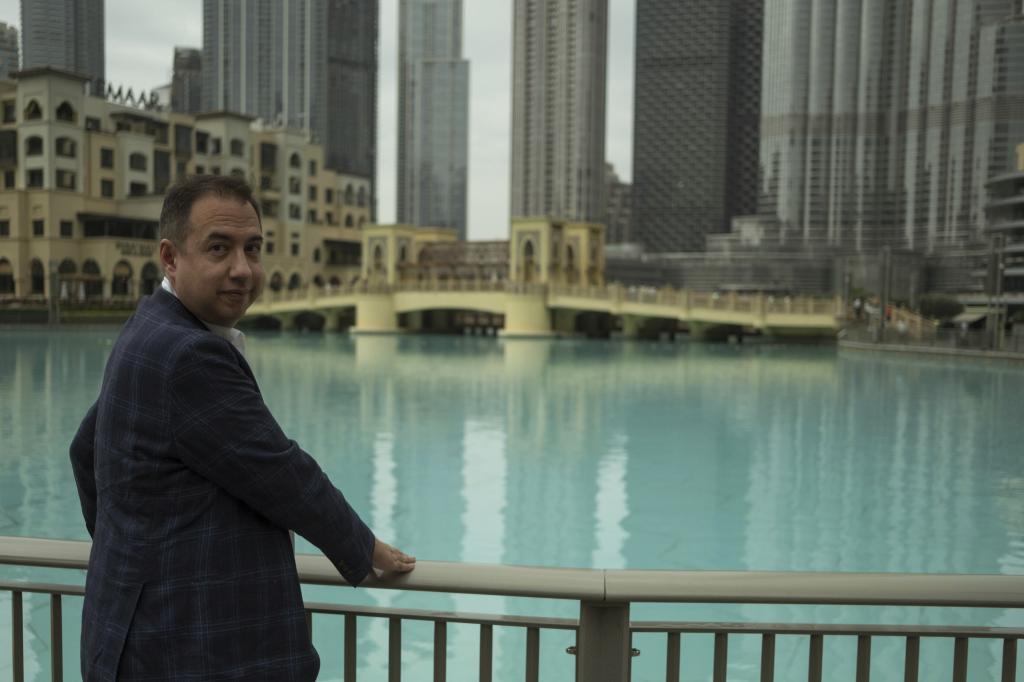
On February 28, without prior notice or declaration of war, Iran unleashed 150 ballistic missiles and hundreds of drones on the United Arab Emirates. The explosions shook the futuristic city of Dubai, and tens of thousands of tourists and residents sought refuge wherever they could while buying any available ticket to leave the place. The airport, despite being visited by several Iranian drones, continued to operate with some punctual closures. For days, we heard about several influencers, celebrities, or crypto investors narrating on television programs their anxiety to leave the country. Some even demanded an evacuation mission from their home countries.
The tourist and financial centers of the Gulf then seemed like ghostly places reliving images of the pandemic. Several Iranian drones attacked some iconic hotels in the spectacular Dubai Marina, and a strange war on social media began between those who claimed that nothing was happening in the Emirate and that it was all misinformation, and those who asserted that Dubai's grand project as an ideal city to attract talent, tourists, and daring entrepreneurs had died under the ayatollahs' missiles. Neither of these two claims was true. Meanwhile, the country's anti-aircraft defense surpassed the drone and missile interception rate of Israel's famous Iron Dome.
During those weeks, some hotel entrepreneurs admitted that they had lost 95% of their bookings. Sources in Dubai's real estate sector then stated that 70% of residents had left the United Arab Emirates, frightened by an escalating war against a country that had never attacked its host. Some nationalities, out of the 200 existing in the Gulf country, almost disappeared from its streets when their embassies recommended leaving. The Americans and British, for example, disappeared. Others, like the Spaniards, continued working. At most, some packed up their families on their way to Spain for what everyone considered a vacation. Most are already returning.
To learn more about this attitude, we are invited to a barbecue with a group of Spaniards in one of the developments near the famous Dubai Marina. "This is also my family," says Luis Álvarez, a private plane pilot from Cartagena and a resident in the Emirate for years. "Many Spanish speakers live in this development, and only a few Spaniards have left, or left during school holidays, but those few who left will return." Amid steaks, their conversations revolve mainly around the potential impact of this war on their lives in the Emirate. They all praise the houses they live in, "unthinkable in Spain, where everything is much more expensive," in a country with no taxes, ridiculously low crime rates, and comprehensive health insurance for treatment in top hospitals.
"Here our children are happy and free, just like we were in Spain decades ago. They move from one house to another with total freedom. As parents and adults, we have a very good life here. During the coronavirus pandemic, it was the first time I realized one of the major differences: all decisions made in Spain seemed driven by politicians' survival, all for show. The UAE made decisions based on citizen well-being and listening to true health experts," says Álvarez.
The same opinion is shared by Francisco Almansa, a real estate entrepreneur who has continued going to work at his office at all times, even during the most severe Iranian bombings: "I arrived in Dubai in 2022 out of a combination of intuition and necessity. My business model depended largely on clients in Russia, and after the war began, the rules changed completely. It became practically unviable overnight. I remember I was in Barcelona when the attacks on Ukraine started, the night of February 23 to 24. Flights started to be canceled within hours, and I knew that returning to Russia was no longer an option. At that moment, I understood that I had to seek a different perspective, and Dubai emerged as a logical alternative."
What were the reasons for staying here at a time when many decided to leave? "When the current crisis erupted, I decided to stay. It was not an impulsive decision. I have been here for years, and although I am naturally skeptical about the role of the State, in this case, I had developed an unusual level of trust. In the early days, there was uncertainty, as is logical, but it soon became clear that there was no immediate risk to personal security. The defense was working, and the situation was not heading towards a catastrophic scenario. My decision was a mix of rational analysis and personal involvement. I did not see a specific reason to leave, but I saw many reasons to stay: my life, my business, gratitude towards a country that has allowed me to develop," summarizes Almansa.
Almudena Berzosa, a Spanish-Swiss executive expert in leadership, believes that "from this crisis, Dubai can emerge stronger. Not because nothing is happening, but because the response has been effective. It has demonstrated defense capability, organization, and control in a critical moment. And that generates confidence. Sometimes, major projects are not tested in calm times but in moments like this."
Berzosa lives in a classic Emirati villa and is fully adapted to her host country: "One of the things that surprised me the most was the type of leadership. It is not the Western model. There is a real obsession here with serving the citizen, and that also includes foreign residents. You perceive it in any daily management: everything is geared towards making your life easier. From administrative procedures to basic services, efficiency is very high. I remember renewing my driver's license in 10 minutes. These are details, but they make a huge difference."
What social and religious differences can a Spanish citizen notice? "I was struck by the level of tolerance. You can see local women dressed traditionally alongside others in Western clothing, without tensions or judgments. There is real respect. And that extends to many areas. Even in aspects where one might expect rigidity, such as the relationship with dogs in a Muslim culture, I have experienced extraordinary humanity," adds the executive.
Axel Costa, a former professional cyclist and entrepreneur, has been living in Dubai for two years. In the image, at one of the cafes in the massive Dubai Mall, the shopping center in downtown Dubai.ALBERTO ROJAS
Axel Costa, a former professional cyclist and entrepreneur, runs his own marketing company and is another of the Spaniards who decided to stay during the worst moments of the bombers launched by Tehran. "I moved to Dubai two years ago because I wanted to grow personally and professionally. The environment is perfect for that because you are surrounded by talented people. Dubai welcomes you with open arms, but if you commit any crime, you will be deported the next day. This city, managed like a business, thrives on people's trust. War is an external factor that can affect that trust, which is why it was necessary to trust now, in their most challenging moment. We must be there in good times and bad. I am very grateful to them for all the opportunities this country has given me," he tells us.
Almudena Berzosa echoes this sentiment: "There's a very intense narrative battle coming from outside. People talk about the end of Dubai or, at the other extreme, that nothing ever happens here. The truth lies somewhere in between. But what I do know for sure is that much of the criticism stems from a lack of understanding. When you live here, you understand why so many people choose to stay. And why, in a situation like this, we've chosen to stay as well."